
Coquito Tres Leches Cake Recipe – Puerto Rican Dessert
During the holidays, we focus on spending time together and celebrating family traditions. We enjoy many family ping-pong tournaments, watching holiday movies, and making our favorite holiday dishes (like peanut butter fudge and stollen bread).
When the kids were younger, I wanted to teach them about our family tree, so we started making recipes from cultures around the world. We spent many hours in the kitchen, cooking and sampling dishes. As a result, we developed one of our all-time favorites, a Coquito Tres Leches Cake recipe. This is the perfect mix of two awesome Puerto Rican desserts: coquito and tres leches cake. Come see how easy it is to make for your family this holiday season!
*Disclosure: This post may contain affiliate links, which means we may receive a commission if you click a link and purchase something that we have recommended. Please check out our disclosure policy for more details. Thank you for your support!
What Is Coquito Tres Leches Cake?
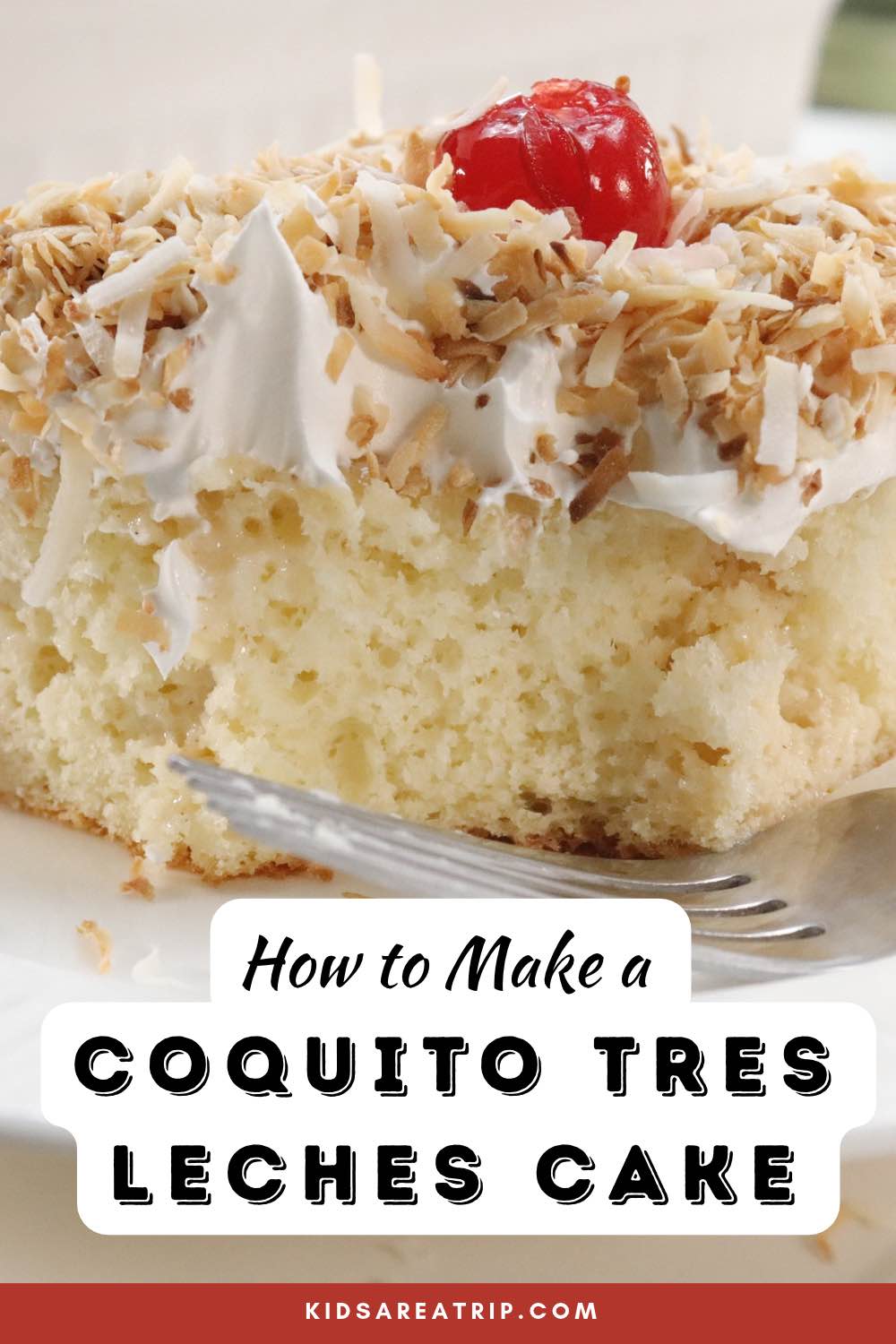
Coquito tres leches cake is a Puerto Rican dessert that combines two holiday classics: coquito (a coconut-spiced eggnog) and tres leches (a cake soaked in three milks). The cake is baked, poked with holes, and drenched in a coquito-inspired mixture of sweet condensed milk, evaporated milk, and coconut milk seasoned with cinnamon and nutmeg, then finished with whipped topping, toasted coconut, and a maraschino cherry on each slice.
The History of Coquito
Coquito, which means “little coconut” in Spanish, is a traditional Puerto Rican holiday drink often compared to eggnog. The drink’s origins are unclear, but many believe it developed from Spanish colonial influences, with traditional eggnog recipes adapted using local ingredients like coconut and Puerto Rican rum.
Made with coconut milk, cream of coconut, condensed milk, rum, and warm spices like cinnamon and nutmeg, coquito has become a beloved part of Puerto Rico’s Christmas celebrations.
In Puerto Rico, the holiday season stretches from Thanksgiving through Three Kings Day in January, with family gatherings, music, food, and parrandas (traditional Christmas caroling).
Coquito is a staple at these celebrations, often made in large batches to share with family and friends or given as a homemade holiday gift. Many families have their own recipes passed down through generations, making coquito more than just a festive drink. It’s a taste of family, tradition, and Puerto Rican heritage.
I have fond memories of my grandmother serving this at Christmas parties when I was little. There’s an alcoholic (with rum) and non-alcoholic version, and my boys love the non-alcoholic version (as do I), so we’ve made it for the past few years during the holidays.

Making a Coquito Tres Leches Cake
Last year we decided to take the recipe a step further and try our hand at a Coquito Tres Leches Cake. I explained to my children that although the cake is called “tres leches”, which means cake of three milks, there are actually four types of milk used in baking this cake: sweet condensed milk, evaporated milk, coconut milk, and whipping cream.
I was asked many questions about this, but I have no idea why they don’t call it “Cuatro Leches”. The kids still insisted we should make the cake.
Of all the Puerto Rican food out there, I would say Coquito Tres Leches Cake is a fairly easy recipe. If you have time, you can make this Puerto Rican dessert without using cake mix. I like easy recipes, and for me, cake mix is easy.
While the cake bakes, we make the coquito topping, and after the cake cools, we pour the topping over it and let it soak overnight. The hardest part is the waiting.

The next day, we spread whipped topping all over the cake and sprinkle the entire cake with toasted coconut. Top each slice with a maraschino cherry. The kids can’t get enough! Watch our video below to see how easy it is!
Coquito Tres Leches Cake

A mix of two Puerto Rican favorites results in one fabulous holiday dessert.
Ingredients
Tres Leches Cake Ingredients
- 1 package cake mix, white or yellow
- 4 whole eggs
- 1 cup whole milk
- 1 stick butter, melted and cooled
- 1/4 tsp vanilla
Coquito Topping Ingredients
- 1 can La Lechera sweet condensed milk
- 2/3 cup Carnation evaporated milk
- 1/2 cup coconut milk
- 1/4 tsp cinnamon
- 1/4 tsp nutmeg
Topping
- 1 bag shredded coconut, Toast for 3-5 minutes in a pan on the stove.
- 1 container whipped topping
- 1 jar maraschino cherries
Instructions
- Pre-heat oven to 350 degrees.
- Butter a 13 x 9 baking dish.
- In a large mixing bowl add cake mix, eggs, whole milk, melted butter, and vanilla. Stir until blended and pour into baking dish.
- Cook for 30 minutes.
- While cake is baking, make the Coquito topping.
- In a large bowl, add sweet condensed milk, evaporated milk, coconut milk, cinnamon, and nutmeg. Mix together with a whisk and set aside.
- After removing cake from oven, let rest for 40 minutes.
- When cake is cool, use the round end of a spoon or chop stick to poke holes all over the cake.
- Pour the Coquito topping evenly on top of cake.
- Refrigerate cake for at least four hours, but preferably overnight.
- Toast the coconut by placing it in a pan on the stove top at medium heat. Use a spatula to turn it over until it is a light brown color. This takes 3-5 minutes.
- Cover the cake with whipped topping and sprinkle with toasted coconut.
- When serving, place a maraschino cherry on top of each slice.
- Enjoy!
Recommended Products
As an Amazon Associate and member of other affiliate programs, I earn from qualifying purchases.
-
 KitchenMade Measuring Cups Stainless Steel 6 Piece Stackable Set
-
WALFOS Silicone Spatula Set - 600°F High Heat Resistant Non-Stick Silicone Spoon & Spatulas for Baking,Cooking and Mixing - Strong Stainless Steel Core Design (4-Piece Set) - BPA Free & Food Grade
-
Pyrex Basics 3 Quart Oblong Glass Baking Dish, Clear 9 x 13 inch (Set of 2)


Nutrition Information:
Yield:
18Serving Size:
18 piecesAmount Per Serving: Calories: 334Total Fat: 16.7gSaturated Fat: 9.4gCholesterol: 60mgSodium: 281mgCarbohydrates: 41.6gFiber: 1gSugar: 29.7gProtein: 5.8g
Key Takeaways
- Two Puerto Rican classics in one cake: coquito meets tres leches.
- Coquito topping: condensed milk, evaporated milk, coconut milk, cinnamon, nutmeg.
- Poke holes before soaking so the milk absorbs evenly.
- Refrigerate at least four hours; overnight is better.
- Finish with whipped topping, toasted coconut, and a maraschino cherry.
- Cake mix makes this recipe weeknight-easy.
What is Puerto Rican tres leches cake?
Puerto Rican tres leches cake is a sponge-style cake soaked in a mixture of sweet condensed milk, evaporated milk, and a third milk (often whole milk or cream), then topped with whipped cream. The Puerto Rican version frequently adds coquito flavors, coconut milk, cinnamon, and nutmeg, turning it into a coquito tres leches that tastes like the island’s beloved Christmas drink in cake form.
How does tres leches cake not get soggy?
Tres leches cake stays moist without turning soggy because you bake it until fully set, then cool it completely before pouring the milk mixture over it. Poking holes all over the cake with the round end of a spoon or a chopstick lets the liquid absorb evenly into the crumb rather than pooling on the surface. Refrigerating for at least four hours, preferably overnight, gives the cake time to soak up the mixture gradually, so the texture stays tender and custardy instead of wet.
Can I make coquito tres leches cake ahead of time?
Yes, and it actually tastes better when made ahead. The recipe calls for refrigerating the soaked cake for at least four hours, but overnight is ideal. You can bake the cake and add the coquito topping a full day before serving, then add the whipped topping and toasted coconut the morning you plan to serve it. Add the toasted coconut and maraschino cherries right before serving so they stay fresh.
Why is it called tres leches if there are four milks?
Classic tres leches uses three milks: sweet condensed milk, evaporated milk, and heavy cream. This coquito version swaps the cream for coconut milk and adds whipped topping separately, which technically brings the milk count to four. The name ‘tres leches’ has simply stuck, even if ‘cuatro leches’ would be more accurate for this recipe!
