
Hiking in Japan with Kids: A Family Adventure in Hokkaido’s Daisetsuzan National Park
We’ve been a hiking family since our son was a tiny baby strapped into a backpack, exploring trails together as he grew from toddler to teenager. By the time he turned 13, he was ready for one of our most ambitious adventures yet: a week-long hiking trip through Daisetsuzan National Park in Hokkaido, Japan.
Known affectionately as “the roof of Hokkaido,” this national park offered us the perfect mix of challenging trails and cultural experiences. If you’re considering hiking in Japan with kids, this trip combines breathtaking mountain scenery with unique Japanese traditions like onsen bathing and kaiseki dining. It makes for an unforgettable family adventure we can’t recommend highly enough.

*Disclosure: This post may contain affiliate links, which means we may receive a commission if you click a link and purchase something we have recommended. Please check out our disclosure policy for more details. Thank you for your support!
Epic Hikes in Hokkaido
Planning a hiking trip in Japan with just the Internet as a guide overwhelmed me, so I booked a self-guided tour to help us navigate the nuances of Japanese cultural practices and find the best hikes in the region.
Oku Japan booked our travel, selected our hikes, suggested alternative hikes when a mama bear and her cubs were spotted in the area, and secured our accommodations in traditional Onsen hotels.
They also helped us navigate some of the nuances of Japanese travel by explaining customs and cultural practices in the very helpful Handbook to Traveling in Japan. The handbook explained everything from how to enjoy the Onsen to instructions for visitors to cover their tattoos, since tattooed people are not allowed to use the public baths.
What to Expect on a Self-Guided Hiking Tour
Our family had never been on a self-guided hiking tour before, and we loved being able to set our own rhythm and pace during our 6-day tour of Daisetsuzan National Park.

Oku Japan gave us very clear instructions on how to arrive at the trailheads, sometimes by bus and sometimes by a taxi they had pre-arranged. There was even one hike where we were able to set off on foot right from our hotel.
When the bears canceled a planned hike, our taxi driver took us to another stunning part of Daisetsuzan. I worried for just a moment that the driver wouldn’t come back to collect us, but even though our Japanese is terrible and his English was limited, he showed up ten minutes after we descended from the trail.
Each of our four day-hikes was in the 4-6 mile range, with climbs of 800-1,800 feet. When we set off hiking each morning, we brought lunches and snacks with us in our packs. Like many travelers to Japan, we discovered the delight of egg salad sandwiches and other Japanese to-go food from 7-11 convenience stores.
Hiking Mount Kurodake
On our longest hike to the peak of Mount Kurodake, “black peak” in English, the dark volcanic rock cushioned the trail. We felt every inch of the 1,984 meters as we rose to the top.
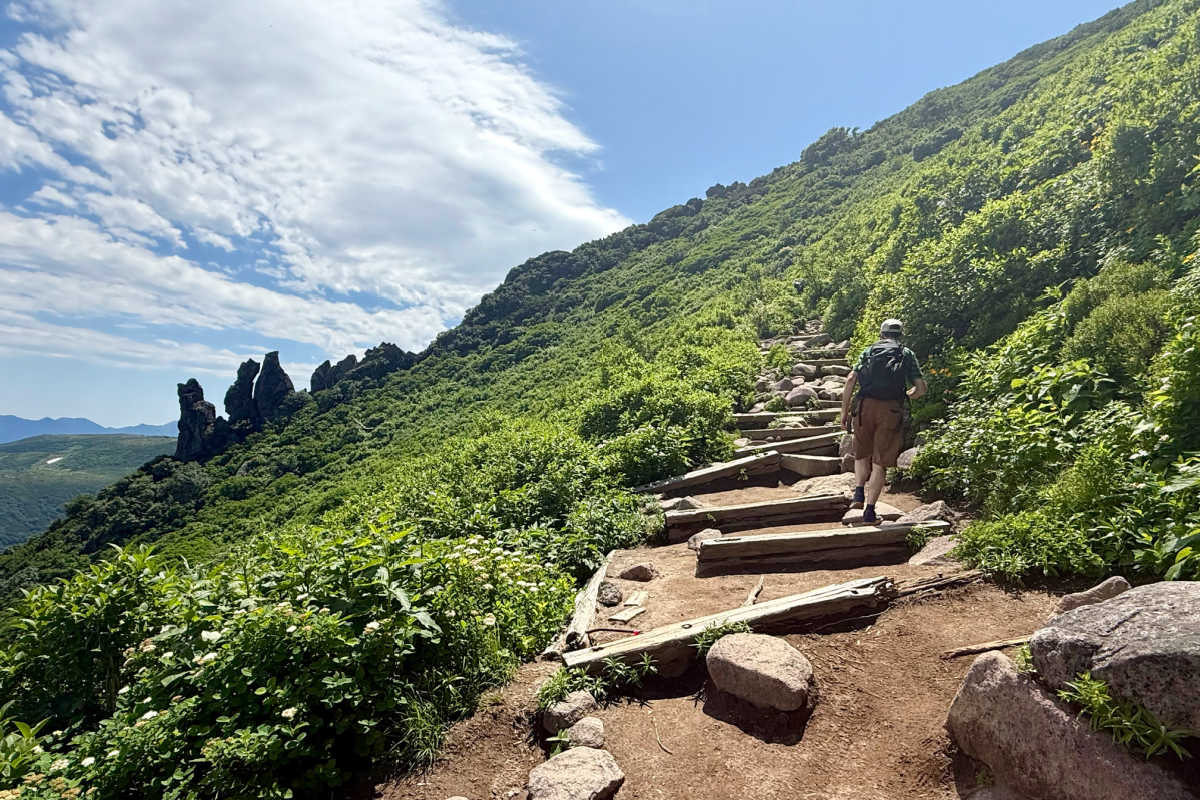
The three of us climbed and climbed the twisting switchback trails, lined with deep green alpine vegetation, with pops of color from bluebells, narcissus, and chocolate lilies. The volcanic peaks in the Daitezusen mountain range greeted us with each turn, the vastness of the Japanese wilderness unfolding as we climbed higher.

During the long hours of hiking, we passed the time by chatting with hikers from around the world. We met groups of older Japanese women traveling and hiking together, retired couples enjoying the view, and a few Westerners slowly rising above the tree line. Our son’s soccer training was coming in handy as he raced up the trail; his Dad and I wished we could keep up.
When we reached the top, our family stopped for a break and to celebrate bagging our first Japanese peak. We high-fived, took some photos, and ate another egg salad sandwich. Standing on top of Mount Kurodake, I felt exactly in between Karmuy Mosir, the land of the gods, and Ainu Mosir, the land of the humans, a fitting pinnacle to our Japanese hiking adventure.
Onsen Baths for Health and Hiking Recovery
Japanese hiking culture is a deeply connected and spiritual pursuit that highlights a reverence for nature. Our time in the Japanese mountains was not limited to breathtaking hikes; a key part of the experience was the post-hike relaxation at the traditional Onsen, bathing in natural hot springs for health, cleanliness, and relaxation.
Onsen hotels are known both for traditional Japanese hot spring mineral baths and excellent food. Most Onsen have a ⅔ board, and travelers are treated to giant buffets for both breakfast and dinner.

The buffets, known as kaiseki in Japanese, are grand affairs with an array of both Western and traditional Japanese foods, including corn soup and beef curry for breakfast, and elaborate spreads of seafood and regional delicacies such as Tajima Beef, sashimi, soba noodles, and baked oysters.
An Onsen is both the name of a hotel with communal baths and the name of the actual hot springs. Between the great hikes, the post-hike baths, and delicious food, our self-guided tour was a fulfilling way to explore the dramatic mountainous landscape of Hokkaido.
Tips for Visiting an Onsen with Kids
Onsens are separated by gender. My husband and son bathed together on the men’s side, and I joined the women. People bathe in the Onsen naked. The first step is to sit on the low stool and wash yourself before entering the bath. Mostly, Onsen bathing is done in silence, but of course, it is not expected that children be completely silent.
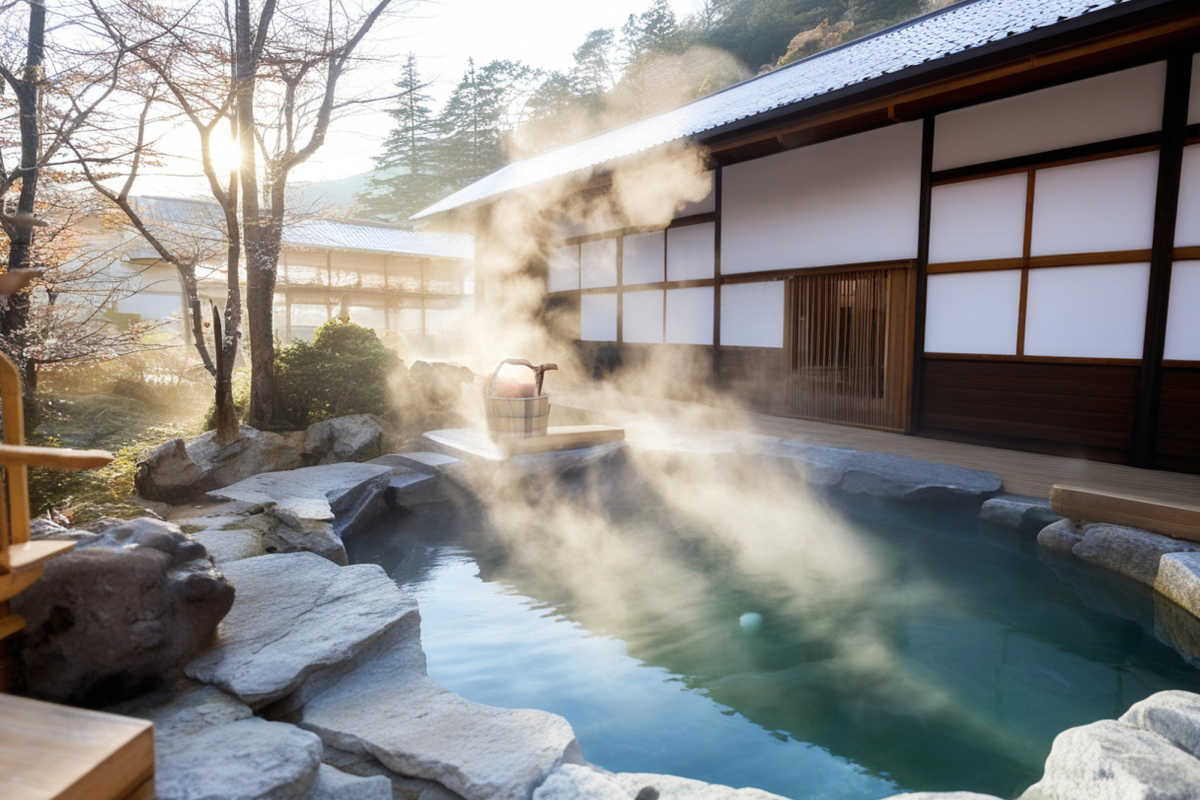
Many bathing areas of the larger hotels will have a hot spring tub, a cold plunge, a steam room, and a sauna. When leaving the Onsen bathing area, the locker room is filled with lotions and skin care for face and body. I have never been so moisturized. There are also hairbrushes, hair ties, and other beauty products included with the Onsen hotel stay.
Things to Know About Travel in Japan with Kids
Traveling with kids in Japan is easy, safe, and delightful. Japan is notable for the freedom kids enjoy, as portrayed in the popular Japanese TV series Old Enough!, which depicts Japanese toddlers running errands. I had no problem with our son walking down to the corner 7-11 on his own in bustling Tokyo when he was hungry for a snack.
Japan Travel Tips
In general, being respectful and curious will hold most people traveling to Japan in a good light with locals.
- When meeting or greeting a Japanese person, bowing is considered a sign of respect.
- In many public spaces and hotel rooms, it is expected that you remove your outdoor shoes and put on slippers. There are even separate slippers for the bathroom.
- When waiting for a train, there is often a marked area on the ground where people should queue to give debarking passengers space.
- Restaurants and hotels are happy to accept credit cards.
- Tipping is not practiced in Japan.
Most small shops prefer cash to credit cards. Public transportation and convenience stores use the Suica or Pasmo Card to make purchases. You can buy a Suica Card and reload it whenever needed. The card is scanned either at the 7-11 check-out or at the Metro gate.
Things You Need When Hiking in Japan
It’s easy to feel underdressed when hiking in Japan; an over-prepared style leads most Japanese hikers to wear the latest and greatest gear, even on the least strenuous hikes. Being fully prepared for any condition, high-end and stylish gear is the norm on Japanese trails.
One standard safety precaution visitors can pick up in Japan is a bear bell. Uzo brown bears are common on Hokkaido Island, and it is advisable to wear the bell to prevent a surprise encounter. Most trailhead stores and hotel lobbies carry bear bells.
What to Pack for Hiking in Japan
Hiking shoes are key to climbing the packed gravel trails in Daitezusen National Park. I wore only my Merrell SpeedArc Matis hiking shoes, both on the trails and in the cities, while traveling in Japan. With the combination of extra cushioning and a secure sole, I felt comfortable on the steepest of trails. One key feature is the single-pull, drawstring-style lacing. In Japan, visitors constantly take their shoes on and off, and Merrell has made that process super easy with its simple laces.

It can be tricky fashion-wise to go from full-on hiking gear to a very style-conscious city like Tokyo. Luckily, the Ibex line of Merino wool shirts is an essential piece of gear, keeping hikers cool when warm and warm when cold. The shirts dress up well and resist odors.
Equally ambidextrous, I wore my wide-legged Stio Coburn Pants on the trail, out to dinner, and traipsing around the cities. The combination of durability, water resistance, and flattery meant this was the only pair of pants I brought to Japan.
I also really love the Dawner Jacket by Stio, but it was too hot during our July visit to wear it anywhere but on the airplane. My go-to shorts are from the Swedish brand, Fjallraven. Their Abikso Trail Stretch Shorts fit and move well and are super tough.
About the author: Ariel Frager loves to get outside to play, be it surfing, traveling the world or walking the dog. Ariel’s writing has been published in a variety of print and online outlets including: Travel + Leisure, Gear Junkie, Business Insider, AAA Westways, Success Magazine, Family Vacationist and others. Ariel writes about outdoor and family adventures in her beloved Pacific Northwest and beyond. She lives in Portland, Oregon with her family.
