
Cusco with Teens: Top Activities, Day Trips & Cultural Experiences for Families
Planning a family trip to Peru with teenagers? We recently visited Lima, Cusco, and the Sacred Valley with our teen and young adult, and I can easily say, Peru is a family trip we won’t soon forget. Cusco offers a rare combination of adventure, culture, and authentic experiences that will genuinely interest teens. This guide covers the best things to do in Cusco with teens, from cooking classes to day trips and museums that don’t elicit eye rolls. Whether your teen is into adventure or wants to learn about the Inca sites, Cusco is sure to deliver experiences they’ll love.
*Disclosure: This post may contain affiliate links, which means we may receive a commission if you click a link and purchase something we have recommended. Please check out our disclosure policy for more details. Thank you for your support!
Things to Know Before Traveling to Cusco with Teens
Altitude Sickness
Cusco’s elevation of 11,150 feet affects virtually all visitors from lower altitudes, and teenagers aren’t exempt. Acute mountain sickness (AMS) symptoms include headache, nausea, fatigue, dizziness, and sleep disturbances. Some tips to help with altitude sickness:
Gradual ascent
Spend your first night in the Sacred Valley (9,000 feet) or Urubamba before ascending to Cusco. We flew from Lima (which is at sea level) to Cusco, where we met our local guide and headed straight into the Sacred Valley.
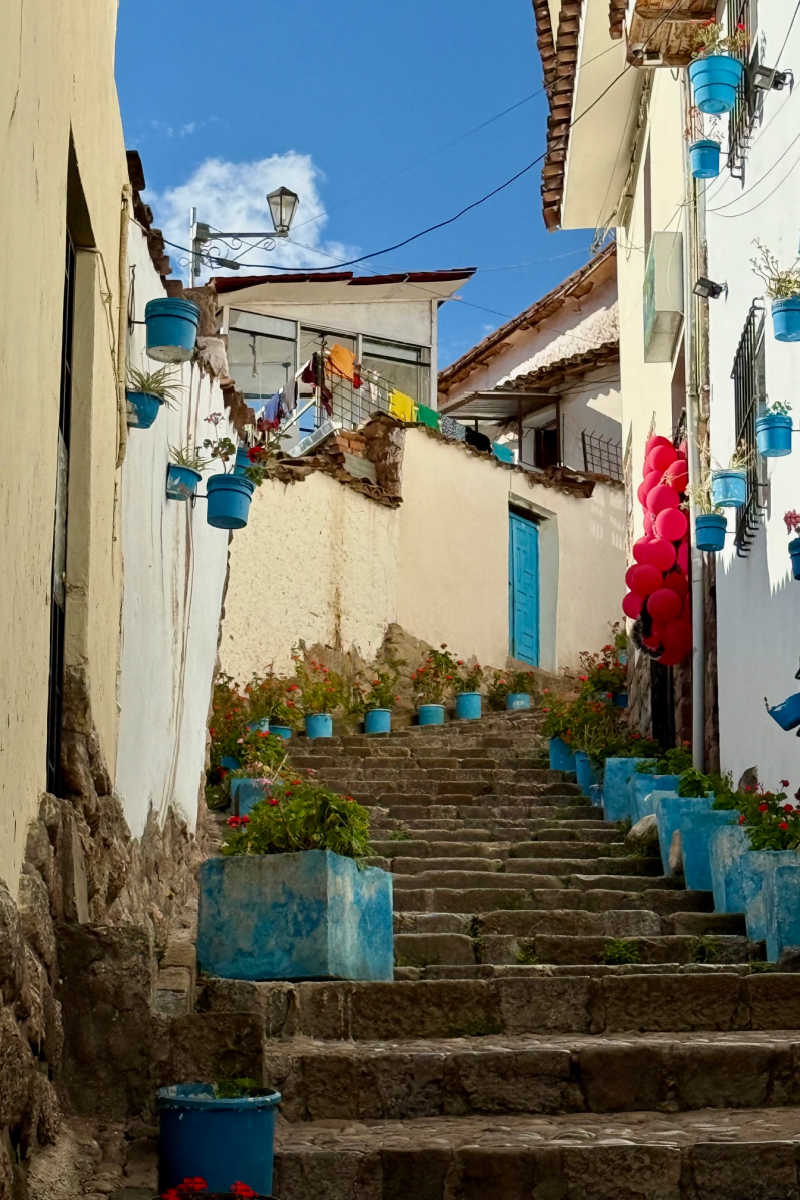
Photo credit: Kids Are A Trip
After exploring sites like Pisac, Ollantaytambo, and Machu Picchu, we returned to Cusco for several days. Our main symptoms were headaches and dehydration, but I feel like we did quite well compared to other horror stories I’ve heard.
Hydration
Drink significantly more water than normal. I mean A LOT more. I typically drink about 8 glasses per day, but even this wasn’t enough. Bring some hydration packets like LiquidIV or LMNT to help. We reminded our kids constantly to drink more water.
Note: It is not safe to drink tap water in Peru; be sure to bring a filtration device or plan on buying a lot of water bottles.
Go slowly
I would recommend a light schedule on the first day rather than strenuous hikes or high altitude excursions.
Coca tea
This traditional remedy, made from coca leaves (legal in Peru), helps some people with altitude symptoms. It contains minimal cocaine alkaloids, not enough to produce any drug effects or cause positive drug tests, but check your family’s comfort level.

I tried some, but I can’t say it made much of a difference. I was told MULTIPLE times, do not drink coca tea after noon, or you will be awake all night. This is a morning-only beverage.
Medication
Acetazolamide (Diamox) can prevent altitude sickness when started one day before heading to a higher elevation. Consult your doctor before travel, as it requires a prescription and isn’t suitable for everyone.
Teenagers sometimes downplay symptoms because they don’t want to slow the family down or miss activities. Watch for signs of altitude sickness and take them seriously; it can turn bad quickly.
Getting Around Cusco
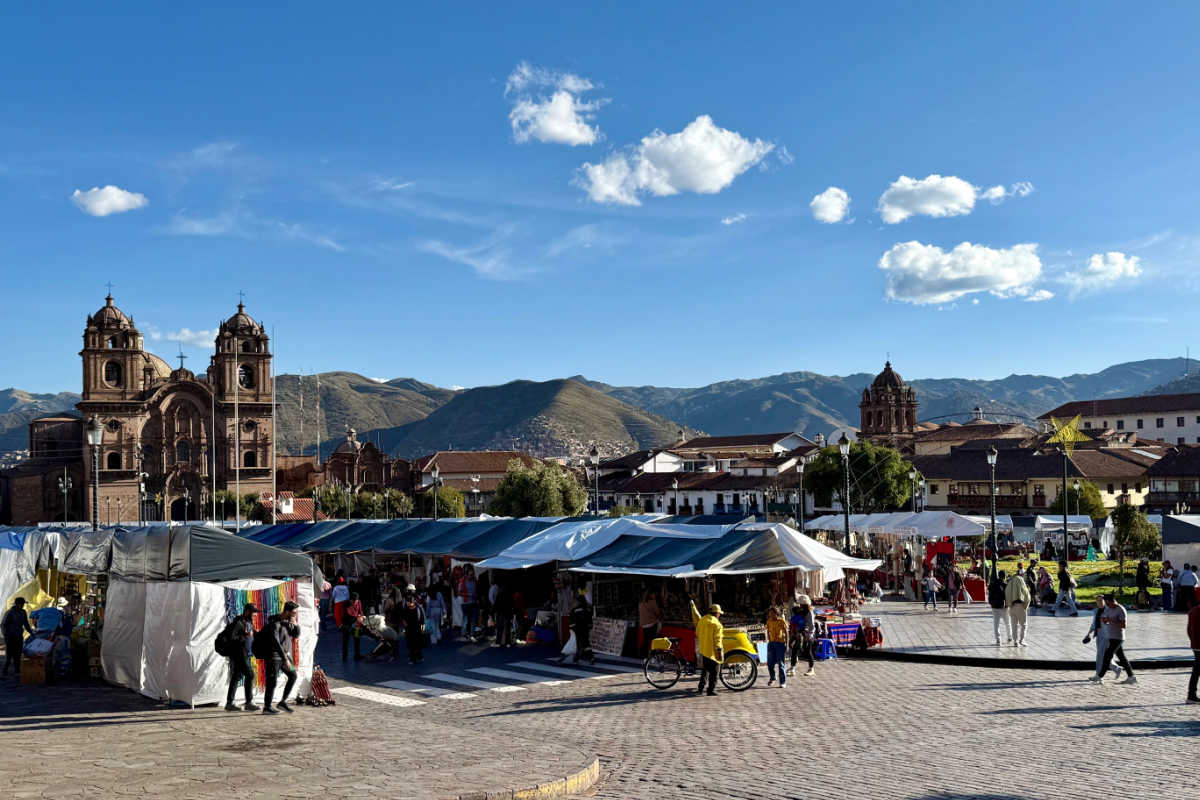
Cusco’s historic center is compact and walkable, though the combination of hills, stairs, and uneven cobblestones can be challenging.
For longer distances, Uber is readily available throughout Cusco. Official registered taxis are safe and inexpensive; short rides within the city cost $1-3. Avoid unlicensed taxis (unmarked vehicles) even though drivers may offer lower prices. When in doubt, ask your accommodation to help with booking.
Many of the sites within central Cusco are walkable (San Blas, Plaza de Armas, San Pedro Market), and using Uber or arranged transportation for day trips offers the perfect balance.
Safety Considerations
Cusco is generally safe for tourists, including families with teens. Petty theft (pickpocketing, bag snatching) occurs in crowded areas like markets and bus stations, but violent crime against tourists is rare.
Standard precautions apply: don’t display expensive electronics unnecessarily, use hotel safes for passports and extra cash, stay aware in crowded spaces, and avoid isolated areas after dark. San Blas, Plaza de Armas, and the main tourist corridors are safe for evening walking.
Where to Stay in Cusco
Inkaterra La Casona
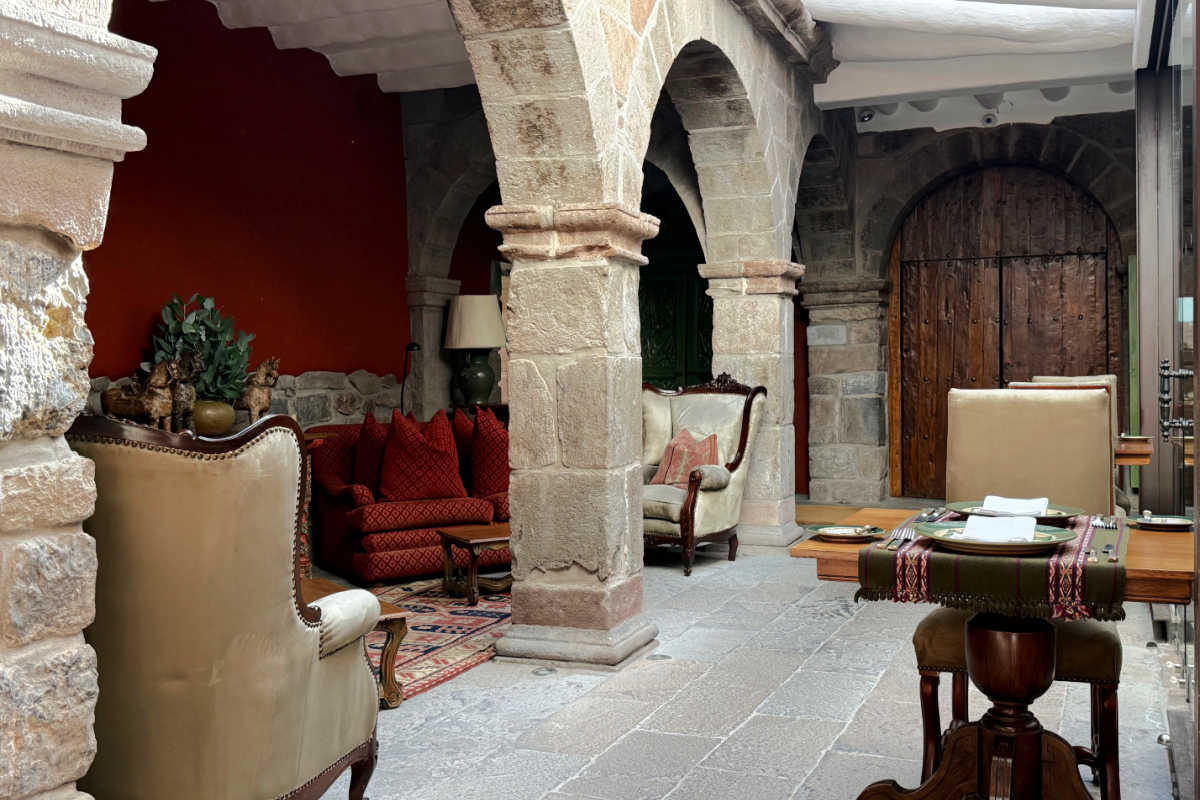
We stayed at Inkaterra La Casona, located in the quiet Plaza de las Nazarenas. It’s a 16th-century mansion with 11 suites surrounding a main courtyard, a restaurant, and a spa. This property has an enviable location as it is within walking distance of Cusco’s historic center and surrounded by shopping and restaurants. Guests can book excursions to tour the city and nearby attractions, and if families need childcare, babysitting services are available.
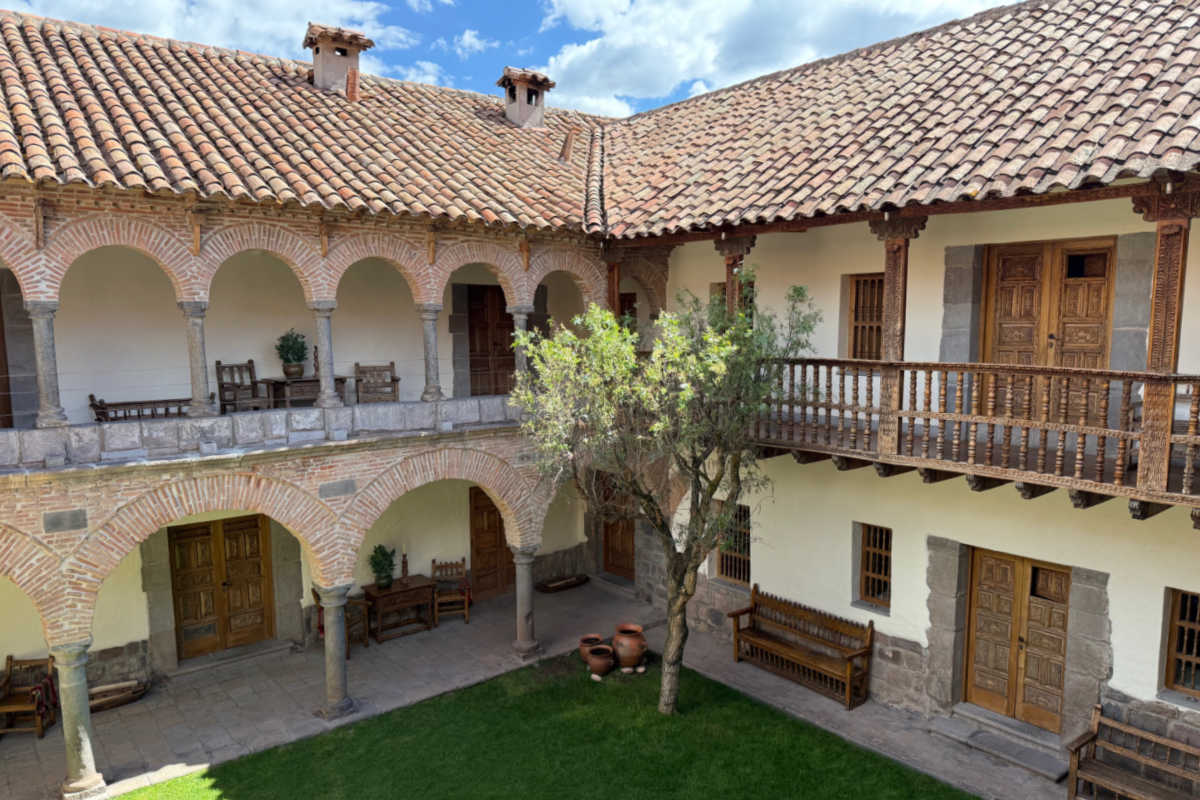
What we loved about this property was its intimacy. Upon arrival, you knock on the large wooden front door and are greeted by the staff. It truly feels like arriving at someone’s home.
We had two of the Balcon Suites, which were quite spacious with a sitting area and fireplace, access to the balcony overlooking the courtyard, and a massive bathroom with a shower and a separate soaking tub.
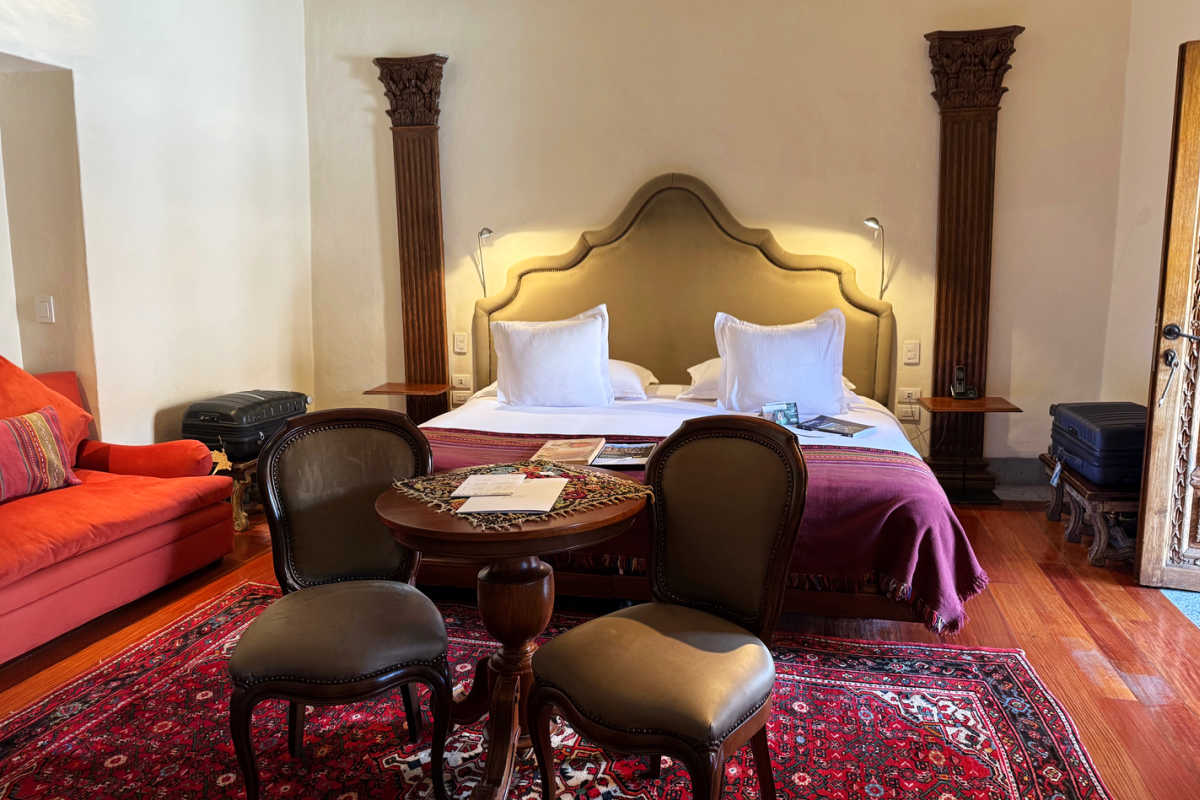
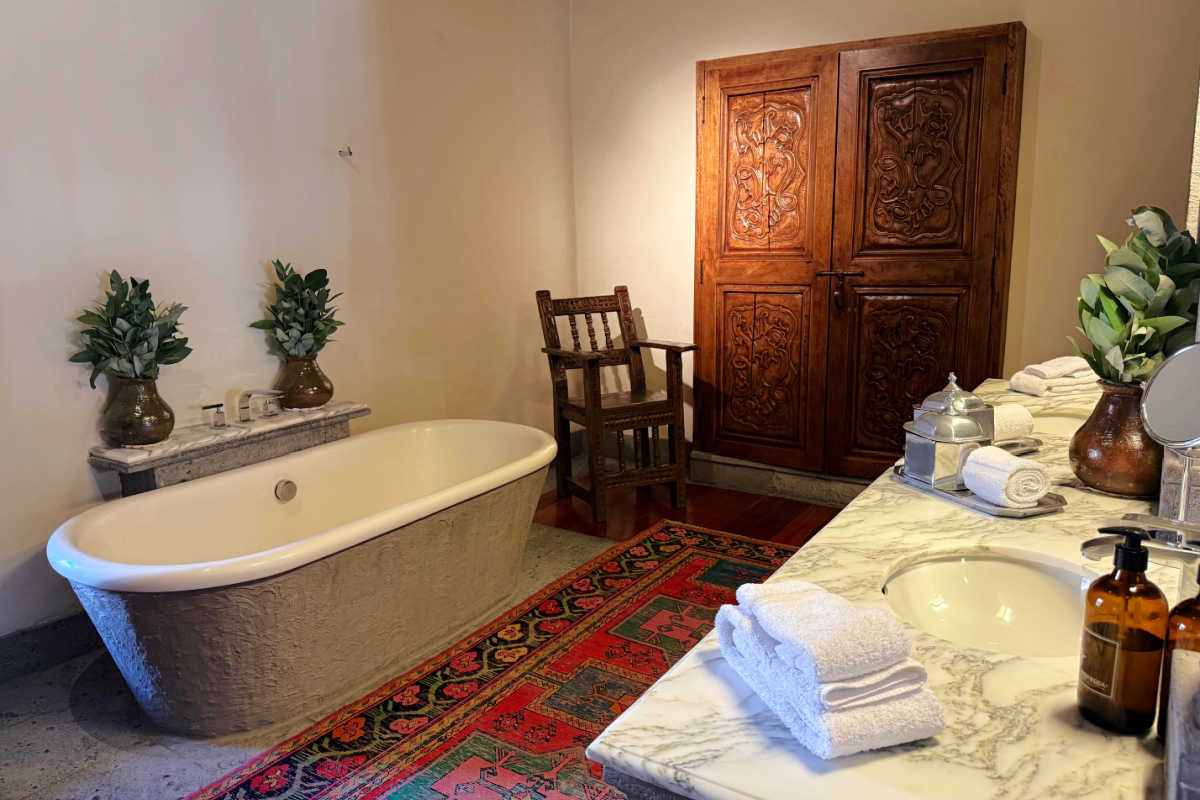
Meals featured a variety of Peruvian cuisine in a cozy (yet formal) dining room. The service we received was amazing, and everything was delicious. You cannot go wrong with a stay at Inkaterra La Casona.

What You Don’t Want to Miss in Cusco with Teenage Travelers
1. Peruvian Cooking Classes
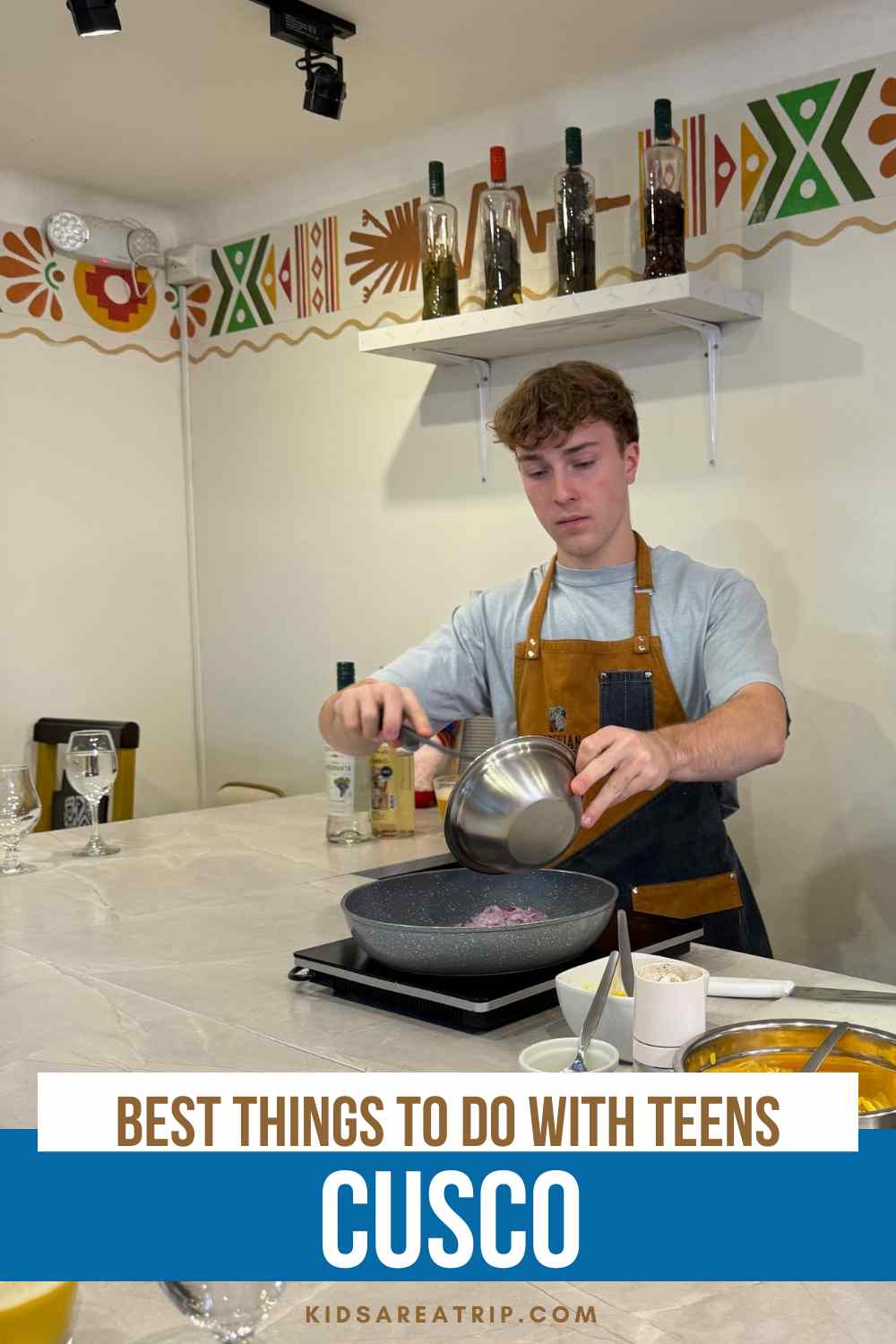
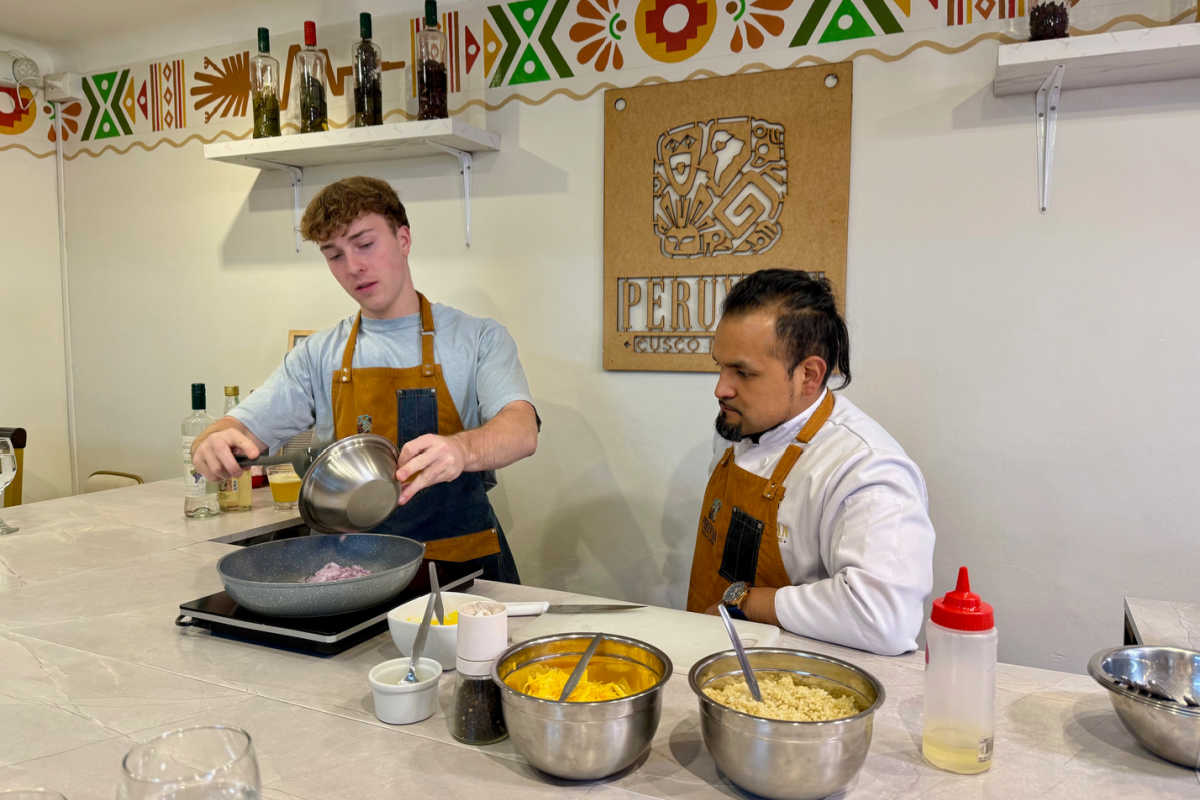
One of the best things to do with older kids is a Peruvian cooking class. Our class included a market visit to the San Pedro Market, where we sampled Peruvian food that included: granadilla, tumbo, cherimoya, lucuma, and paneton. A visit to the local markets is a great way to introduce teens to the daily life of Cuzqueños.
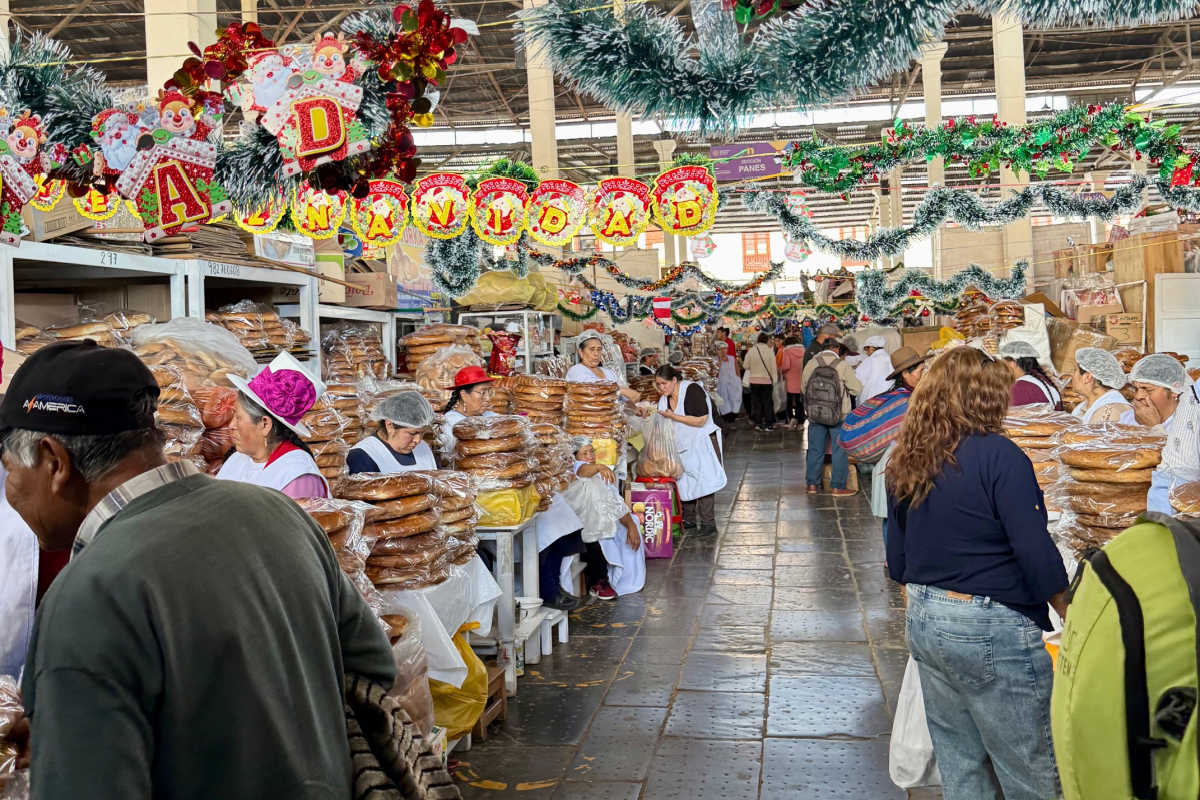
After our market visit, we walked to the chef’s cooking studio, where we learned how to make tamales, ceviche, causa, and cocktails (don’t worry if your teen isn’t 18, they can have a non-alcoholic version). Our family thought this unique experience was one of the best activities of our trip. Book this class HERE.
2. Sacsayhuamán
Sacsayhuamán sits on a hill overlooking Cusco, about 15 minutes by taxi from Plaza de Armas. This complex features some of the largest stones used in any Inca construction, and the largest weighs over 120 tons and stands 18 feet tall. We were all fascinated by the Incas’ ability to build without mortar.
We had so many questions. How did the builders transport stones from quarries miles away using only human power, ropes, and ramps? How did they shape and fit stones so perfectly? It is a truly mind-blowing experience.
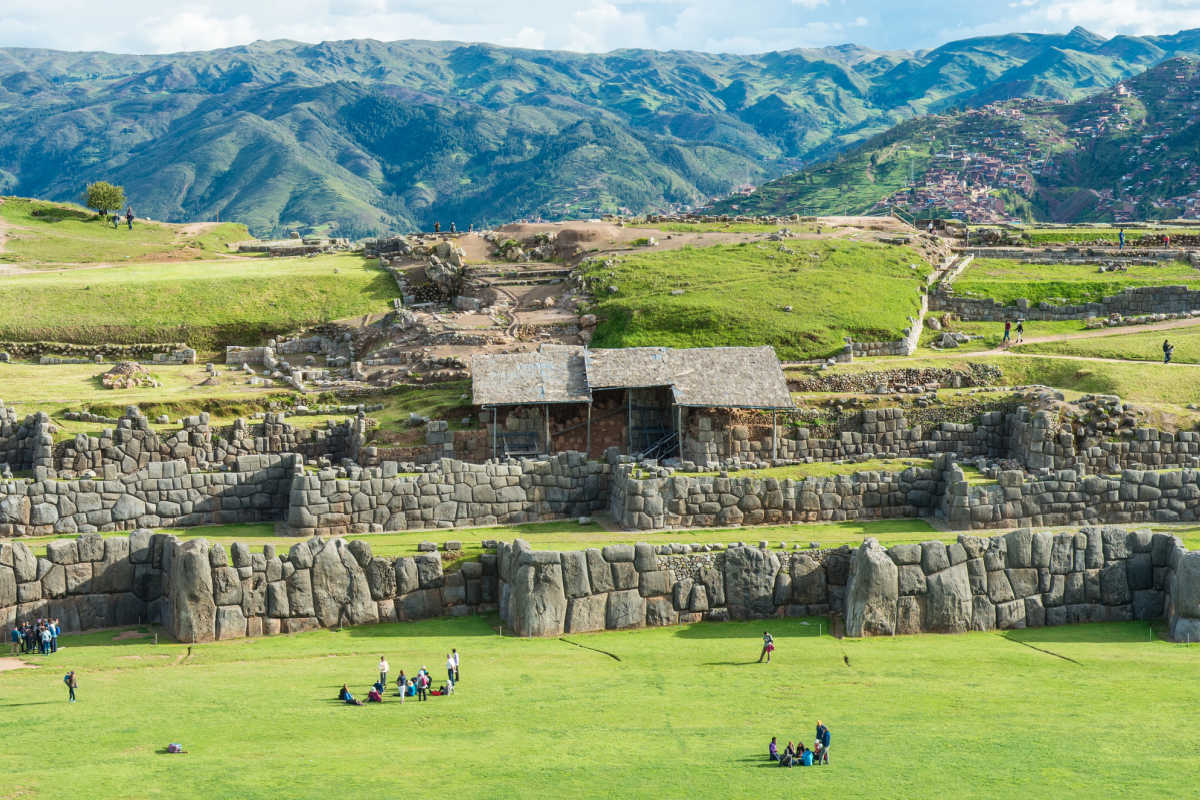
The site offers substantial space for wandering, and the views over Cusco’s red-tiled roofs provide excellent photo opportunities.
Sacsayhuamán is included in the Cusco Tourist Ticket (Boleto Turístico), which costs approximately $40-50 per person and covers entrance fees for 16 sites valid for 10 days. For families planning to visit multiple archaeological sites, this ticket provides better value than individual admissions. If you would rather book a guided tour with transportation, this is the tour we recommend.
3. Historic Center of Cusco
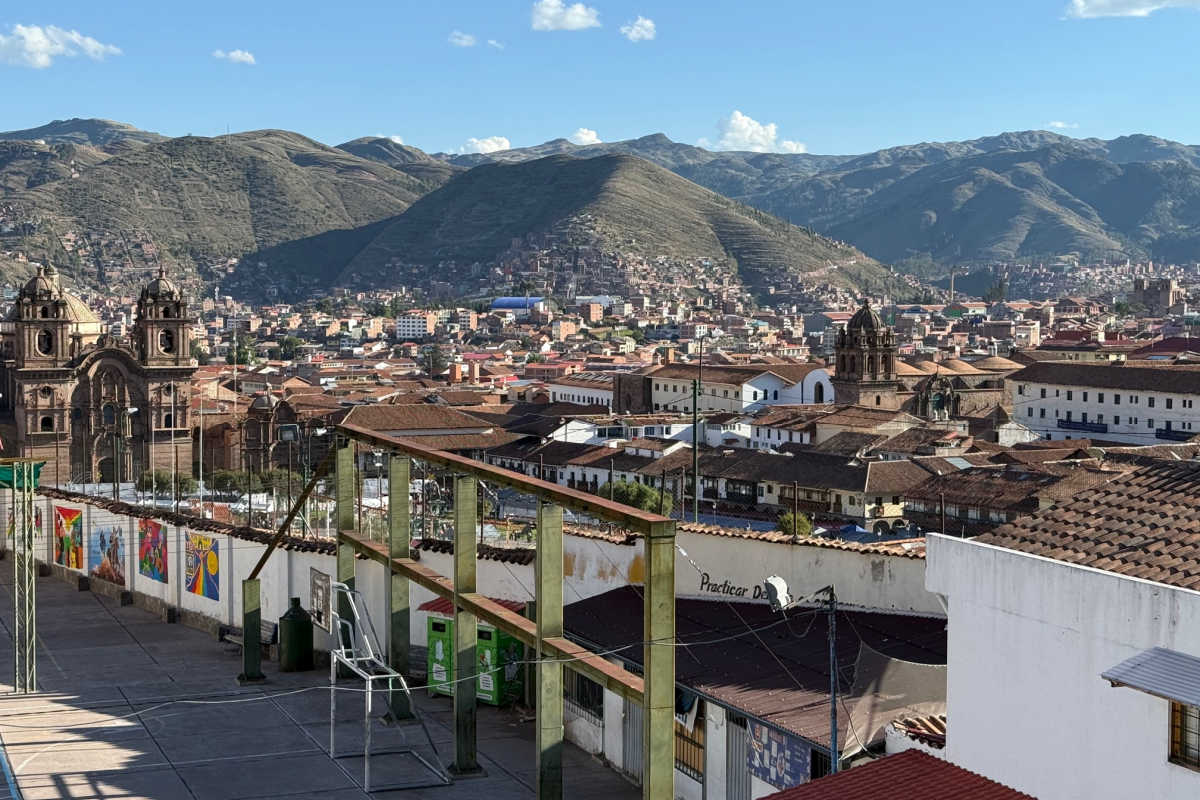
The historic center of Cusco itself earned UNESCO World Heritage designation in 1983 for its remarkable blend of Inca foundations and Spanish colonial architecture.
Don’t miss the following spots:
Coricancha (Temple of the Sun): This was the Incas’ most important temple, once covered in gold leaf with walls of perfectly fitted stone. Over time, it became the foundation for the Santo Domingo church. Earthquakes damaged the colonial structure while Inca walls remained intact, showing the Incas’ superior engineering abilities.
Hatun Rumiyoc Street: The twelve-angled stone embedded in an Inca wall has become an iconic photo opportunity. Beyond the famous hand-carved stone, this street showcases how Spanish colonizers built directly on Inca foundations, unable to replicate the stonework quality. There are plenty of vendors along this street, so just be aware that if you give them attention, they won’t let you walk away easily.
Plaza de Armas: The central plaza sits on what was the Inca ceremonial center. Spanish conquistadors demolished temples and built their cathedral using stones from Sacsayhuamán. The cathedral took nearly 100 years to complete and contains artwork blending Catholic and indigenous symbolism. You can take a self-guided tour for a minimal fee and climb the church’s tower for a view of the square below. Photos are not allowed inside the church.
4. Choco Museo
The Choco Museo (also known as Museo de Chocolate or The Chocolate Museum) operates multiple locations in Cusco and focuses on cacao’s journey from bean to finished chocolate. The educational component covers cacao cultivation, historical significance in Peruvian and Latin American cultures, and chocolate production.
They offer chocolate-making workshops where you can create personalized chocolate bars with Peruvian ingredients like quinoa, coca leaves, native fruits, coffee, and various spices. The workshops run 60-90 minutes and cost approximately $20-30 per person.
The museum portion is free to visit.
5. Museo de Arte Precolombino (MAP)
The Museo de Arte Precolombino is housed in a restored colonial mansion and focuses on pre-Columbian art from 1,000 to 1532 CE. The museum is quite manageable and can be thoroughly explored in 45-60 minutes.
The collection includes gold work, ceramics, textiles, and wood carvings that demonstrate the achievements of ancient Peruvian civilizations. It’s a fascinating look at how the Peruvian cultures evolved through the centuries.
6. Planetarium Cusco
Planetarium Cusco offers evening programs for a look into Incan astronomy and Southern Hemisphere constellations rarely visible from North America or Europe. The experience begins with an outdoor observation session using telescopes, followed by an indoor planetarium show. It’s fascinating to see how Incan civilization used astronomy for agriculture, architecture, and connecting with the spiritual world.
Programs run approximately 90 minutes and start around 6:30 PM or 7:30 PM, depending on the season.
Transportation from Cusco is included in most packages, as the planetarium sits outside the city center. Tours cost approximately $20-25 per person and should be booked in advance, as group sizes are limited.
7. San Blas Neighborhood
The San Blas neighborhood is Cusco’s artisan quarter, uphill from Plaza de Armas. The area is filled with galleries, craft shops, cafes, restaurants, and street vendors. This neighborhood’s compact size makes it suitable for teens to explore independently. We felt very comfortable letting our teen and young adult go out on their own.
Notable stops include the twelve-angled stone (Piedra de los Doce Ángulos) on Hatun Rumiyoc Street and the San Blas Plaza with its colonial church and surrounding cafes popular with younger travelers.
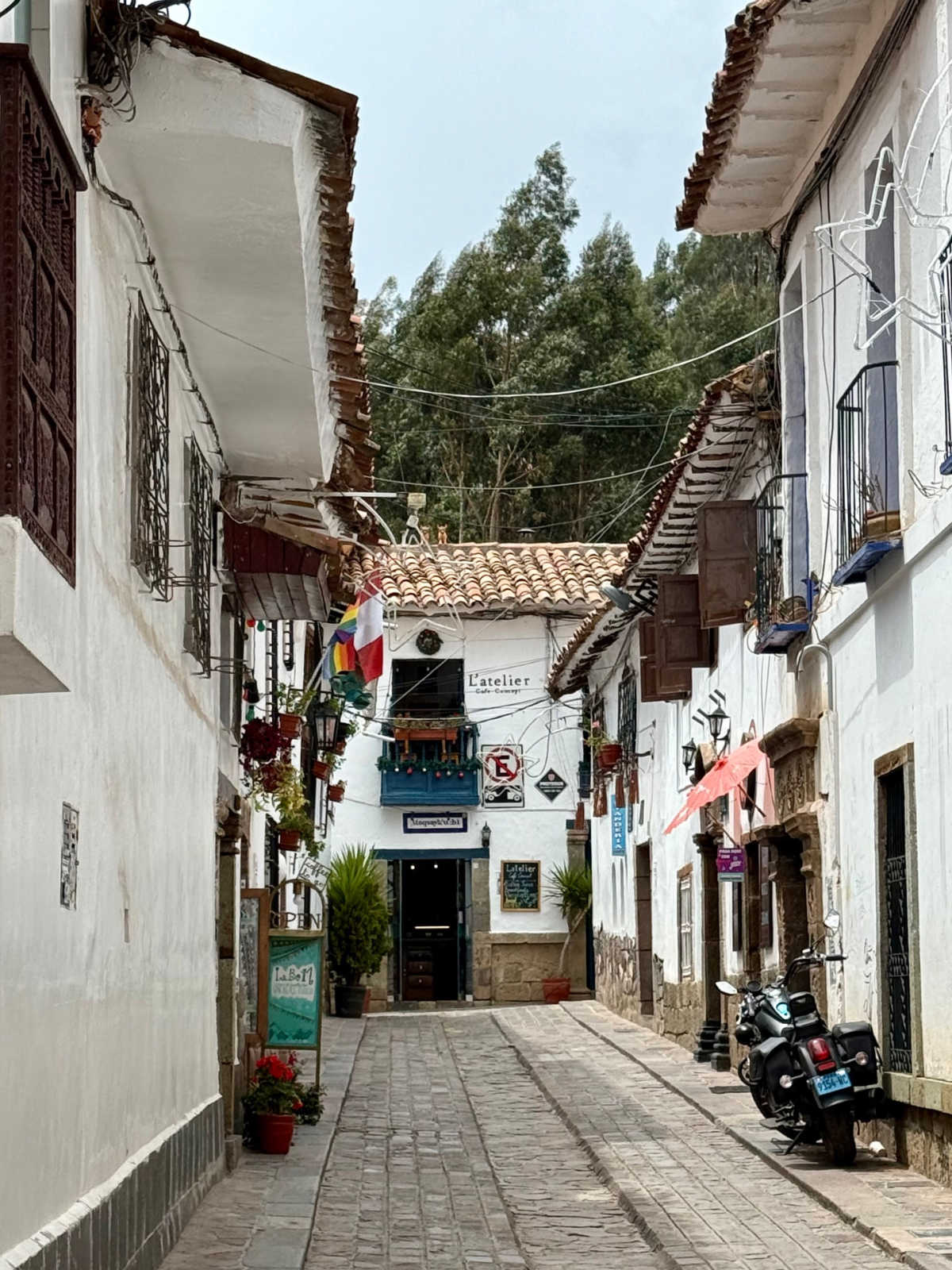
While exploring, don’t miss Siete Borreguitos Street (Seven Little Lambs Street), a narrow pedestrian street that is one of Cusco’s most Instagrammable spots. The steep cobblestone street lined with blue-painted buildings creates an Instagram-worthy perspective that looks distinctly Cusco. The street showcases the city’s colonial architecture with Inca foundations visible in the lower wall sections.
8. Qorikancha Archaeological Site and Museum
Qorikancha (also spelled Coricancha, meaning “Golden Temple” in Quechua) is one of Cusco’s most important sites for understanding Inca civilization and the Spanish conquest. This was the Inca Empire’s most sacred temple, dedicated to Inti (the sun god). It was covered in sheets of gold that reflected sunlight throughout its interior chambers.

When Spanish conquistadors arrived, they were astounded by the wealth and decided to melt down the gold to send to Spain. Then, they built the Santo Domingo church and monastery directly on top of the Inca foundations, creating one of the most obvious demonstrations of colonialism you’ll find anywhere in South America.
As you walk through, you’ll be amazed by the Incas’ curved walls built without mortar, and stones shaped so precisely that they’ve survived multiple earthquakes. When earthquakes struck in 1650 and 1950, the colonial portions suffered severe damage while the Inca stonework remained relatively intact.
The on-site museum displays artifacts recovered from Qorikancha and provides context about the temple’s original function, astronomical alignments, and religious significance. There are underground chambers that create dramatic photo opportunities teens are sure to love. The site can be explored in 45-60 minutes with a guide, or 30-40 minutes independently with signage providing basic information.
Entry costs approximately $4-5 per person (separate from the Cusco Tourist Ticket). The site is an easy walk from Plaza de Armas.
9. Weaving Class in the Sacred Valley
If your teens are interested in art or fashion, consider visiting a textile workshop in the Sacred Valley. These workshops, led by master weavers, teach the complete process of creating traditional Peruvian textiles from raw materials to finished product.
The experience typically begins with natural dyeing instruction, where participants learn how workers extract colors from plants, minerals, and insects. Certain bugs produce brilliant reds, chilca leaves create yellows, and q’olle plants yield greens. These are all colors that have been used for centuries in Andean textiles. Teens will love the opportunity to experiment with different combinations and create their own colors.
These workshops usually include lunch with local families and hotel pickup from Cusco.
10. Cusco Pottery Class
Pottery classes in Cusco introduce participants to working with clay and traditional designs. Instructors will explain the symbolism behind common patterns, and families can create pieces that can be shipped or carried home in their luggage.
11. Sapantiana Aqueduct
Located about 20 minutes from central Cusco in the Sapantiana district, this colonial-era aqueduct represents Spanish engineering from the 1700s, and still carries water today. For families looking to get away from the crowds, Sapantiana is a peaceful half-day excursion. The neighborhood surrounding the aqueduct provides glimpses of local Cusco life away from the tourist zone.
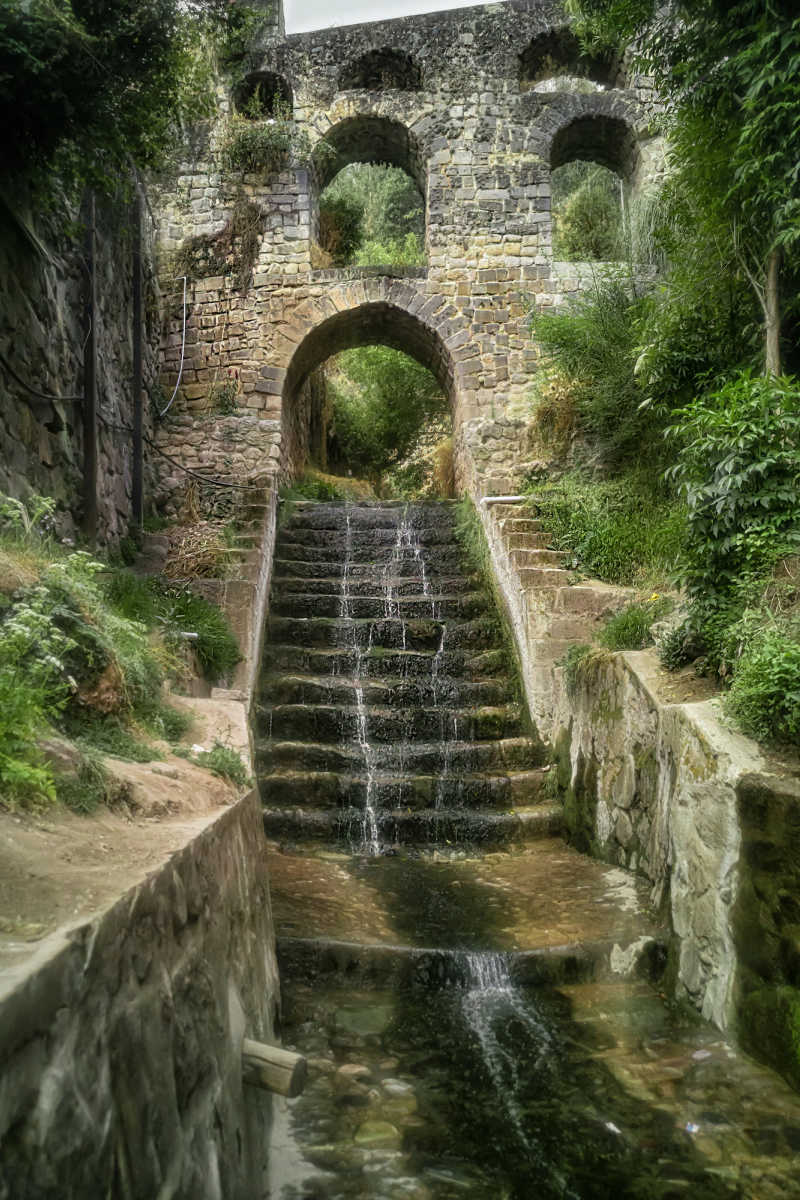
The aqueduct area includes walking paths and small parks where families can rest while teens explore or photograph the structure from multiple angles. This isn’t a must-see attraction, but it’s an option for families who’ve covered major sites and want to experience Cusco’s quieter side.
Day Trips from Cusco for Families with Teens
Cusco is one of the best places to use as a home base for exploring the Sacred Valley and beyond. If you’re planning a family vacation to Peru, know that this area is where you will spend most of your time. Some of the highlights of the Sacred Valley of the Incas (Valle Sagrado) include:
- Moray
- Maras
- Pisac
- Chinchero
- Manos de la Comunidad
- Ollantaytambo
- Machu Picchu
The Sacred Valley extends northwest of Cusco along the Urubamba River and sits at a lower elevation (9,000 feet), making it ideal for first or second-day activities while getting used to the altitude.
Moray Agricultural Terraces
A trip to Moray can easily be paired with a visit to Maras and Chinchero. Consider booking a private tour with travel specialists that allows you to explore these sites at your own pace. Another idea is to take an ATV tour from Cusco that allows the whole family to experience these destinations uniquely.
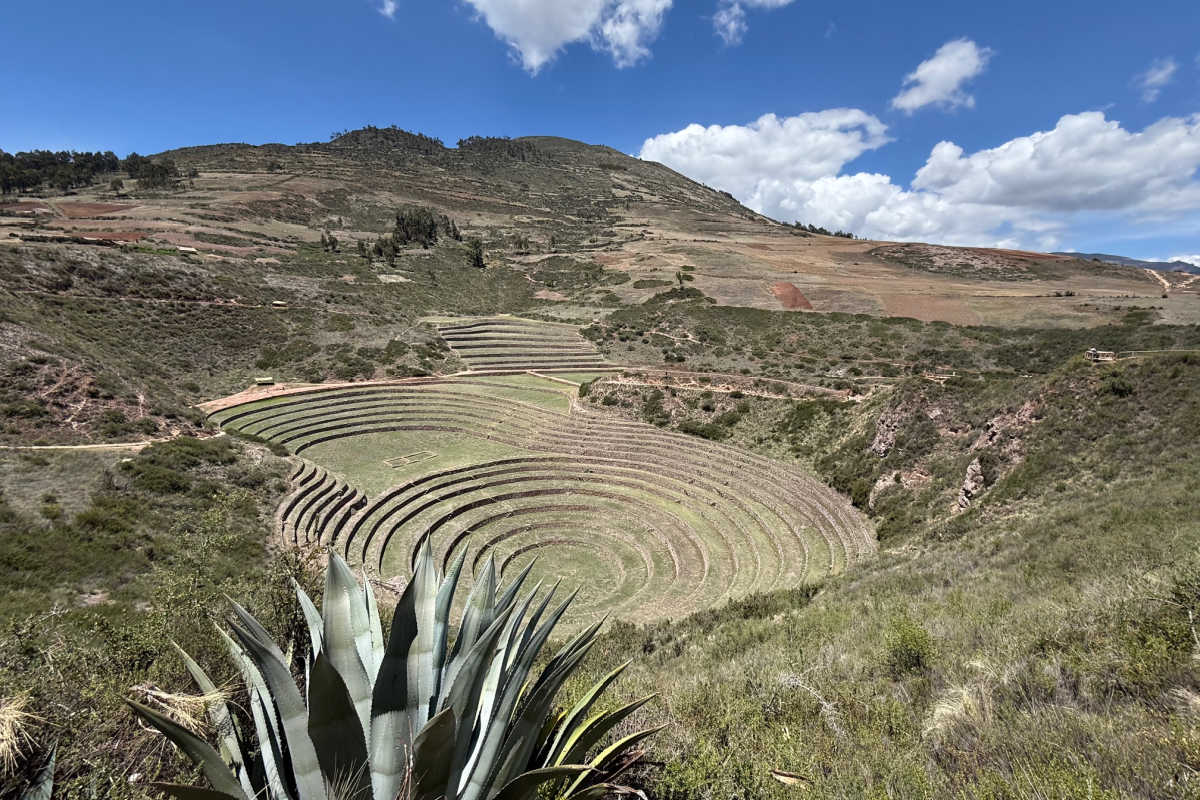
Moray features circular terraces that descend like an amphitheater, but it’s not a music venue. Incan engineers created microclimates at the different levels, with temperatures changing up to 60°F between the top and bottom terraces. This allowed them to experiment with crop cultivation at various altitudes. It takes about 30 minutes to an hour to visit the site.
Maras Salt Mines
The Maras salt mines (Salineras de Maras) feature approximately 3,000 salt pools, creating stunning geometric patterns that are made for TikTok. Teens appreciate this site because it’s visually stunning and easy to navigate.
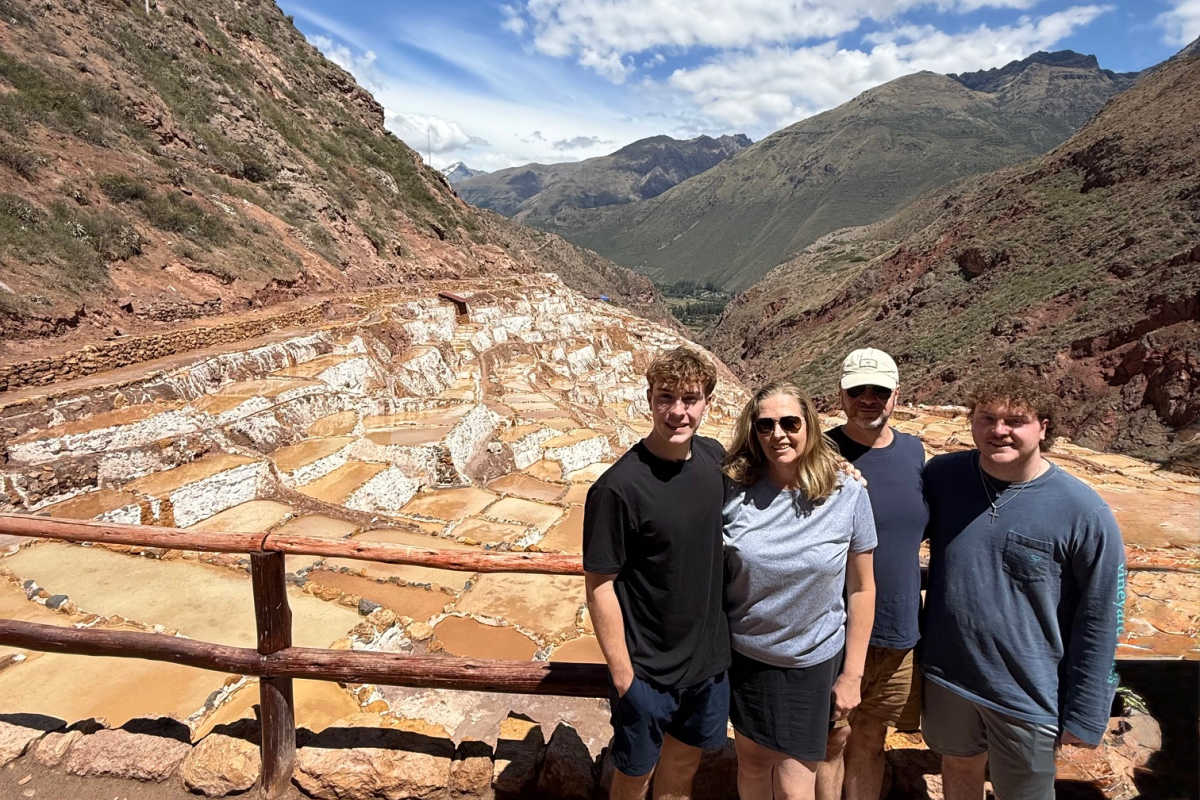
The salt comes from a warm spring that originates in the mountains. From there, it is channeled into shallow pools where evaporation leaves behind salt crystals. Families can purchase various salts at the site, and it is cheaper here than in Cusco city.
Pisac
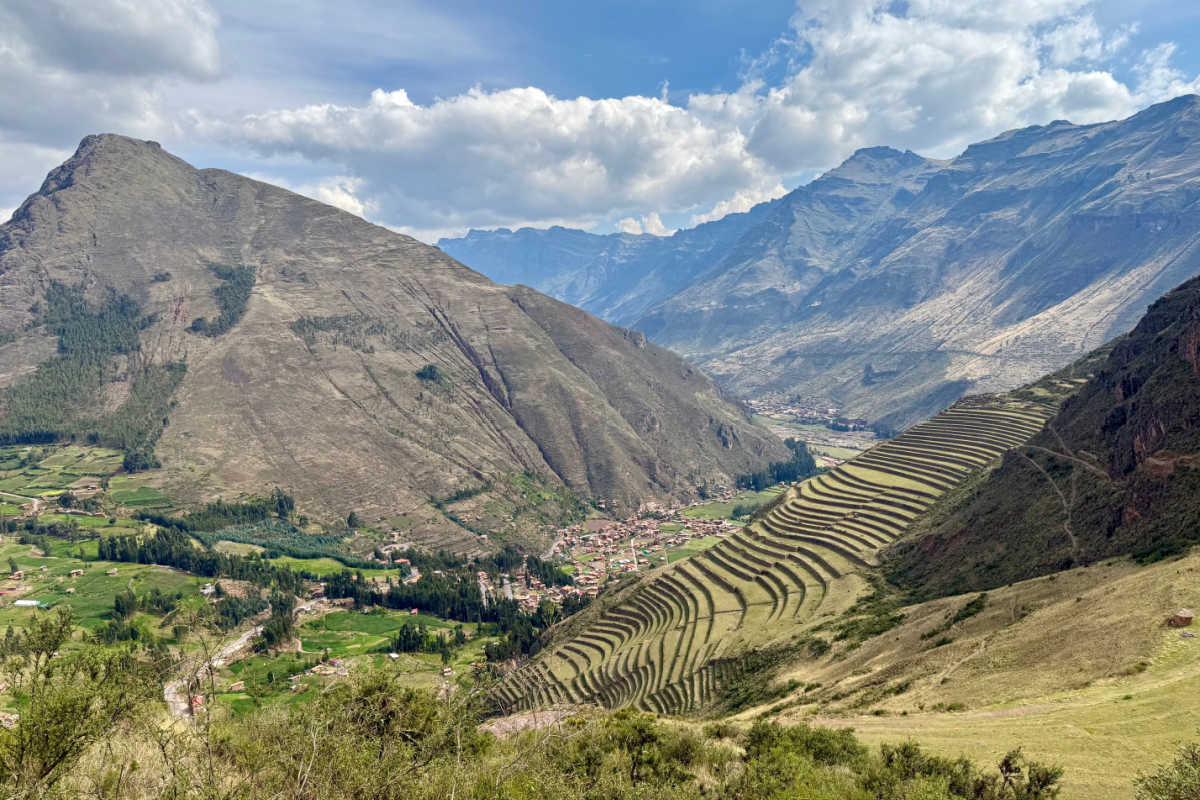
Pisac is about 20 miles from Cusco and takes about 45 minutes by car. The town has a popular Sunday market (smaller ones operate on Tuesday and Thursday) that fills the town plaza with vendors selling textiles, ceramics, jewelry, and produce. It’s a great place to shop for souvenirs and alpaca wool items, and less crowded than the Cusco markets.
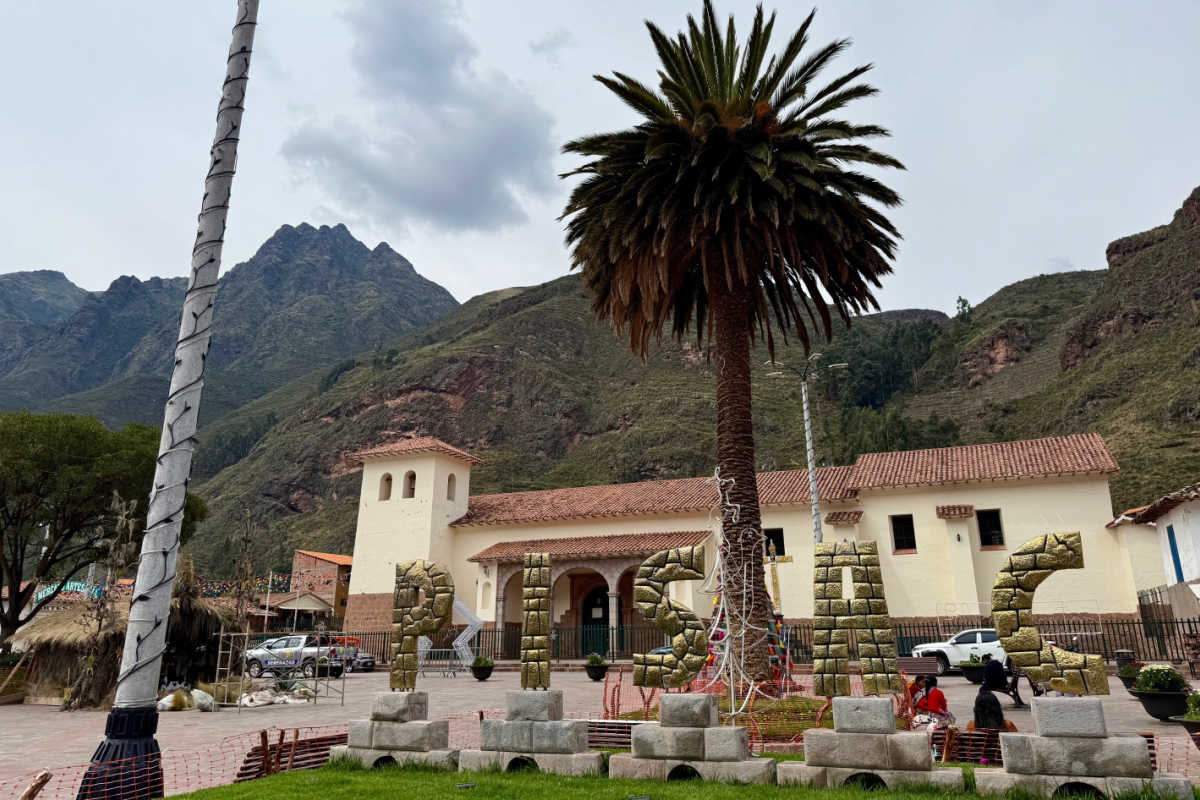
Above the town, Pisac’s archaeological site features more agricultural terraces and cliff-side tombs. The ruins are less crowded than Machu Picchu and Moray but showcase similar Inca architecture. The site requires moderate hiking, but the views are worth it.
Chinchero
Chinchero, located in the Sacred Valley about 18 miles from Cusco at 12,500 feet, combines Inca ruins with cultural activities. The town sits on Inca terraces and foundations, with a colonial church built atop an Inca palace.
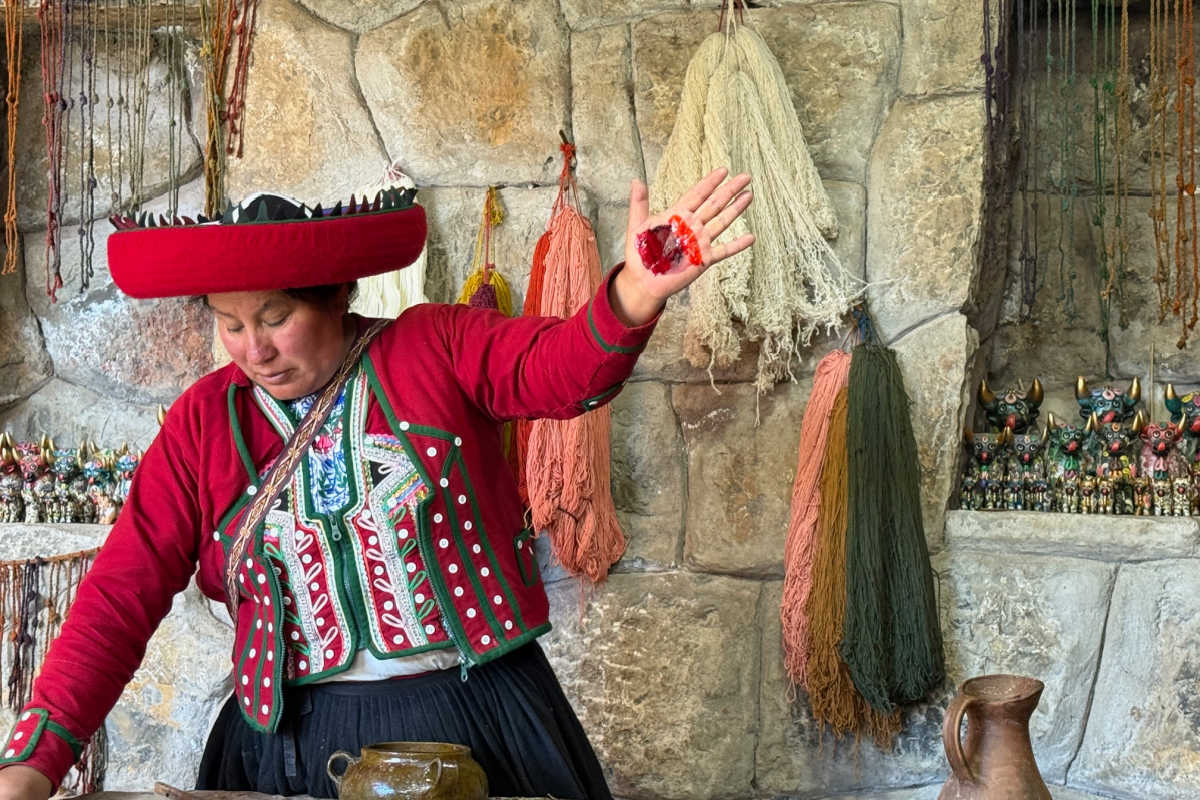
Different shops in the area offer weaving demonstrations by local artisans, and the town’s Sunday market features Quechua-speaking residents conducting business in traditional dress. The market sells produce, goods, and prepared foods as well as souvenirs.
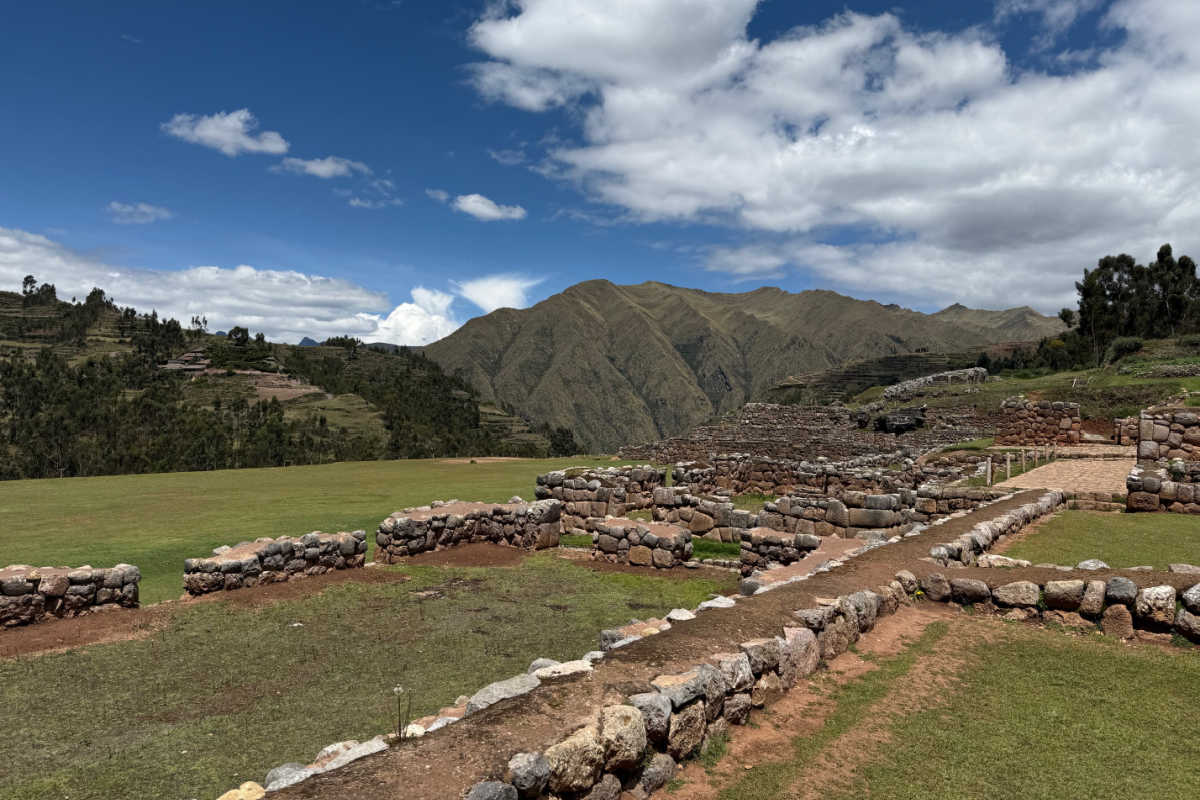
The archaeological site is a combination of ruins, working terraces, and a colonial church. Most Sacred Valley tours include Chinchero. Independent visits require approximately one hour by taxi or colectivo (shared van) from Cusco.
Manos de la Communidad
Instead of visiting Chinchero, families can work with a local tour operator to visit Manos de la Communidad, an animal farm and showcase of the Quechua textile industry. If you’re looking for kid-friendly activities, this is the one we recommend, because it works for both younger and older children.
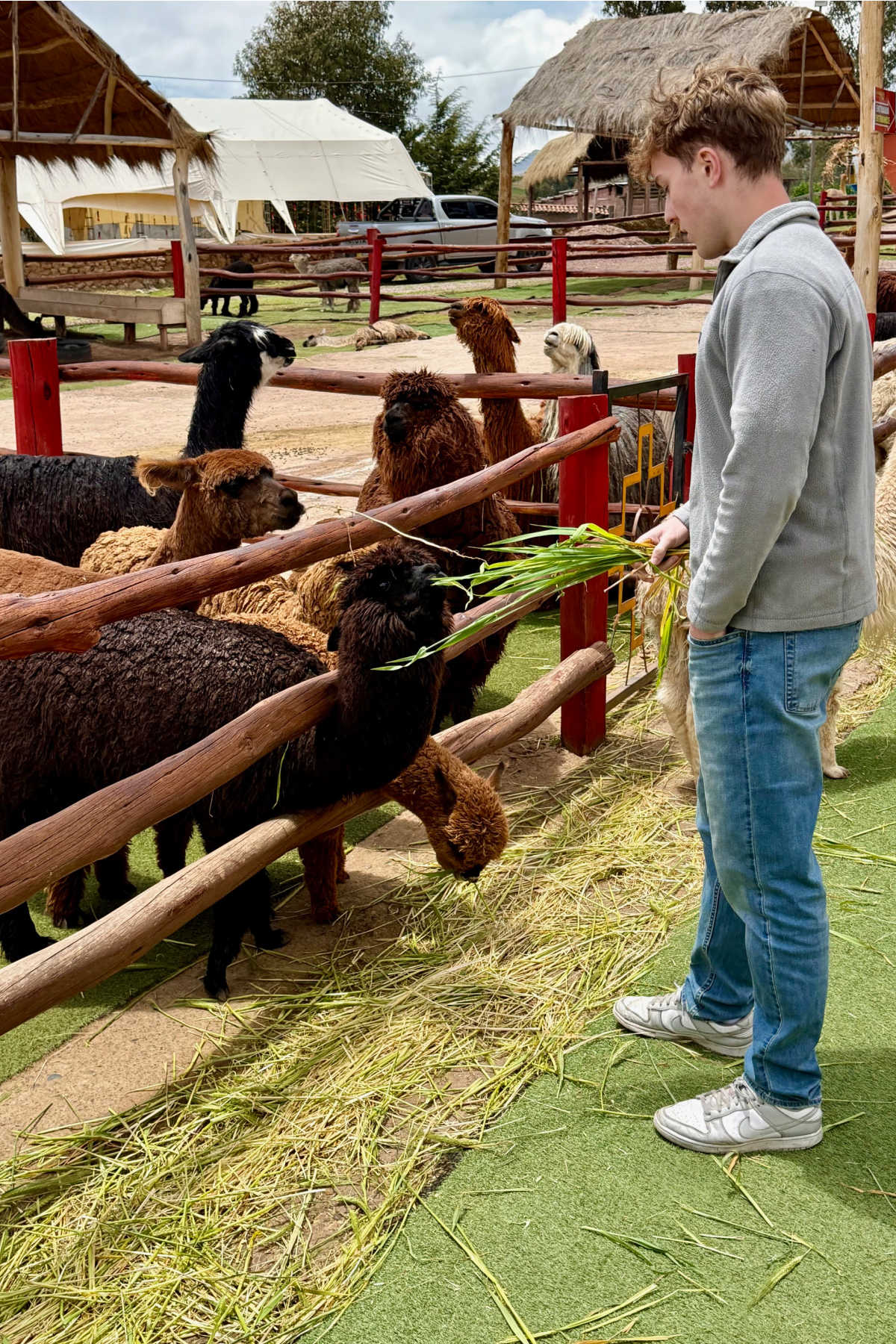
Located in the community of Ccaccaccollo, about 45 minutes from Cusco, this community-based tourism initiative provides interaction with Quechua families who use traditional textile practices using alpacas, vicuñas, and llamas to make their wool.
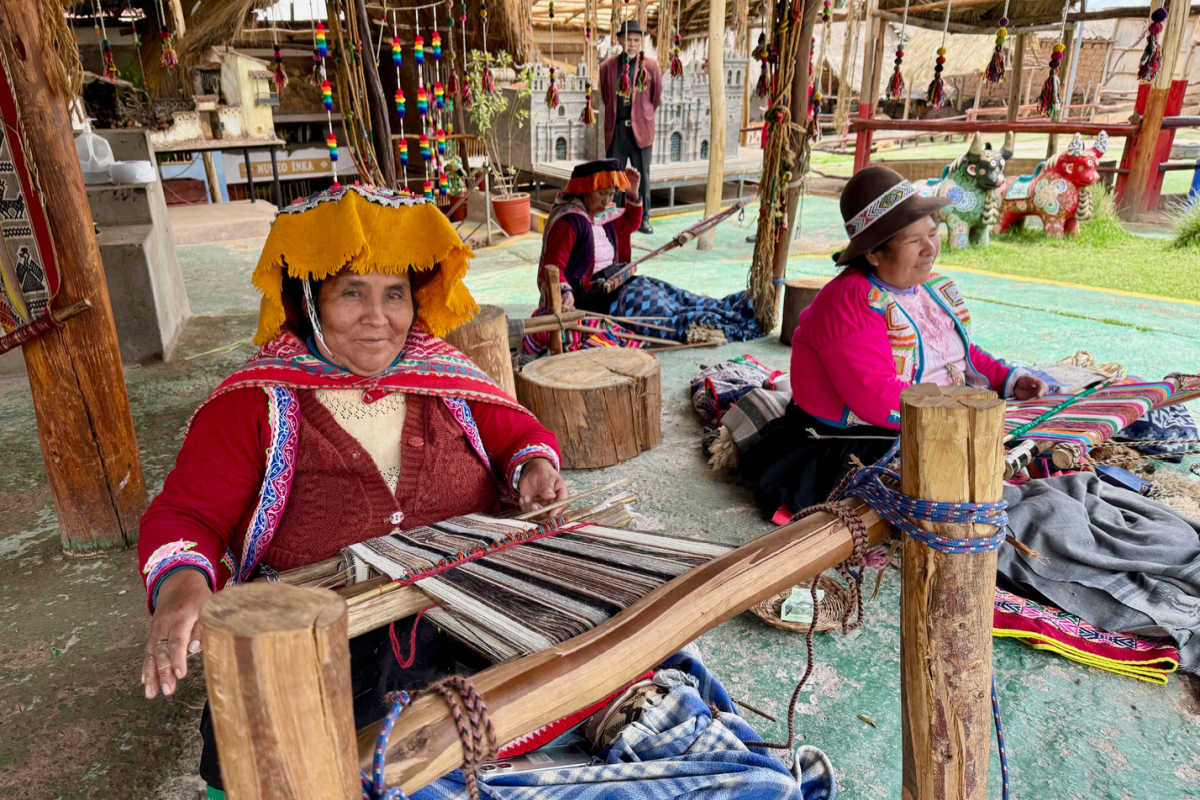
The experience typically starts by meeting the alpacas and llamas, and learning about their care and importance in Andean life. Teens can feed the animals, observe fiber shearing (typically November-December), and understand the complete process from animal to finished textile. Afterward, families can shop the massive store for everything from sweaters to scarves and donate directly to the community through purchases.
Ollantaytambo
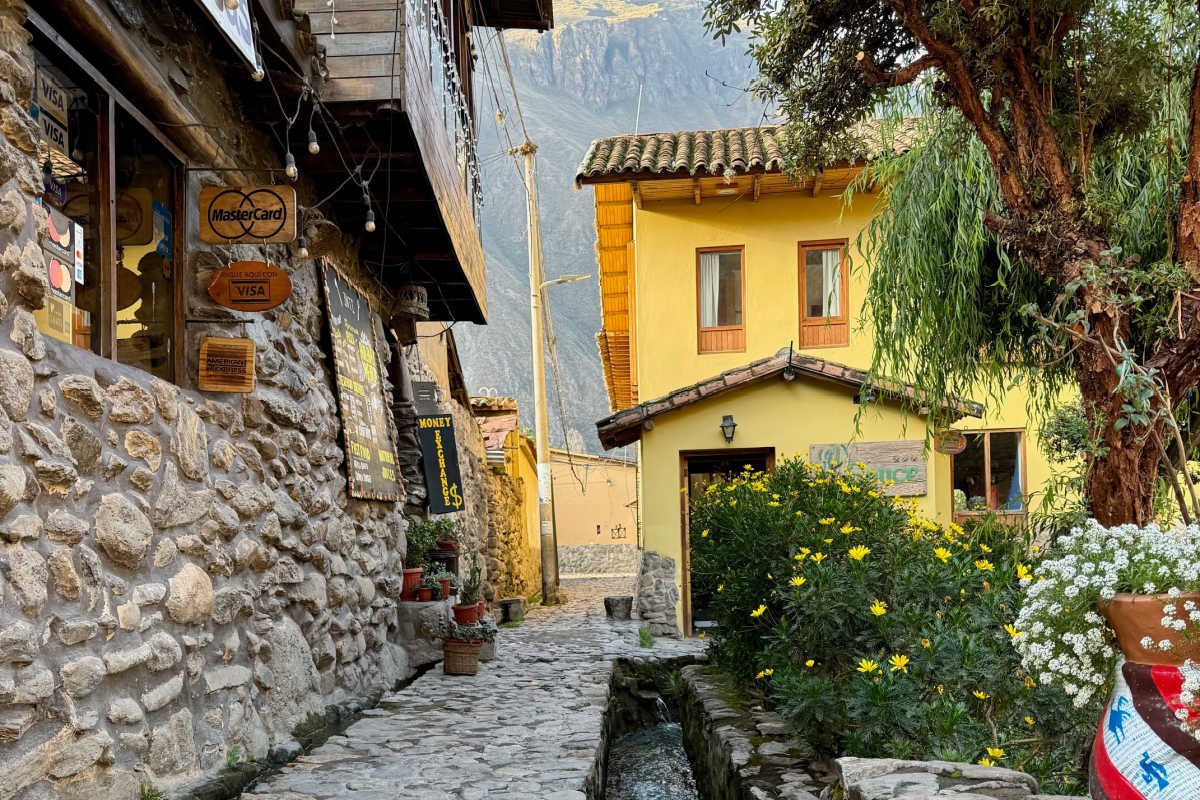
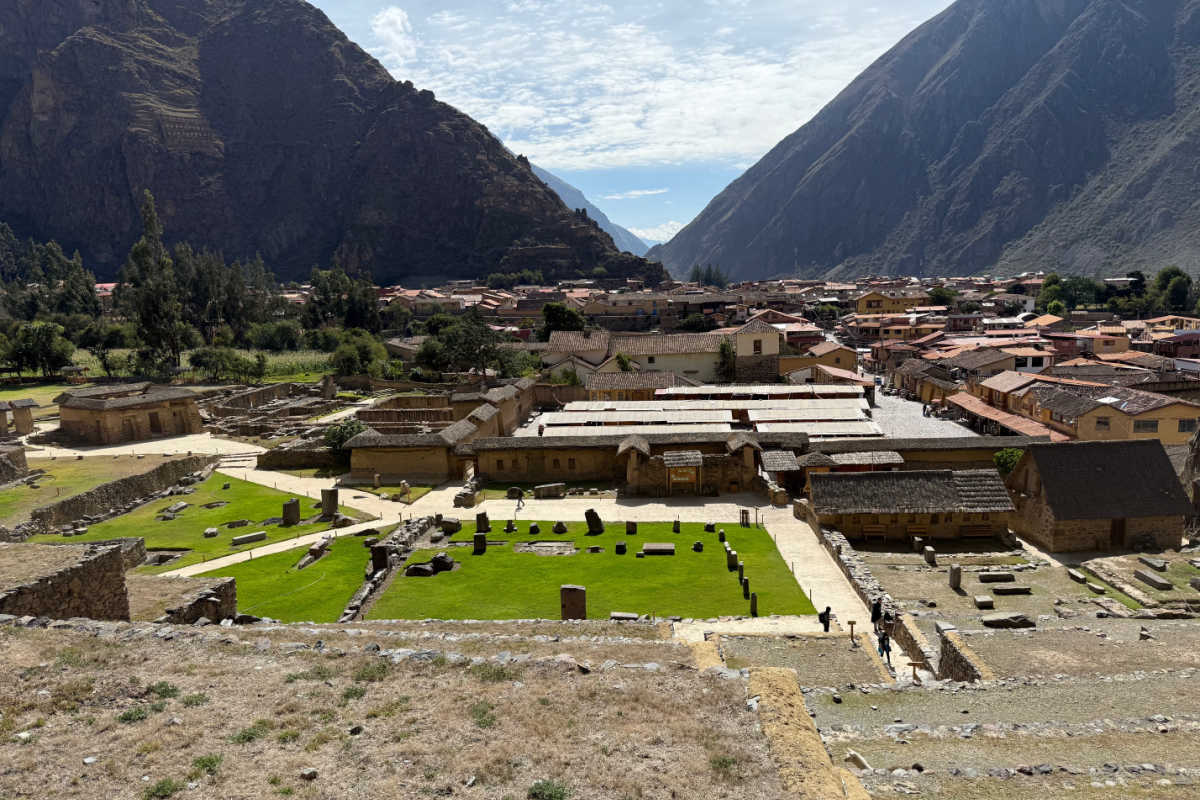
Ollantaytambo distinguishes itself from other archaeological sites because it’s a living town where residents live in homes built on Incan foundations, using original water channels and street layouts. It’s a great overnight stop on the way to Machu Picchu since the trains (both Peru Rail and Inca Rail) leave from here.
Ollantaytambo’s fortress complex requires a steep climb, but you’re rewarded by impressive views over the town and the scenic Sacred Valley. It’s a solid overview of this amazing man-made city.
The town itself offers opportunities for independent exploration, with artisan shops, small cafes, and narrow streets where teens can wander on their own.
Machu Picchu
No discussion of Cusco with teens would be complete without mentioning Machu Picchu, one of the Seven Wonders of the World. Machu Picchu sits approximately 50 miles (80 kilometers) northwest of Cusco but requires either a four-day trek on the Inca Trail or a train journey. Most families opt for the train from Ollantaytambo or Poroy station to Aguas Calientes (the town below Machu Picchu), followed by a bus ride up the winding mountain road.
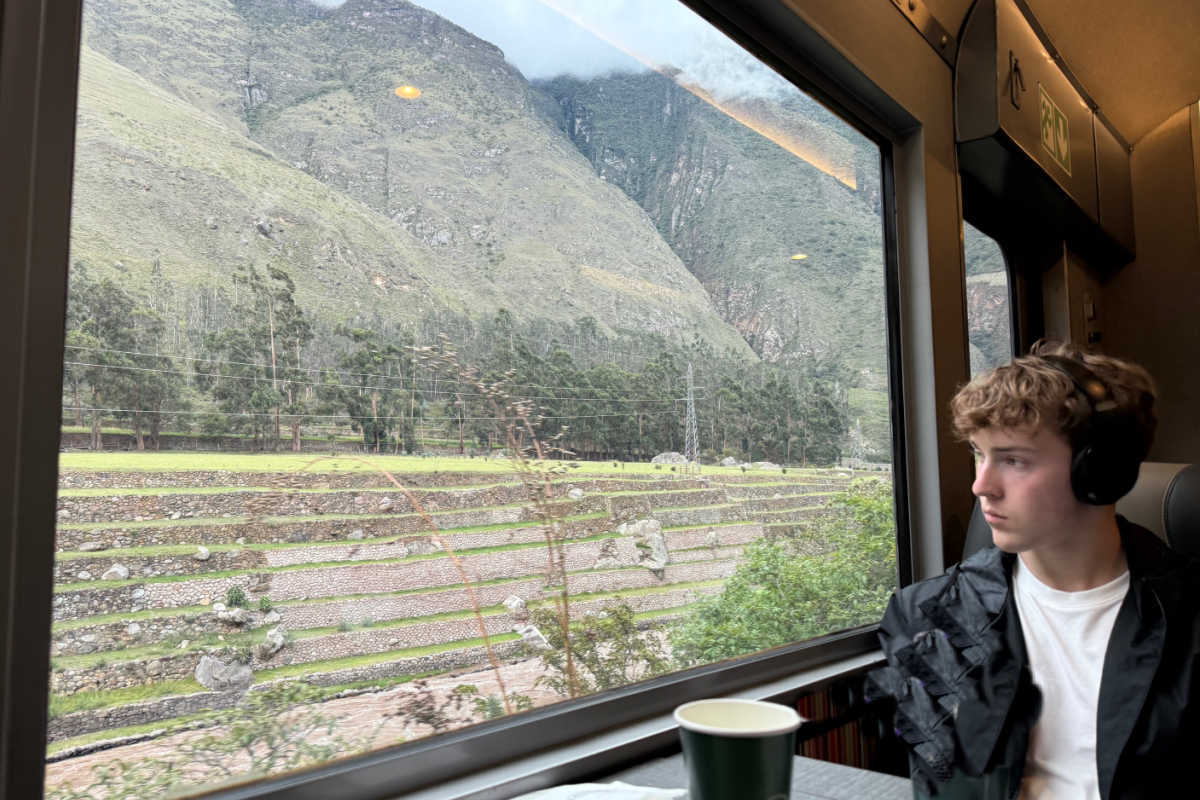
The train follows the Urubamba River through dramatic gorges from Cusco to Ollantaytambo to Aguas Calientes. You must purchase your train tickets in advance. Peru Rail is a basic, traditional train journey, while Inca Rail offers dancers, food, and music. Both offer fabulous views.
Tickets to Machu Picchu must be purchased in advance and include specific entry times. Morning slots (6:00 AM, 7:00 AM, 8:00 AM) offer better weather and light but require extremely early departures from Cusco. Afternoon entries (noon, 1:00 PM, 2:00 PM) allow more reasonable morning starts but may encounter clouds or rain.
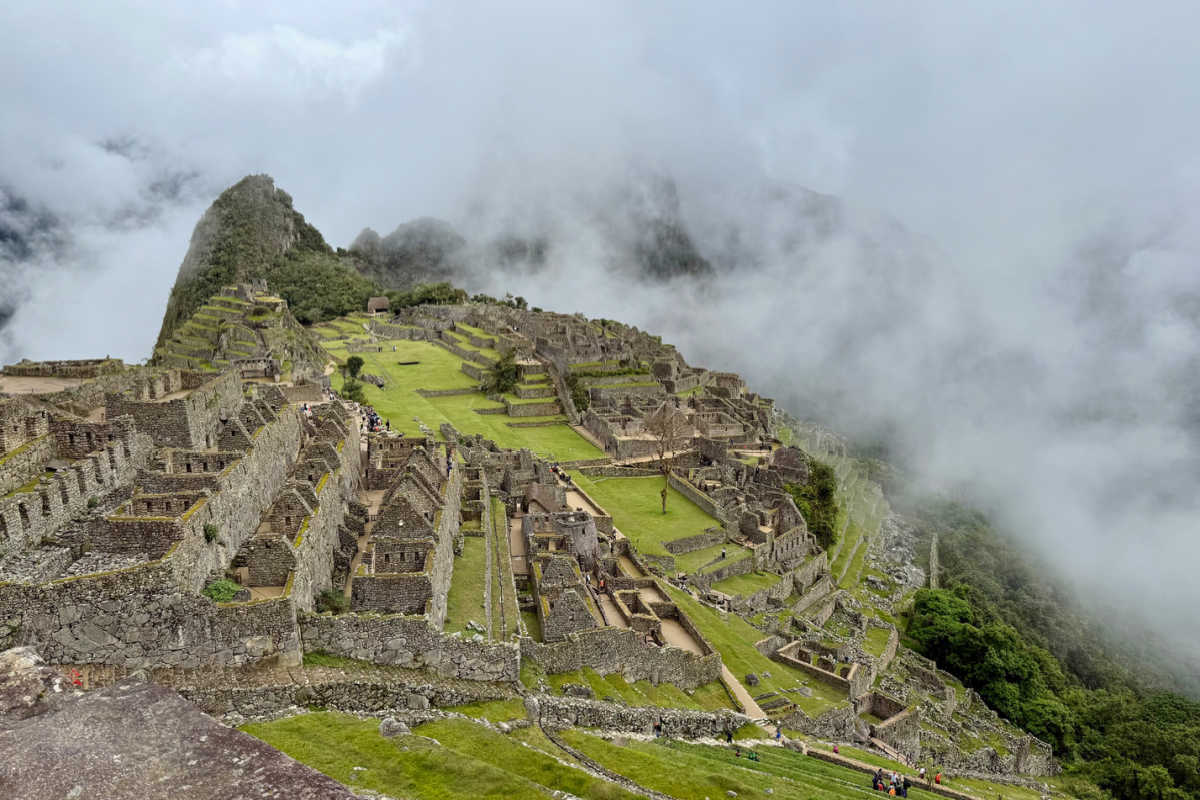
Note: When traveling during the rainy season (November to March), the mountain may be fogged in early in the morning. This happened to us (we had an 8:00 AM slot), but by 9:30, the clouds parted so we could see the Citadel.
Consider staying overnight in Aguas Calientes (we stayed at Inkaterra Machu Picchu Pueblo), which allows for a very early entry to Machu Picchu when crowds are smallest, and llamas graze the terraces. This is a better way to experience the site, rather than visiting at midday with hundreds of tourists.
Machu Picchu Tips
- Hire a private guide for your family rather than joining large group tours. There are guides available in Aguas Calientes and at Machu Picchu, but we recommend booking one in advance.
- There are multiple circuits to explore. Be sure to research the differences in the Machu Picchu circuits to choose the right one for your group. This can be a full-day excursion, or you can visit for a couple of hours. We chose circuit 2-B, which allowed us to see the classic view of the Inca Citadel and the ancient buildings on the lower terrace. In hindsight, I think the teens would have liked hiking Huanya Picchu (the smaller mountain), which is circuit 3-A. You can do both if you want.
- Round-trip train tickets from Ollantaytambo cost $70-140 per person, depending on train class. Buses between Aguas Calientes and the Machu Picchu entrance run $10-15 per person each way, and entrance tickets cost $50-60 per person. There are tours from Cusco that include transportation and admission if you choose to go that route.
- Tickets often sell out weeks in advance, particularly during peak season (May-September). Book as early as possible, especially if adding Huayna Picchu or Machu Picchu Mountain hikes, which have much more limited availability.
- No food is allowed inside Machu Picchu, and re-entry isn’t permitted. There’s a toilet before you enter the trail; be sure to use it.
Best Time to Visit Cusco
Cusco’s dry season (May through September) offers the most sunny days, but this period brings peak tourist crowds and higher prices. Sites like Machu Picchu and Rainbow Mountain become congested, and popular restaurants require reservations.
Shoulder seasons (April, October) provide reasonable weather with fewer tourists. Families who don’t mind occasional rain might prefer this timing as the city feels less overwhelmed and locals have more time for genuine interactions.
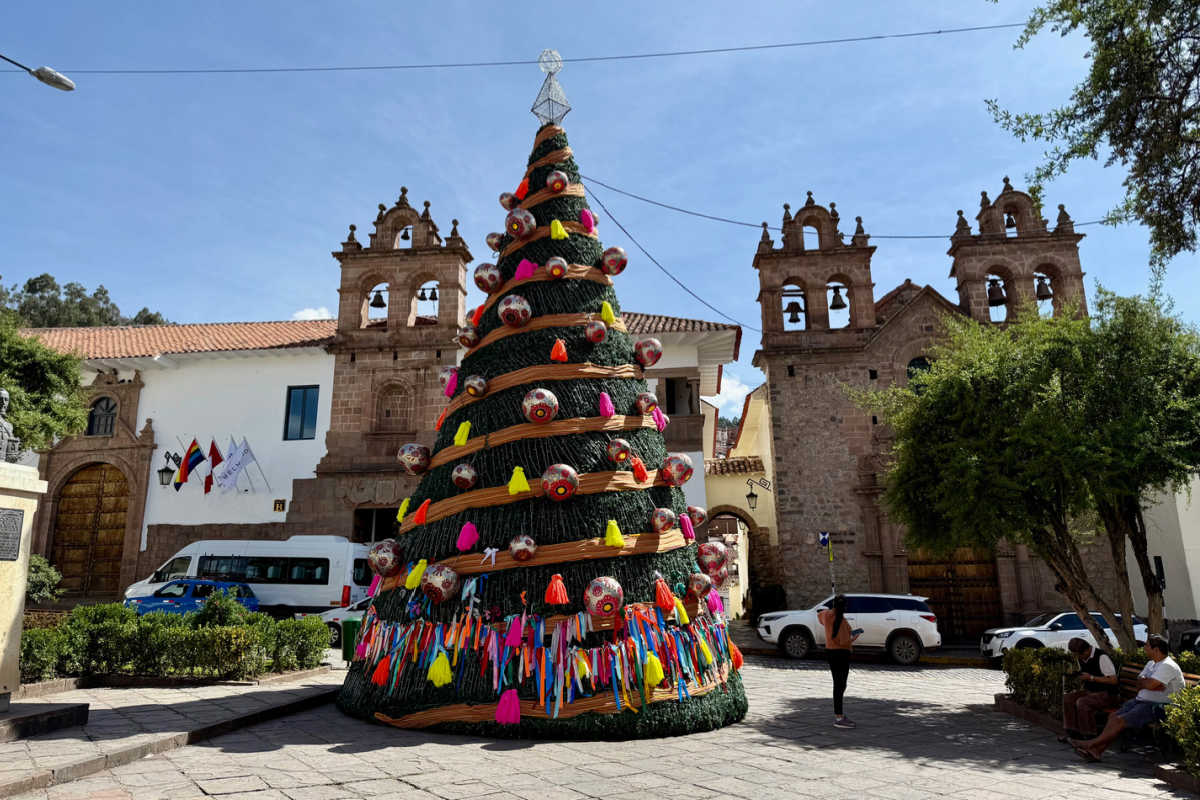
Rainy season (November through March) brings afternoon showers and the smallest crowds. Prices drop significantly (outside of the Christmas season), and availability improves for hotels, tours, and train tickets to Machu Picchu.
For families with school-age teens, summer vacation timing (June-August for U.S. families) inevitably falls during Cusco’s high season. Be sure to book accommodations and key activities well in advance.
Why We Loved Cusco with Teens
Cusco succeeds as a family destination because it offers a rich history, stunning landscapes, and cultural depth that teenagers can engage with on their own terms. Cooking classes, Sacred Valley day trips, and allowing our teens to explore on their own made for an unforgettable vacation. For teenagers who can appreciate history, natural beauty, and different cultures, Cusco is a trip they are sure to remember the rest of their lives.
