Switzerland Family Vacation: Planning Tips
Switzerland – the land of cheese and chocolate – is an incredible family-friendly destination. It has all the elements for spectacular and successful multigenerational holidays in every season. From delicious regional cuisine to beautiful mountain landscapes dotted with picturesque wooden chalets and dairy cows, and active adventures on land, lakes, and even in the air, a family vacation in the Swiss Alps and its historic cities will make for unforgettable and lasting travel memories.
*Disclosure: This post may contain affiliate links, which means we may receive a commission if you click a link and purchase something we have recommended. Please check out our disclosure policy for more details. Thank you for your support!
Is Switzerland a Good Destination for a Family Vacation?
Yes, Switzerland is one of the best family vacation destinations in Europe. It combines jaw-dropping scenery with an extremely safe environment. Its world-class rail network that makes getting around easy, and there are activities that work for every age, from toddlers to grandparents.
The honest caveat is cost: Switzerland is one of the priciest countries in the world, and a family of four should budget CHF 250-400 per day for accommodation, food, transport, and activities. The Swiss Travel Pass Family Card, which lets children aged 6-15 travel free on trains and boats, is the single best tool for managing that expense.
Tips for Planning a Switzerland Vacation All Ages Will Love
Swiss Transportation
Easily accessible from the United States, Switzerland is located in Western Europe and bordered by France, Italy, Germany, Liechtenstein, and Austria. Zurich Airport (ZRH) is the main international hub for intercontinental flights. Access to Switzerland’s famous SBB Railway network is just a few easy escalators below the airport.
Switzerland Train Travel
The Swiss Federal Railway system is renowned for its punctuality. Trains have two ticket classes: First and Second. Tickets can be pre-purchased online at Eurail, through Omio, or at the station upon arrival.
You can get anywhere in this compact country by train, and further with a connecting PostBus, which, as you may have guessed, carries both mail and passengers into smaller towns and alpine villages.
Families traveling from North America can obtain the Swiss Family Card. This allows kids 6-15 years old (kids under 6 are free) to travel free with a parent traveling on a Swiss Travel System pass. The pass can be purchased for various lengths of stay, depending on your itinerary. Swiss Travel Pass can also be used if you choose to take a boat ride on Lake Brienz and Lake Thun.

Passes include train travel, free use of public transportation in more than 90 urban areas, and free admission to more than 500 museums, plus 50% discounts on mountain excursion trains like Zermatt’s Gornergrat and the Jungfraujoch. For families planning a trip to Switzerland with family, buying the Swiss Travel Pass with the Family Card before you leave home is the single most effective way to control costs.
Renting a Car in Switzerland
If renting a car in Switzerland for maximum mobility and freedom, note that fuel is highly taxed and very expensive and that drivers keep to speed limits in the country, as speeding tickets can be sizable. Do note that if you choose to visit places like Zermatt, Bettmeralp, Rigi, and a few others, you will not be able to drive within the town — each is a car-free village.
Many Swiss towns do not allow cars in their downtown commercial areas. Public parking lots are well-signed and easily spotted as you enter a city, including the number of parking spaces available at any given time.
Finally, if you’re traveling with young children, it’s a great idea to check out some tips on how to prevent jet lag with kids.
Best Time to Visit Switzerland
Switzerland is beautiful at any time of year. In winter, the country’s famous Alps and Alpine villages are blanketed by snow that lures skiers, riders, and anyone who loves invigorating snow sports and an après that includes warm melted cheese fondue.

During the warm summer months, visitors can explore more than 40,000 miles of hiking trails, as well as via ferratas, zip lines, and cycling paths that connect the Swiss Alps. Switzerland is also one of the most rewarding summer destinations in Europe for families who want to combine city culture with outdoor adventure. Swiss cities like Bern, Zurich, Lucerne, Geneva, Lugano, and Basel are home to local festivals and filled with historic, natural, and art museums.
Swiss National Day is August 1st, and it is always a special time to be in the mountains to enjoy huge bonfires, alphorns, and festive feasts.
Switzerland Travel Tips for Families
Language
There are four national languages in Switzerland: Swiss German, French, Italian, and Romansh. Depending on which Swiss region you visit, one language will be dominant in that region and canton (state).
Most Swiss citizens speak 2+ national languages, and English is widely spoken by many people in businesses and the larger cities, but to varying degrees depending upon age. Knowing some key phrases in the language of the region you’re visiting is always appreciated.
Currency in Switzerland
The currency in Switzerland is the Swiss Franc, which you can get while traveling by using local ATMs. Switzerland is not part of the EU, and Euros will not usually be accepted in Swiss businesses. Credit cards are accepted for larger purchases, but cash is still very much favored for smaller, daily expenses.
Healthcare in Switzerland
Switzerland has an excellent healthcare system, and emergency care is provided to everyone, regardless of nationality.
Tourists from EU/EFTA countries are entitled to receive health services during visits to Switzerland. Nationals from other countries, such as the United States, must have sufficient insurance to cover the costs of treatment in Switzerland.
The phone number for health emergencies is 112, and there is an extensive network of hospitals and doctors in the country. Tourist destinations and major cities tend to have English-speaking doctors for local expats and visitors.
What to Pack for Switzerland
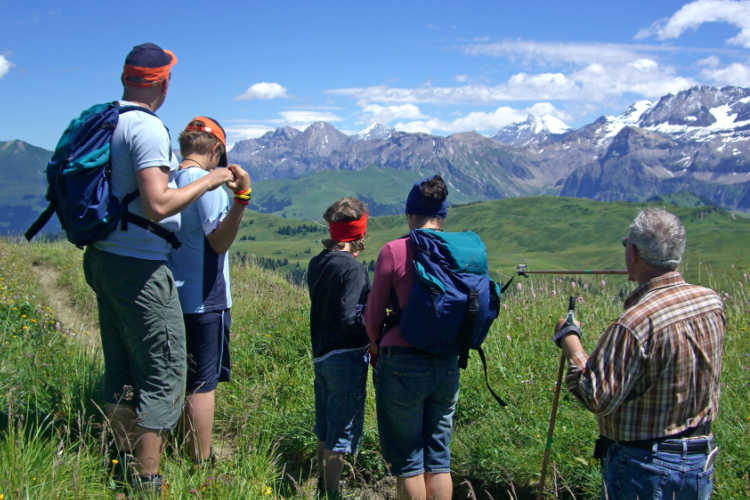
Your packing list for Switzerland will vary quite a bit depending on the season. Aside from basic clothing items, I recommend you carry:
- Excellent walking shoes (sneakers or walking sandals). Pack hiking boots if you plan on any serious hiking during your visit.
- A crossbody bag or backpack as your main day bag – this is our favorite
- Phrasebook in Swiss-German, French, or Italian
- Outerwear, layers, and ski apparel if visiting in winter or planning snow sports activities from November to March.
- Sunglasses, sunscreen, sun hat for summer
- Insect repellent for summer, particularly in the mountains (for mosquitoes and horseflies)
You can find our full packing list for Switzerland here.
Destination-specific Challenges
Switzerland is expensive. The cost of food, gas, accommodation, and restaurants can be eye-opening for travelers from the United States. Budget accordingly — and check out our list of tips for family travel on a budget.
The crime rate is low. However, pickpockets and purse-snatchers do operate in the cities, especially in busy places like airports, train stations, and some public parks.
Some of Switzerland’s older city centers are laid with cobblestones, which can be tough on small-wheeled strollers.
Top Things to Do in Switzerland for Families
Our recommended activities in Switzerland for large family groups are:
1. Visit Bern
Switzerland’s capital city is a UNESCO World Heritage Site known for its historic 12th-century Old Town of charming arcades, fountains, cobblestone streets, and views over the Aare River Valley. Stop in at Einstein House to view the famous physicist’s living quarters.
If visiting in summer, relax at the Aarebad Marzili pool area and be sure to join the locals in floating in the fast-moving Aare River. If you are traveling with family, there are many fun things to do in Bern with kids.

2. Explore the Bernese Oberland
Mountains make up nearly 60% of the Swiss landscape, so any visit should include time exploring the Alps. The Bernese Oberland region includes some of the most famous and spectacular mountains and villages, including the Eiger, Mönch, and Jungfrau peaks and the picturesque towns and villages of Interlaken, Grindelwald, Mürren, Adelboden and Kandersteg.
3. Get active in the mountains
No matter which alpine region you choose in the Swiss Alps, options for outdoor adventures are everywhere. In winter, there’s skiing, riding, skating, tubing, and tobogganing. In summer, visitors can hike for miles (even go hut-to-hut on multi-day hikes), mountain bike, swim, sail, parasail, trottinette, and fly down mountain coasters.
4. Enjoy Time by Swiss Lakes
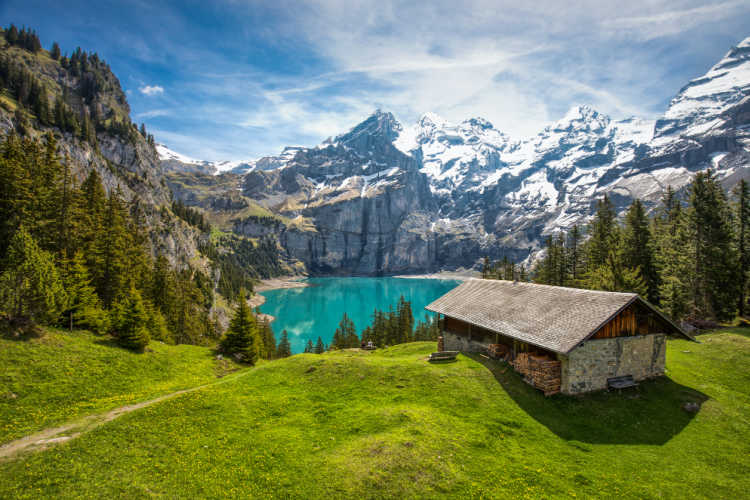
Many of Switzerland’s cosmopolitan cities like Geneva and Zurich, and its smaller centers like Lausanne, Thun, and Lucerne are located on beautiful lakes. Boat cruises are very popular on many of these lakes, as is swimming, paddle-boarding, or simply enjoying the sandy lakeshore on a sunny summer day.
5. Take the Grand Train Tour
While the Grand Train Tour of Switzerland totals over 795 miles and is one of the most scenic train rides in the world, it’s possible to break it up into sections to make it easier for families. Choose the Zurich-Lucerne-Interlaken route from city to scenic city or the stunning Glacier Express that connects magnificent Zermatt at the foot of the Matterhorn with the equally charming and sophisticated St. Moritz.
Recommended Family Restaurants in Switzerland
The Swiss love their food (as well as their wonderful Swiss wine), and family-friendly restaurants can be found throughout the country. In fact, you cannot go far, even in the mountains, without coming across a charming café, restaurant, or guesthouse.
Klötzlikeller (Bern) – A lovely subterranean, cave-like restaurant in Bern’s Old Town serving burgers, salads, and delicious rösti, a fried shredded potato dish often covered in cheese, ham, and egg.
Restaurant La Marmite (Grindelwald) – A higher-end restaurant inside the Hotel Kirchbuhl, with stunning views of the village and the Eiger. The incredible food and outstanding service here make for a special and celebratory family meal.
Haus Hiltl (Zurich) – The world’s first vegetarian restaurant (founded in 1898) is located in the heart of Zurich, near the Bahnhofstrasse. Choose from all manner of fresh and creative vegetarian food, including sandwiches, salads, pasta, finger foods, and main dishes.
Pizzerias (everywhere) – Every Swiss city and town has a pizzeria offering a selection of kid-friendly pies that won’t break the bank. They’re a great choice for famished families.
Migros – A shout-out to the ubiquitous Migros grocery store chain found throughout Switzerland. If you’d like to save money in this expensive country, purchase from the Migros’ great selection of pre-prepared foods for day trips and picnics. Don’t skip the chocolate aisle.
Large Group Accommodations in Switzerland
Swiss hospitality is legendary and famously expensive. The cost of hotel stays for large family groups can escalate quickly. House, apartment, and chalet rentals that can accommodate everyone in your traveling group will be the most cost-effective way to stay and play in Switzerland. You’ll have a home base and a kitchen to prepare meals (another money-saving hack) and enjoy time together as a family.
If you are comparing options across Europe, it is also worth browsing large rental villas in Italy to see what a similar budget can yield in a neighboring country, particularly useful for families planning a broader European trip.
Airbnbs and vacation rentals
Airbnb is popular in Switzerland and can be a good option if you are staying multiple nights in one location. VRBO is another option. Accessibility may be an issue. Always ask specifically if the apartment has steps or a lift and inquire about air conditioning if visiting in summer.
Fancy a stay in a hay loft, tube, or treehouse? Check out the unique accommodation listings on MySwitzerland.
Suggested Switzerland Itineraries
Switzerland is wonderfully compact, but you do have to travel over – or through – mountains to reach some of the more remote places in the country. Families could easily spend a month exploring Switzerland and not run out of things to do.
Switzerland Weekend Itineraries
Bern
Spend a few days exploring one of my favorite cities in Switzerland, the family-friendly city of Bern. Wander through its Old Town arcades, enjoying the chime of the 12th-century astronomical Zytglogge (Clock Tower).
Swim at the free Marzilibad, stop at Einstein House, and enjoy the miniature railway and playgrounds of the Gürten. Plan a day trip to Ballenberg, the Swiss Open-Air Museum displaying over 100 original Swiss buildings and architecture.
Geneva and Lausanne
Explore French-speaking Switzerland by spending one day in each of these cosmopolitan cities on Lake Geneva. Enjoy the scenic train ride along the lake with views of rolling hills and terraced vineyards of white wine grapes. Explore Olympic history and the international flair of the urban nature of Switzerland’s westernmost city.

Zurich
Spend a day visiting Zurich, which is Switzerland’s economic center. Stroll through its old town and along the promenade of Lake Zurich.

Visit the Swiss National Museum and, if you’re into soccer, the FIFA World Football Museum or the Uhrenmuseum, which is dedicated to horology – watchmaking – one of Switzerland’s most important industries. Read this article if you’re looking for more things to do in Zurich.
7-Day Itinerary for Switzerland
If you have a week in Switzerland with your family, there are many options. The compact nature of the country means that you can visit quite a lot of Switzerland in seven days. Families looking for a leisurely stay should consider spending the whole week using Bern as a base; it provides easy access to other cities, alpine villages, and the famous Bernese Alps. Or explore two cities. Lausanne and Geneva work well together, and so do Bern and Zurich.
If you want to see as much as possible and don’t mind changing location every night, you could follow an itinerary like this one (which does not include arrival and departure days).
Day 1 – Zurich
Visit the city center, its lakeshore, and the Swiss National Museum.
Day 2 – Lucerne
With only one day in Lucerne, visit the Museum of Transport, the Old Town, and the covered Chapel Bridge. Take a cable car to Mount Pilatus to enjoy spectacular views of Lake Lucerne and the surrounding area.
Alpine playgrounds can be found throughout Switzerland, and there are a couple of great playgrounds right near Lucerne. These are the perfect places to take in the breathtaking landscapes of central Switzerland while little kids play and explore.

Day 3 – Bern
Wander through its Old Town arcades and fountains, and view the 12th-century Zytglogge Clock Tower. Swim at the free Marzilibad, stop into Einstein House or the Paul Klee Museum, and enjoy the miniature railway and playgrounds of the Gürten.
Day 4 – Interlaken and Thun
Take a quick train ride to Thun and board a boat for a scenic tour of Lake Thun. Wander through Interlaken enjoying views of the famous Mönch, Eiger, and Jungfrau mountains, and visit Thun’s historic 12th-century Thun Castle.
For a unique experience, try visiting the Funky Chocolate Club. They offer workshops on how to taste chocolate like a professional or how to make or decorate chocolate.
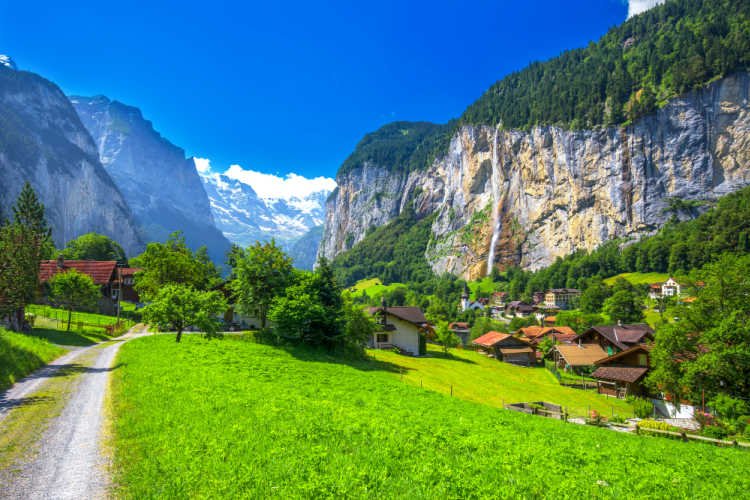
Day 5 – Grindelwald and Lauterbrunnen Valley
Take the train into the Alps to the picturesque village of Grindelwald or Lauterbrunnen. Hike along well-signed trails, take in the breathtaking views of Trümmelbach Falls, and ride the Jungfraujoch, the highest railway in Europe.
Day 6 – Zermatt
Take the scenic train from Brig to Zermatt to stroll through the pedestrian-only village at the foot of the most famous mountain in the world, the Matterhorn. Travel up the Gornergrat cog railway for views of snow-covered peaks and glaciers.
Day 7 – Lausanne
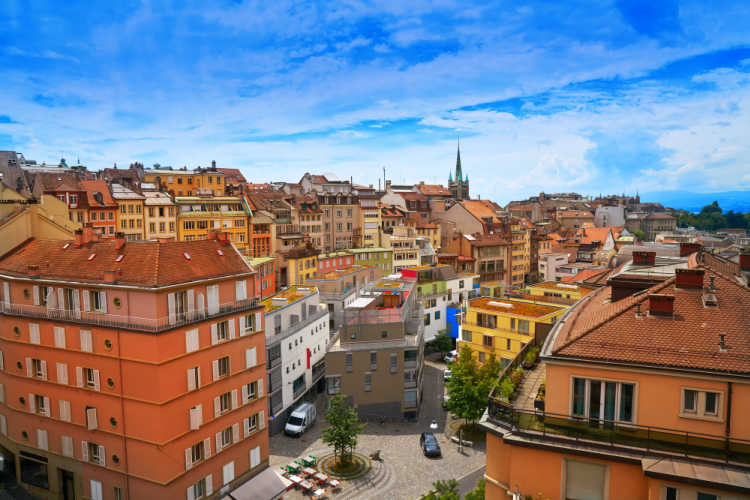
On the shores of Lake Geneva, the French-speaking city is home to the International Olympic Committee headquarters. Visit the Olympic Museum, stroll through the city’s medieval streets, and along the lakeshore Olympic Park.
With its pristine lakes, pine forests, and exquisite mountains, Switzerland offers a memorable multigenerational holiday with the whole family. Families who enjoy combining multiple European destinations in one trip will also find plenty of inspiration in guides to best places in Italy for families and best multigenerational resorts worldwide.
How Much Does a Family Trip to Switzerland Cost?
Switzerland consistently ranks among the most expensive countries in Europe for tourists. Budget for roughly CHF 250-400 per day for a family of four when combining accommodation, meals, transport, and activities, though the Swiss Travel Pass for families cuts transport and museum costs significantly.
Here is where families feel the pinch most:
- Accommodation: Budget hotels start around CHF 180-250 per night for a double room in a city. A vacation rental or chalet sleeping a family of four runs CHF 200-350 per night and is usually better value.
- Meals: A sit-down family dinner at a mid-range restaurant costs CHF 25-45 per person. Migros grocery stores and Migros takeaway counters are the best way to save: a packed lunch for four runs CHF 15-25.
- Mountain excursions: Rides like the Jungfraujoch and Gornergrat are expensive (check current prices on the official websites before you go). Families with the Swiss Travel Pass get 50% off, which is a meaningful saving.
- Skiing: Lift passes, rental gear, and ski school for kids add up fast in January and February. Expect CHF 60-80 per adult day pass at major resorts.
The single biggest money-saving move: buy the Swiss Travel Pass with the Family Card before you leave home. Children aged 6-15 travel free on trains, boats, and city transit when accompanied by a pass-holding parent.
Which Month Is Best to Visit Switzerland with Family?
July and August are the most popular months for families, and for good reason: mountain trails are fully open, lake swimming is warm, and school holidays across Europe and North America align. The trade-off is higher prices and bigger crowds at iconic spots like Grindelwald and Zermatt.
June and September are the sweet spots. Weather is still reliable, alpine flowers are in bloom, or the forests are turning gold, and prices ease noticeably compared to peak summer.

Winter (December through March) is ideal for ski families. The Alps receive reliable snowfall, and the après-ski culture, with its fondue and raclette, is a highlight. Non-skiers can enjoy Swiss Christmas markets, tobogganing, ice skating, and snowshoe walks with young children.
Spring (April and May) is the least predictable season: some mountain passes and cable cars are still closed after winter, and snow can fall at altitude well into May. It can be a rewarding time to visit the lower-altitude cities (Bern, Zurich, Basel, Lausanne) when they are uncrowded and at their greenest.
Key Takeaways
- Swiss Travel Pass Family Card: kids 6-15 travel free.
- Budget CHF 250-400 per day for a family of four.
- July-September: best months for alpine family travel.
- Switzerland has four national languages; English is widely spoken.
- Car-free villages like Zermatt require leaving the car outside.
- Migros grocery stores are the best budget meal hack.
- Emergency healthcare number: 112.
Is Switzerland a good country for families to visit?
Yes. Switzerland is consistently rated one of the safest and most family-friendly countries in the world. The rail network is punctual, clean, and easy to navigate with kids.
Activities span skiing, hiking, lake swimming, mountain coasters, and world-class museums, covering ages from toddlers to teenagers. The main challenge is cost, which careful transport planning (the Swiss Travel Pass) and self-catering can help manage.
Do children travel free on Swiss trains?
Children under 6 travel free at all times. Children aged 6-15 travel free on all Swiss Travel System services (trains, boats, city transit) when accompanied by a parent holding a valid Swiss Travel Pass, using the Swiss Travel Pass Family Card. **Purchase the Family Card before you leave home.
What currency is used in Switzerland, and are euros accepted?
Switzerland uses the Swiss Franc (CHF). Euros are generally not accepted in Swiss shops, restaurants, or transport. Use local ATMs to withdraw Swiss Francs.
Credit cards are accepted for larger purchases, but carry cash for daily expenses, markets, and smaller cafes.
What are the four national languages of Switzerland?
Switzerland has four national languages: Swiss German, French, Italian, and Romansh. The dominant language changes depending on which region and canton (state) you are in. Most Swiss citizens speak two or more national languages, and English is widely spoken in businesses and larger cities, though the level of English varies by age group.
What is the emergency healthcare number in Switzerland?
The phone number for health emergencies in Switzerland is 112. Switzerland has an excellent healthcare system, and emergency care is provided to everyone regardless of nationality.
Tourists from EU/EFTA countries are entitled to health services during their visit; travelers from the United States and other non-EU countries should carry sufficient travel insurance to cover the cost of treatment.
Is it better to rent a car or use public transport in Switzerland for a family trip?
Public transport, specifically the Swiss Travel System, is the most practical and cost-effective choice for most families. Trains, PostBuses, and boats reach virtually every corner of the country, including alpine villages.
A rental car offers flexibility in rural areas, but note that fuel is expensive, speed limits are strictly enforced, and several popular destinations, including Zermatt and Bettmeralp, are car-free villages where you cannot drive at all.
What is the Swiss Travel Pass Family Card?
The Swiss Travel Pass Family Card is an add-on to the Swiss Travel Pass that allows children aged 6-15 to travel free on Swiss trains, boats, and city transit when accompanied by a parent holding a valid pass.
Children under 6 travel free without any card. The Family Card should be purchased before you leave home and is one of the most meaningful cost-saving tools available to families visiting Switzerland.
About the author: Claudia Laroye is a freelance writer, content creator, and editor living in Vancouver, British Columbia. She writes about adventure, family, luxury, and sustainable travel for a variety of online and print outlets around the world, including Vancouver Sun, Air Canada enRoute, Lonely Planet, Fodor’s, Explore magazine, and the Vacay Network. She’s been traveling to Switzerland since she was a baby; her maternal homeland is one of her favorite countries in the world. *Note: Claudia wrote the orginal article, but it was updated with additional information by Kirsten Maxwell.
