
Space Museums Every Kid Should Visit: 10 Top Picks
On my son’s fifth birthday, I took him to his first space museum: Kennedy Space Center on Merritt Island, Florida. Many families may have chosen any of the famous theme parks in the Orlando area, but since my child has been a lifelong space enthusiast (all five years up to that point), I followed his interests. That first space-themed trip has turned into a regular pursuit of rockets, observatories, and dark skies.
As we celebrate World Space Week, here are the ten best museums, observatories, and science centers to help foster a child’s love of learning through a cosmic adventure.
*Disclosure: This post may contain affiliate links, which means we may receive a commission if you click a link and purchase something we have recommended. Please check out our disclosure policy for more details. Thank you for your support!
1. The Kennedy Space Center
If you’re starting with a younger space enthusiast, this NASA museum in Brevard County, Florida, is a great place to begin. The museum has exhibits geared towards younger school-aged children, including interactive screens where they can pretend to be an astronaut or watch the satellite they designed float in space.
It also has a space-themed playground, along with the more historical exhibits geared toward adults.
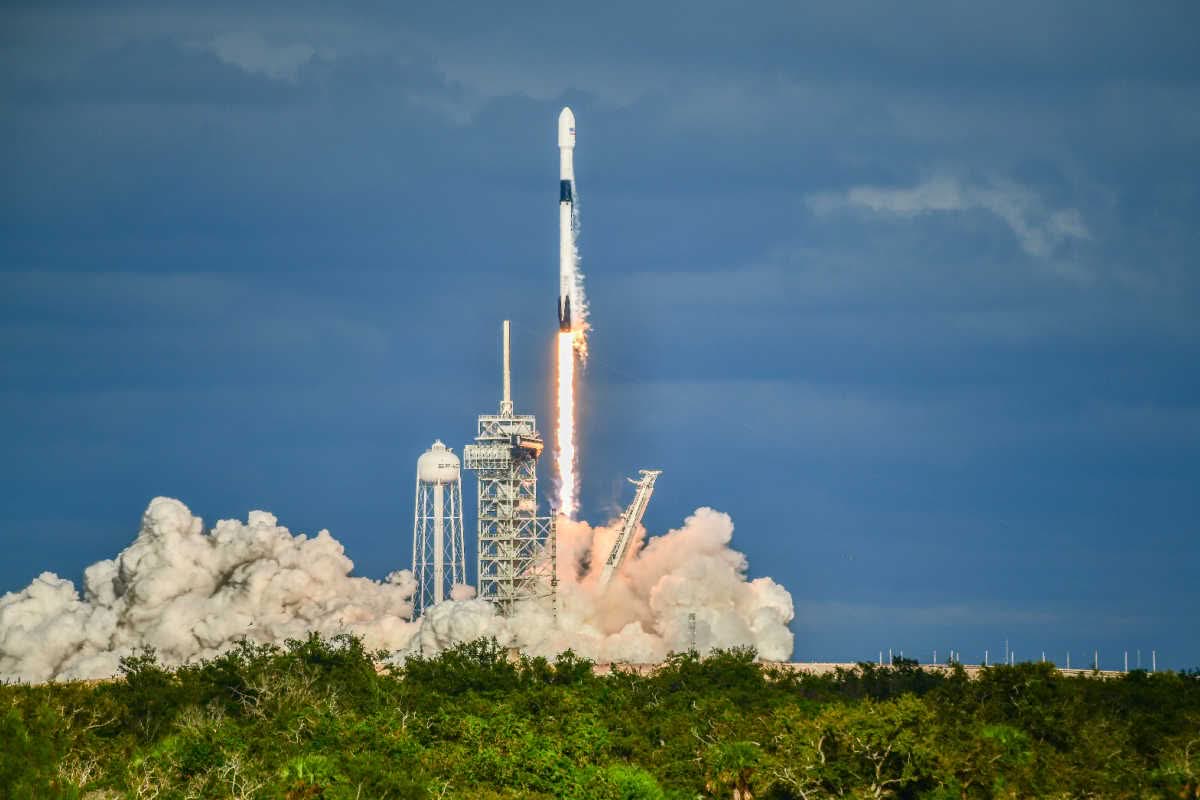
If your timing allows, build a visit around the time of a rocket launch to witness space history in the making.
The Ritz‑Carlton Orlando, Grande Lakes offers a package where up to five people can board an EC-130 helicopter for a ride to the Kennedy Space Center, then get a private tour of the NASA facilities.
2. Kitt Peak National Observatory
Located in the Quinlan Mountains on Tohono O’odham Nation land near Tucson, Arizona, Kitt Peak National Observatory is home to the world’s largest collection of major optical and radio telescopes.
While most of the world-class telescopes at Kitt Peak are used for scientific research and observation, there’s a public nighttime program that allows visitors to view space inside a roll-off roof observatory.
A visit here is ideal for older children–staff recommends children eight and older for the nighttime observatory program. Stay up late to view the moon’s craters with surprising detail, or observe faraway galaxies.
3. Center of Science and Industry (COSI)
For children interested in space and science, COSI in Columbus, Ohio combines the best of both worlds. Their permanent space exhibit includes interactive exhibits on gravity, the International Space Station, and an area for kids to drive a miniature Mars rover.
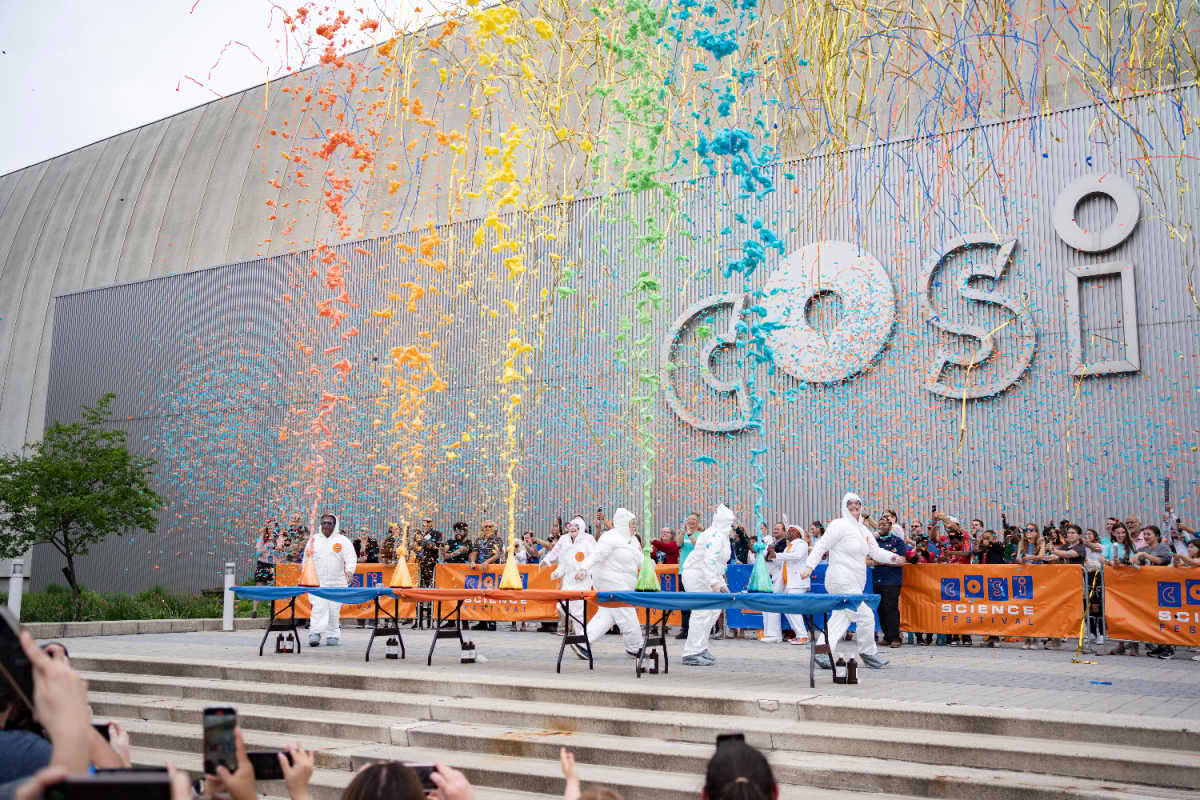
Combine time in the space exhibits with a visit to the planetarium, then head to interactives that teach physics, how gadgets work, and lessons on the human body.
A highlight of any visit to COSI is riding a unicycle 17 feet in the air across the museum’s lobby– the tightrope ride is an exhilarating lesson in levers, counterweights, and an object’s center of gravity.
4. Space Center Houston
You’re probably familiar with the pop culture quote, “Houston, we have a problem,” but it’s actually a slight misquote from a real-life scenario during the Apollo 13 mission in 1970. Space Center Houston brings visitors into the center of that story with a visit inside the historic NASA mission control center.
For a more hands-on experience, visit the science deck to participate in real space science experiments. If your kids loved watching the Artemis mission around the moon, they can relive the thrill in Space Center Houston’s new Artemis exhibit.
5. U.S. Space and Rocket Center
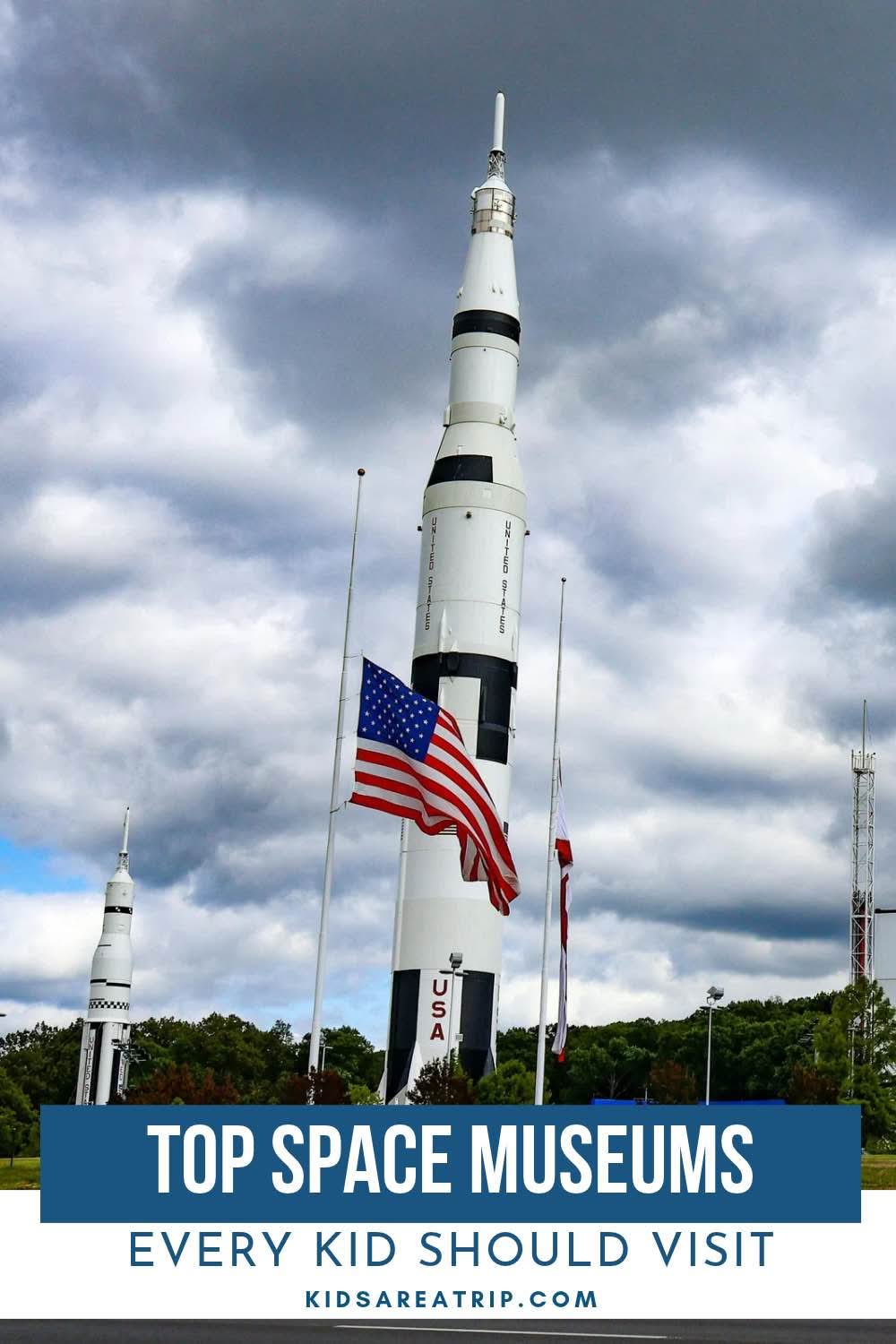
You’ll know you’ve reached the U.S. Space and Rocket Center when you see the larger-than-life rockets towering over the skyline as you inch closer to the museum grounds. There are plenty of real-life artifacts to view at the Huntsville, Alabama Smithsonian museum– enough to remind people of the sheer wonder of space travel.
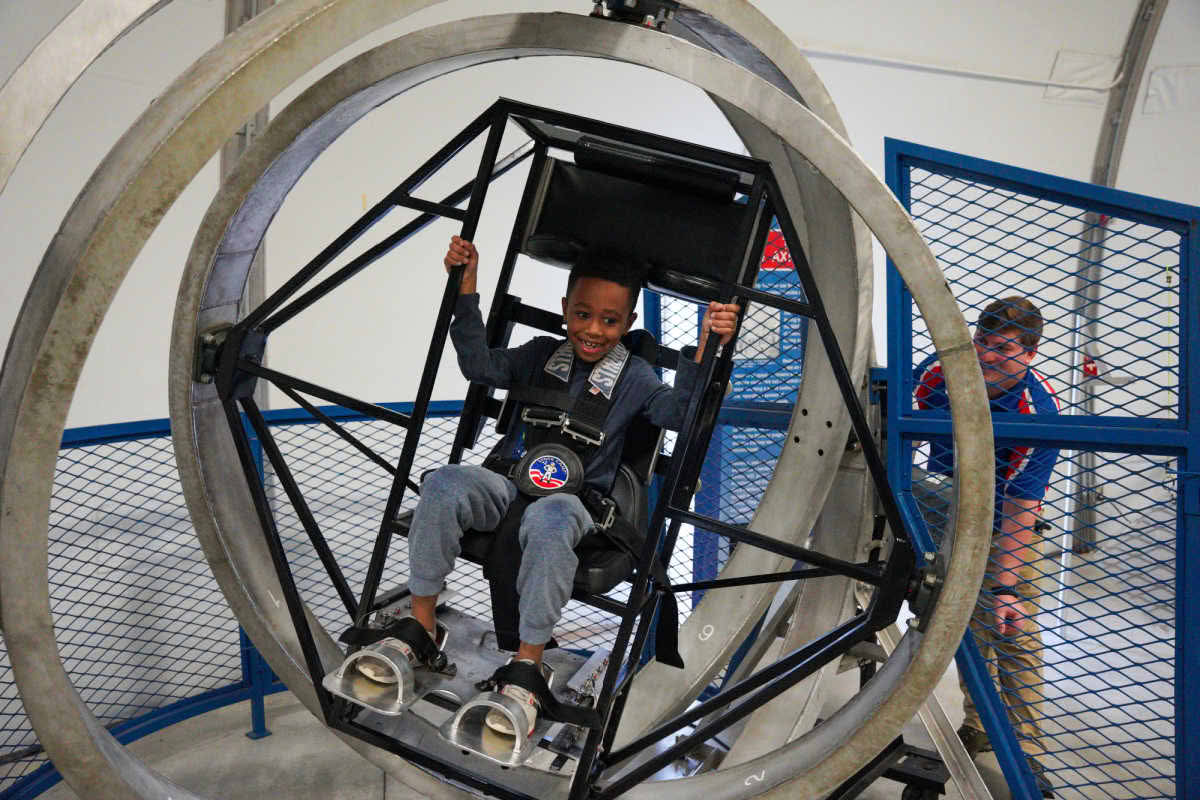
It’s easy to spend an entire day here, seeing the historic Saturn V test rocket, watching a show at the on-site planetarium, or taking a spin on the multi-axis trainer to see if you have what it takes to train like an astronaut.
For those who want more than a day’s worth of activities, the facility still runs week-long space camps, both for children and separate camps for adults. In some cases, the camp works as an early training ground; some young campers have gone on to become NASA astronauts.
6. Smithsonian’s National Air and Space Museum
This Washington, D.C., museum is a gem for older kids, especially those who love exploring the history of space flight. There are hundreds of space artifacts to view, including an Apollo 11 Command Module and a spacesuit worn by Neil Armstrong during his moon mission in 1969.
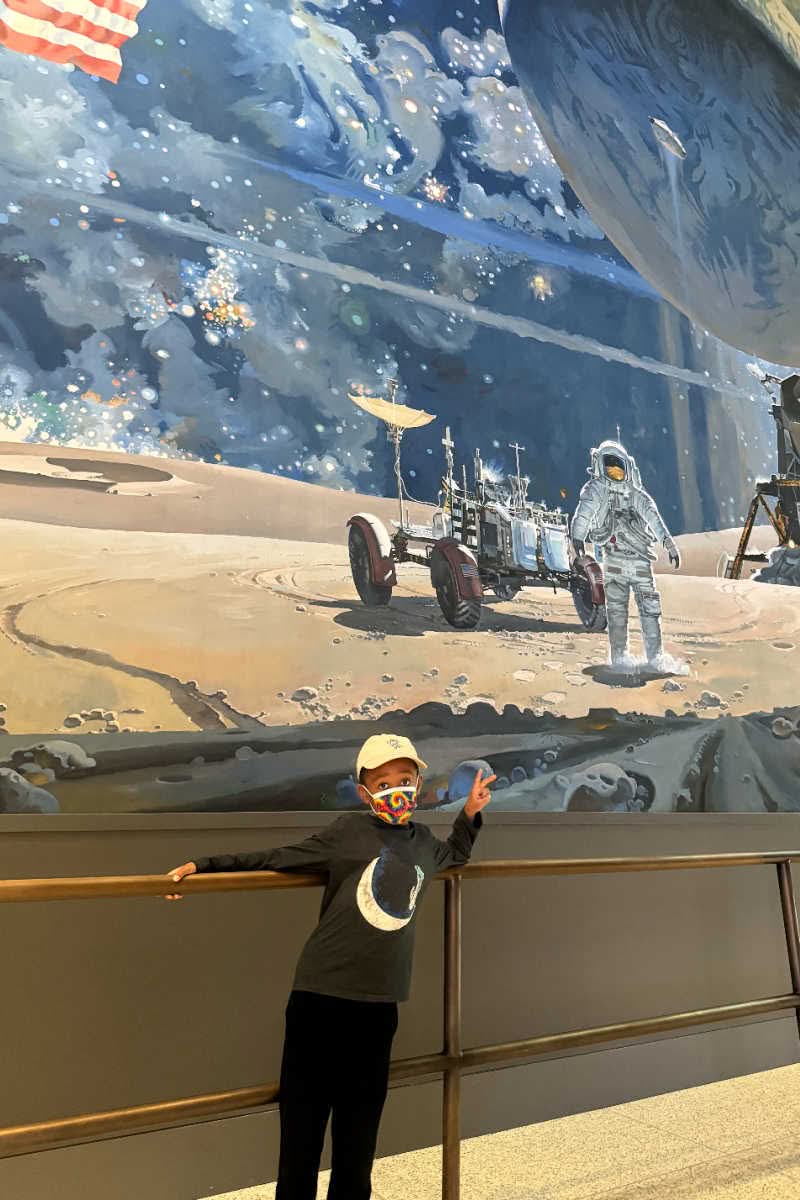
Younger children may enjoy feeling like an astronaut by trying on a real glove–look for the small carts for interactive touchpoints throughout the museum.
After our visit, we ended the day with a stroll through the Southwest Federal Center neighborhood, where we took pictures in front of the NASA sign outside of headquarters.
7. Steven F. Udvar-Hazy Center
If you make the trip to Washington, D.C. for the Air and Space Museum, it’s worth adding a trip to the Steven F. Udvar-Hazy Center, located at Dulles International Airport, in Chantilly, Virginia.
The Udvar-Hazy Center extends your exploration of space artifacts with two hangars full of air and space history. Visitors can also watch Smithsonian staff restore historic space pieces to get them ready for future display.
When you’re done, end your visit by watching airplanes land and take off at Dulles Airport by hanging out in the Donald D. Engen Observation Tower.
8. Griffith Observatory
There’s a reason to celebrate every day at the Griffith Observatory in Los Angeles. That’s because staff take a moment to revel in high noon– not necessarily 12 pm on the clock, but the time the sun reaches its highest point, directly overhead the building’s meridian line. That’s just the beginning of Griffith Observatory’s unique approach to observing the celestial bodies around us.

In the evening, visitors can also use the free telescopes to observe planets in our solar system and beyond. When you’re ready to come back down to earth, soak in the beautiful views of Los Angeles, or catch a show at the on-site planetarium.
9. Canada Aviation and Space Museum
This Ottawa, Canada museum starts with a deep dive into Canada’s space history. View the Shuttle Remote Manipulator System, also known as the Canadarm, a 15-meter robotic arm that NASA used on space missions for more than a decade.
Also on display is one of the space suits worn by Marc Garneau, the first Canadian to go to space.
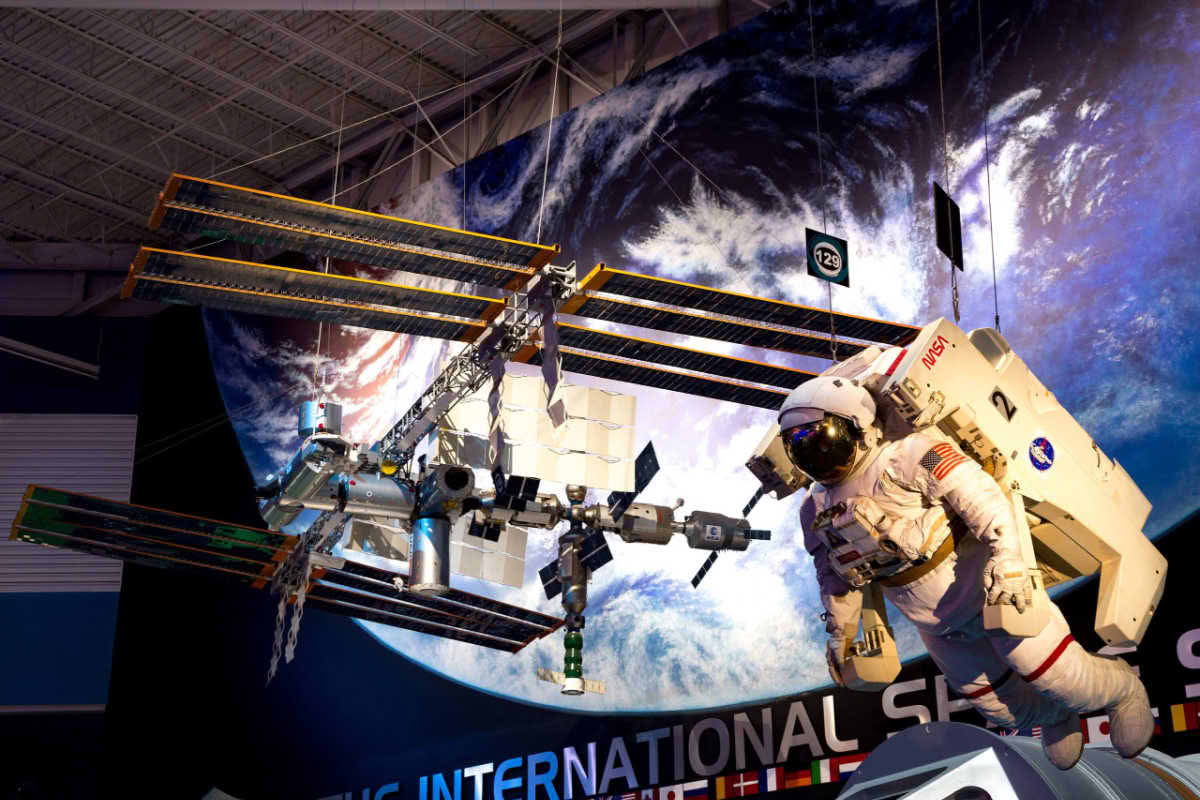
Beyond that, learn about some of the bigger challenges astronauts face, like staying healthy in space, and what it’s like to live in the International Space Station.
10. Cité de l’espace
This attraction in Toulouse, France, is actually categorized as a theme park, but don’t expect roller coasters and water slides. Instead, it takes visitors on a thrilling journey through ultra-interactive exhibits where you’re immersed in a life-sized rocket launch or space mission. Visitors can explore Mars, satellites, and more, and put their astronaut skills to the test.
About the author: Sheeka Sanahori is an Atlanta-based travel, food, and outdoors writer. You can find her work in National Geographic, The Oxford American, Garden & Gun, The Washington Post, and more.
