
I Spent Four Days Following Comté Cheese Through France’s Jura Region, and Here’s What I Found
When someone invites you to spend four days exploring France’s Jura region in search of cheese, you say yes. Every. Single. Time. At least, that was my thinking when Comté USA invited me on a press trip to discover how Comté cheese makes its way from the farm to the aging cellar. I knew there would be plenty of cheese tasting, but I wasn’t quite prepared for the charming villages, beautiful countryside, curious cows, and fascinating history that came along with it.
*Disclosure: This post may contain affiliate links, which means we may receive a commission if you click a link and purchase something we have recommended. Please check out our disclosure policy for more details. Thank you for your support!
Comté Cheese and France: A Road Trip Through the Jura’s Dairy Heartland
Over four days, I met farmers, cheesemakers, and cellar masters, and sampled cheeses at various stages of aging. I explored a part of France that doesn’t always make it onto the typical tourist itinerary. Along the way, we had some special behind-the-scenes experiences, including a visit to a working dairy farm and a private meeting with a Meilleur Ouvrier de France, one of France’s highest culinary honors.
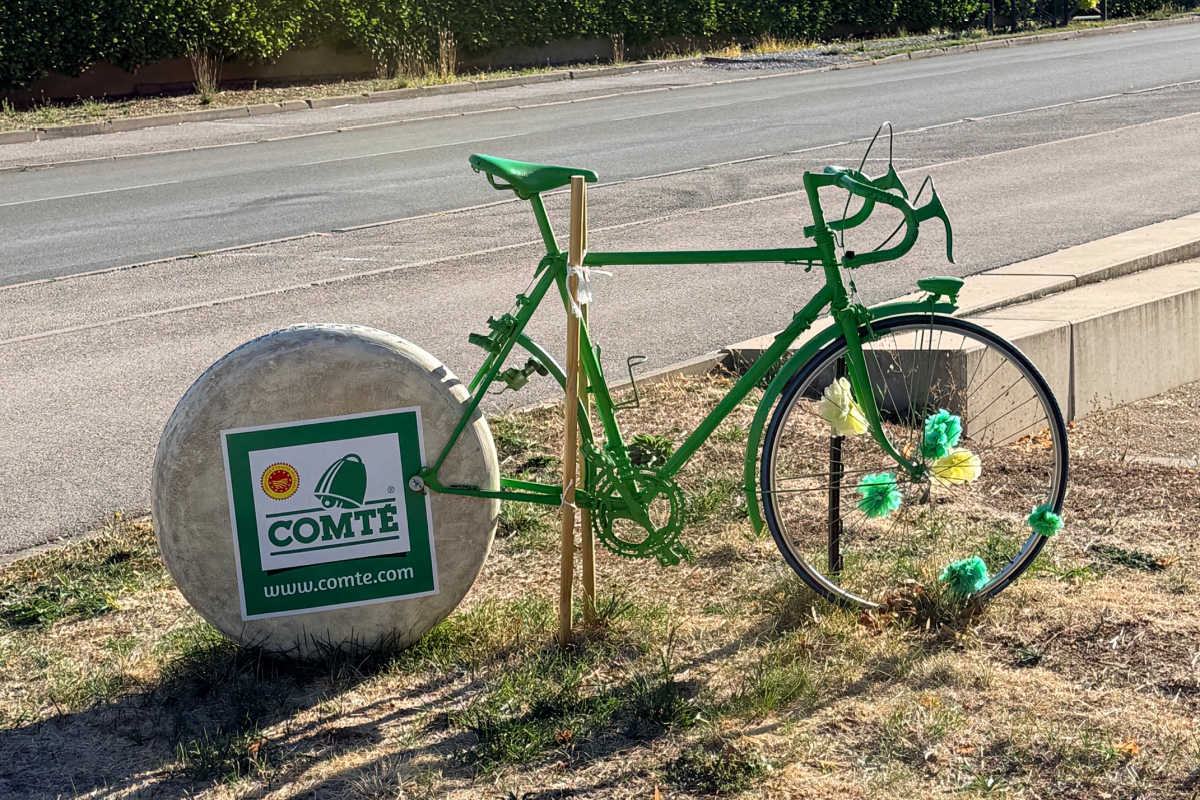
Not everything I experienced is available to the average visitor, but you can still plan your own adventure through Comté. There are museums, cheese shops, historic sites, walkable towns, and plenty of opportunities to enjoy the region at a slower pace. And if your family likes cheese, you may want to start making room in your suitcase now.
Before Crossing Into France: A Scenic Drive Along Lake Geneva
Our journey began in Geneva, Switzerland, before we headed along the Swiss side of Lake Geneva toward Rolle and Nyon. If you’ve ever driven through this part of Switzerland, you know the scenery can be a little distracting. Vineyards tumble down toward the water, the Alps are off in the distance, and the lake seems to go on forever.
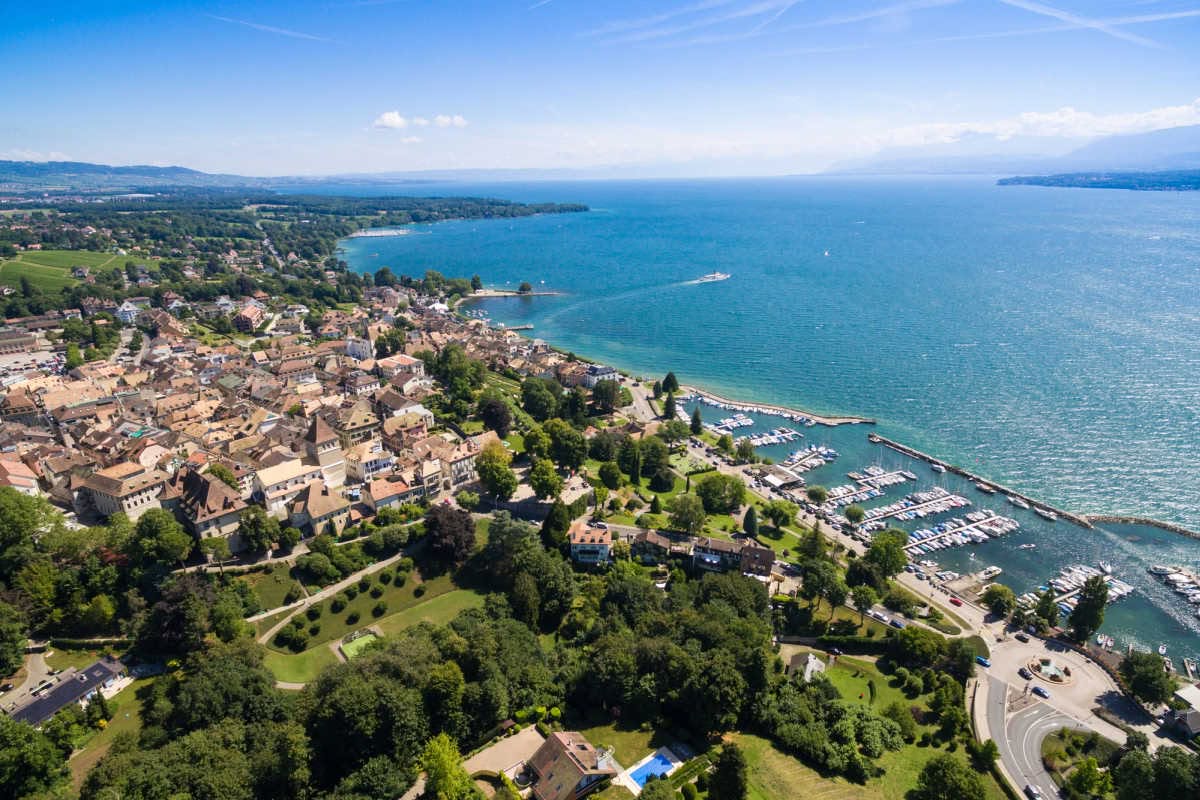
Photo credit: Deposit Photos
It was a lovely introduction and a reminder that sometimes the journey between destinations deserves a little attention, too. This is an easy way to break up the drive before continuing into France.
Day 1: Meeting a French Cheese Legend in Champagnole
Our first stop in France was Champagnole, a small town of around 7,000 people. We were there to meet Marc Janin, a Meilleur Ouvrier de France (MOF), a prestigious distinction awarded to exceptional craftspeople in France.
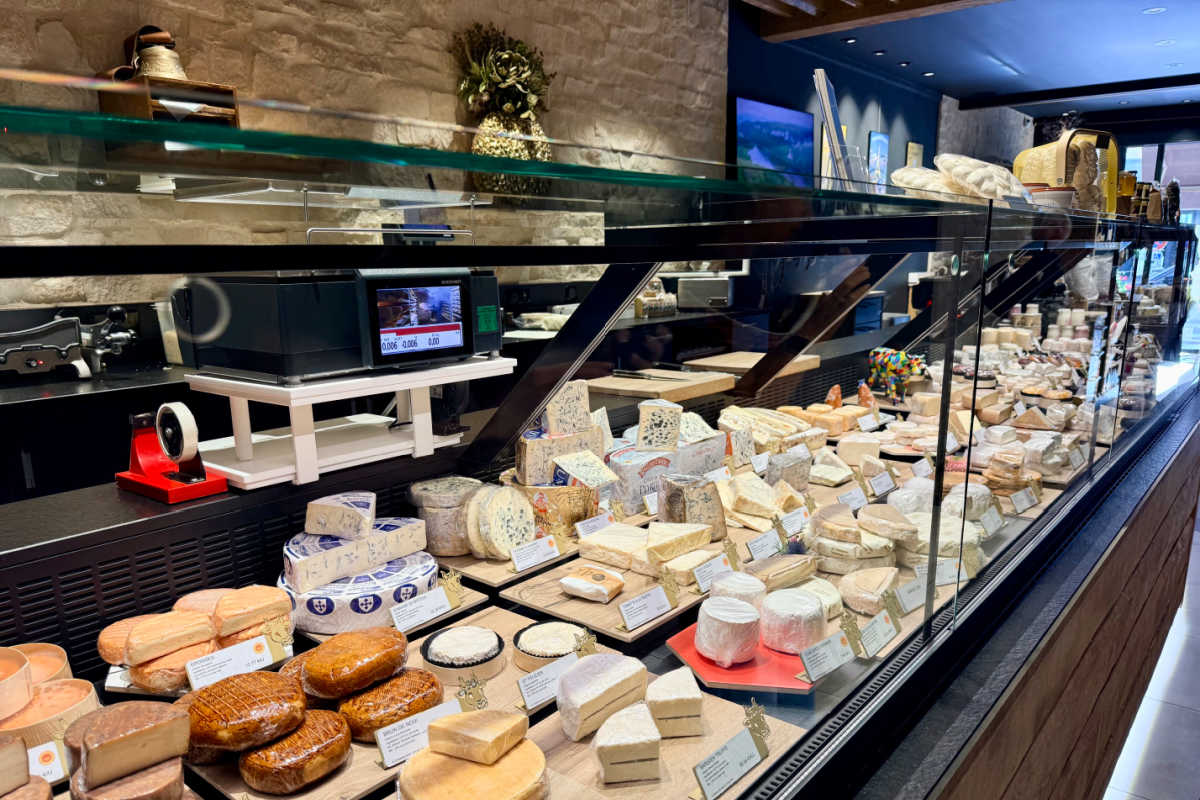
Janin’s family cheese shop has operated since 1960 and sells approximately 1,000 wheels of Comté each year. If you think a wheel of cheese is something you can easily tuck under your arm, think again. Each one weighs between 35 and 40 kilograms, or roughly 80 pounds. That’s a lot of cheese!
We visited the cellar and sampled several varieties, including Comté at different aging stages. I quickly discovered that the cheeses’ age makes a real difference. Janin favors Comté aged for 17 months, and I can see why. It had a lovely nuttiness that I found particularly appealing.
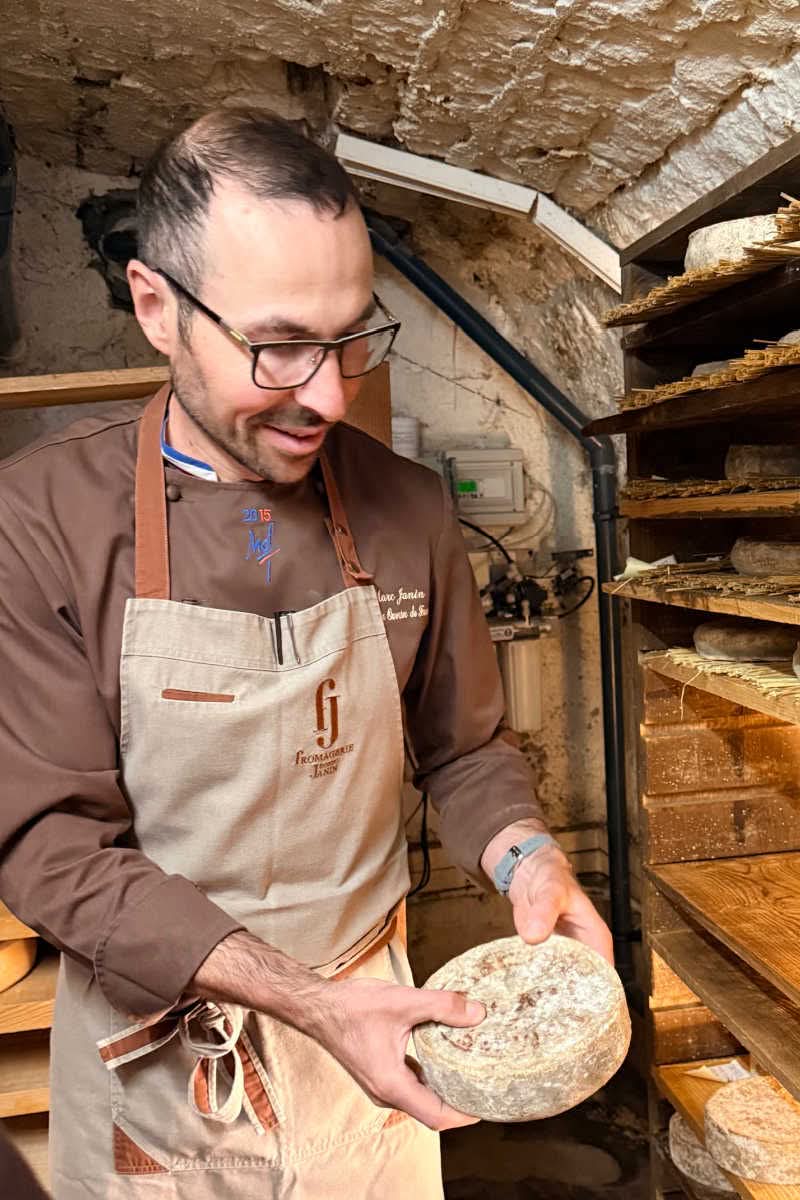
We also tried Morbier, another regional cheese that’s easy to recognize with a thin line of ash running through its center. If you’re a cheese lover, you could happily spend an afternoon asking questions and sampling things you might not find at home.
Our meeting with Janin was part of the press trip, but his shop is open to the public. I recommend stopping in Champagnole to sample local cheeses and discover a new favorite.
After a day of driving and exploring, we spent the night at Domaine du Revermont. It was a peaceful place to settle in after our first day and a good option for families exploring the region.
Worth a detour: Château-Chalon
If you have extra time in this part of the Jura, consider visiting Château-Chalon. This hilltop village is known for vin jaune, a distinctive golden wine produced in the region. Even if wine isn’t your main interest, the village is worth considering for its setting and character.
Day 2: Poligny, the Capital of Comté, and a Visit to a Working Dairy Farm
If you’re exploring Comté cheese country, Poligny is a natural place to start. Widely considered the capital of Comté, you’ll see why when you spot the cheese shops clustered around the main square.
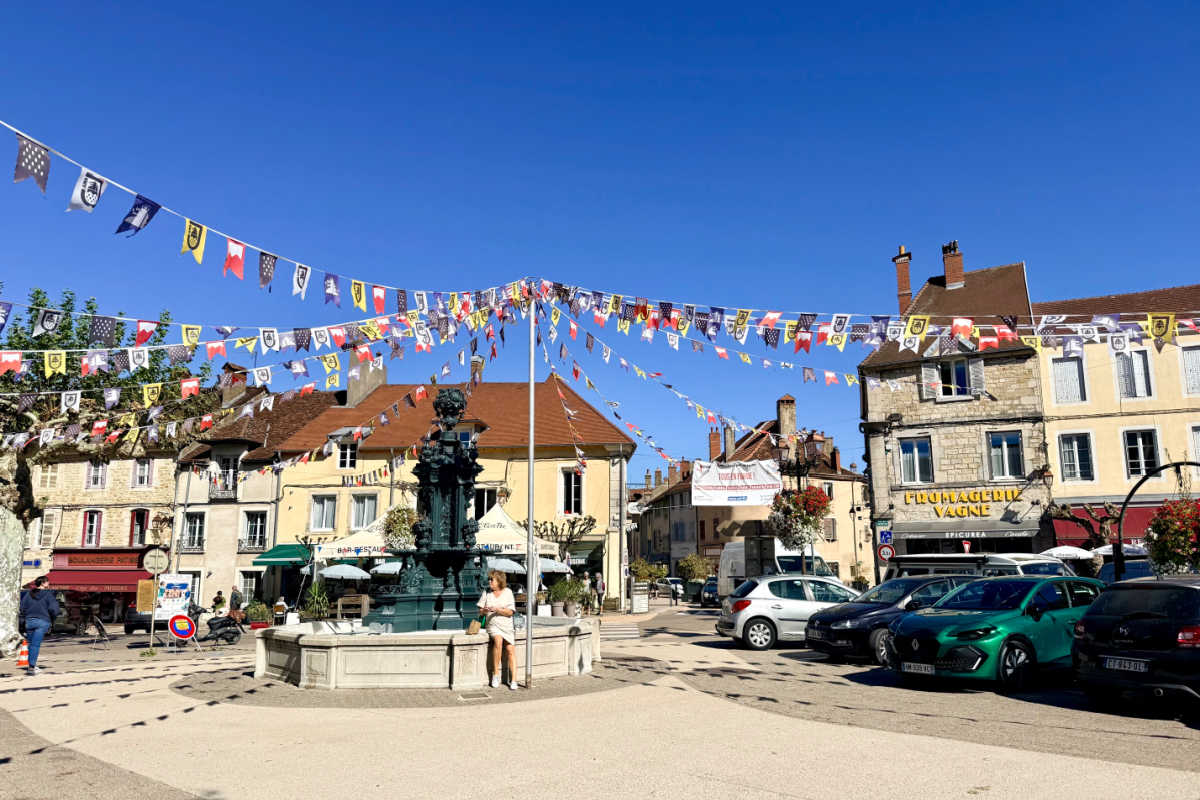
One of our first stops was the Maison du Comté, a museum dedicated to the cheese and the people who make it. Now, I realize that a cheese museum might not immediately sound like the most exciting family activity. I can practically hear the teenagers asking, “We’re going to a museum about what?”
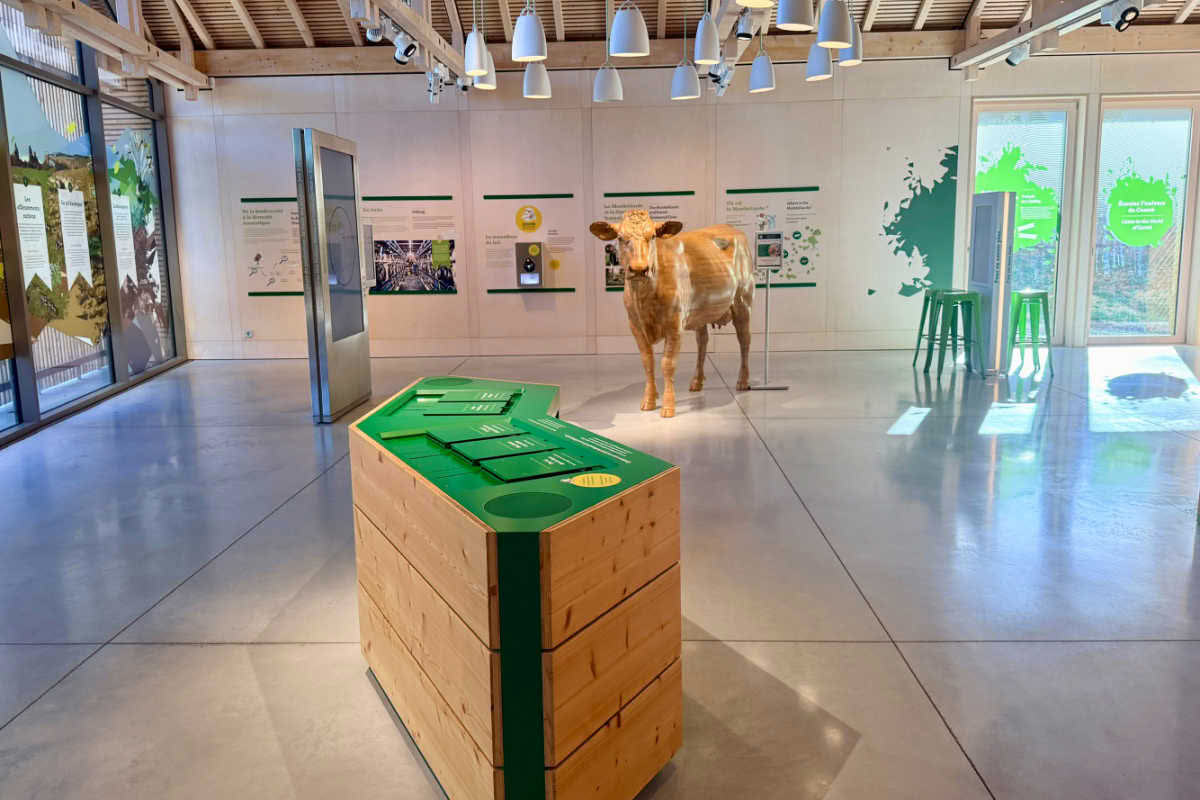
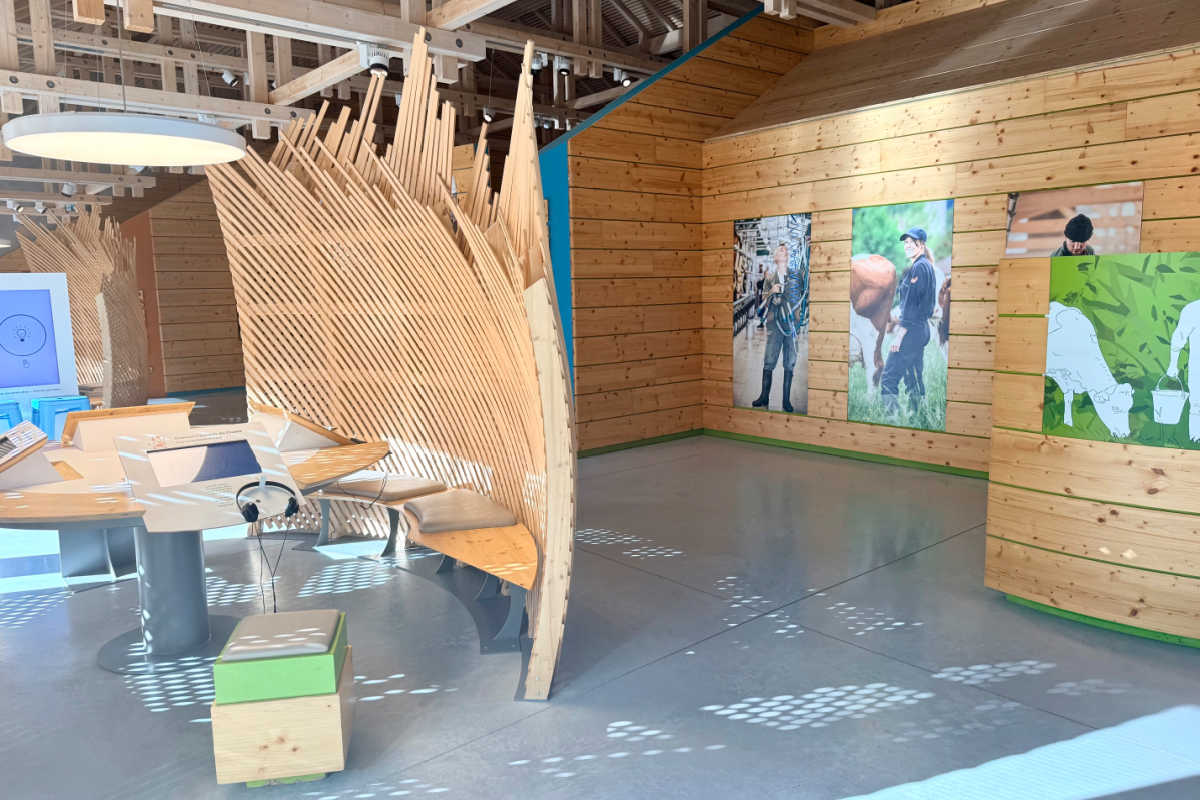
But it’s not what you think.
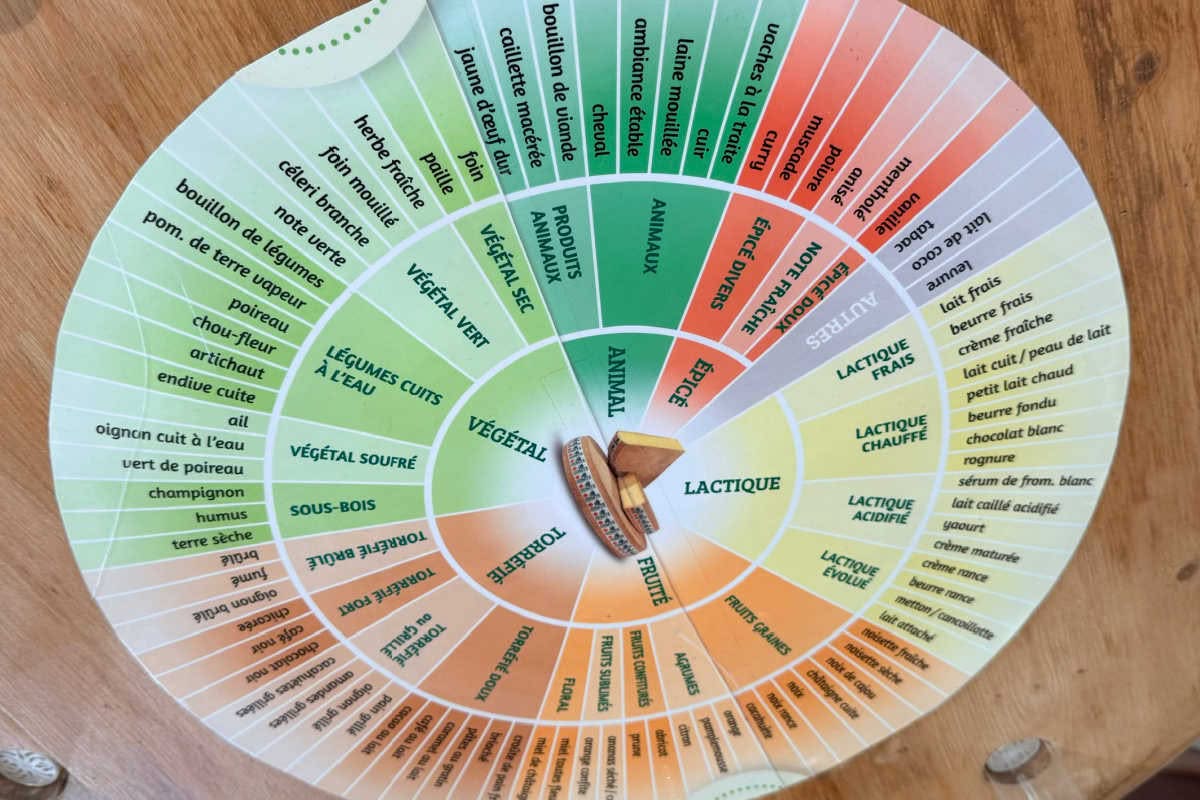
The museum has interactive exhibits, including a scent activity that matches aromas to different flavor notes. It’s a fun way to learn how the cheese develops its distinctive characteristics. This is a good place to begin if you want to understand why Comté is such an important part of life in this part of France.
During our visit, we learned more about the CIGC, the organization that protects and oversees Comté production. They oversee the roughly 2,400 farms that supply milk to the local cooperatives, known as fruitières. Production is restricted to a defined geographic area, so the local climate, geology, and grass shape the product’s flavor profile.
In other words, Comté isn’t simply a cheese recipe you can reproduce anywhere. It’s tied to this particular landscape, and the people here take that seriously.
We also learned that only a small percentage of Comté ever reaches the United States (between 1-2%), which made each tasting feel special.
On the Farm in Vernierfontaine
After a delicious lunch at Le Bistrot de Port Lesney, we headed to Vernierfontaine to visit a working dairy farm. This was one of the experiences I was most excited about because I wanted to see how the process worked behind the scenes.
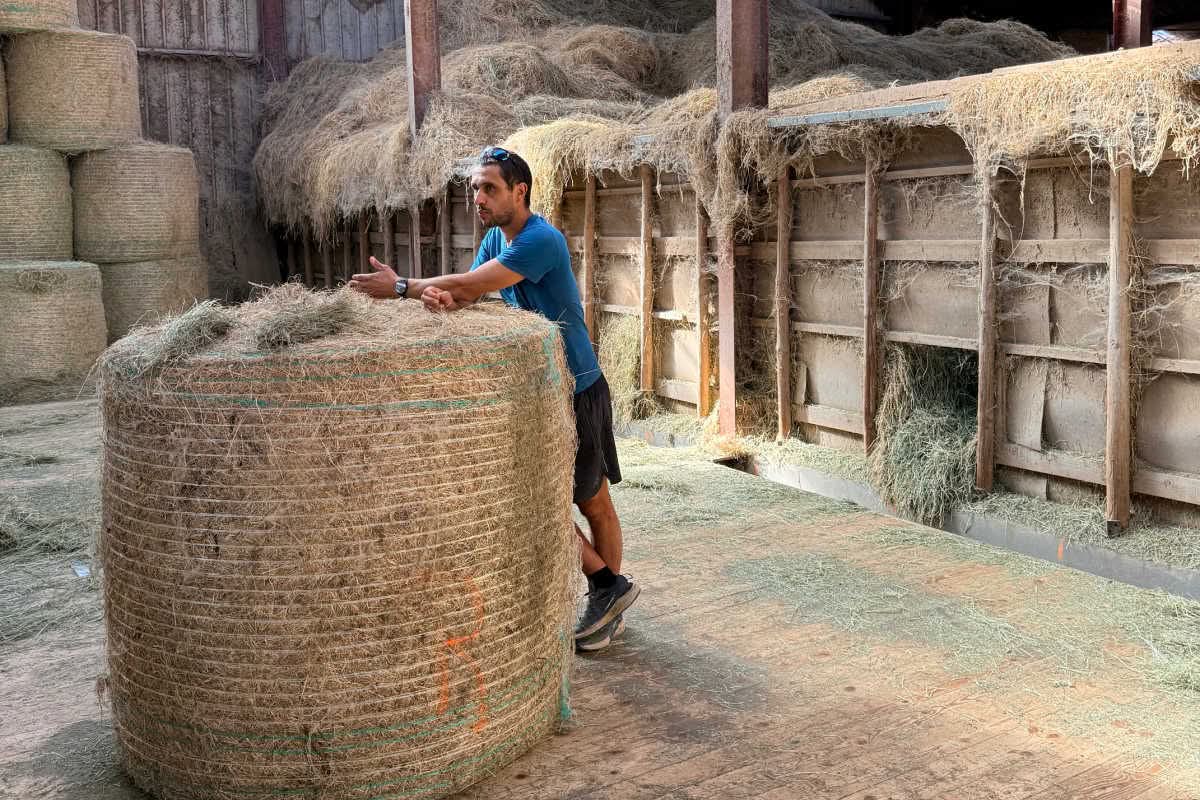
Photo credit: Kids Are A Trip
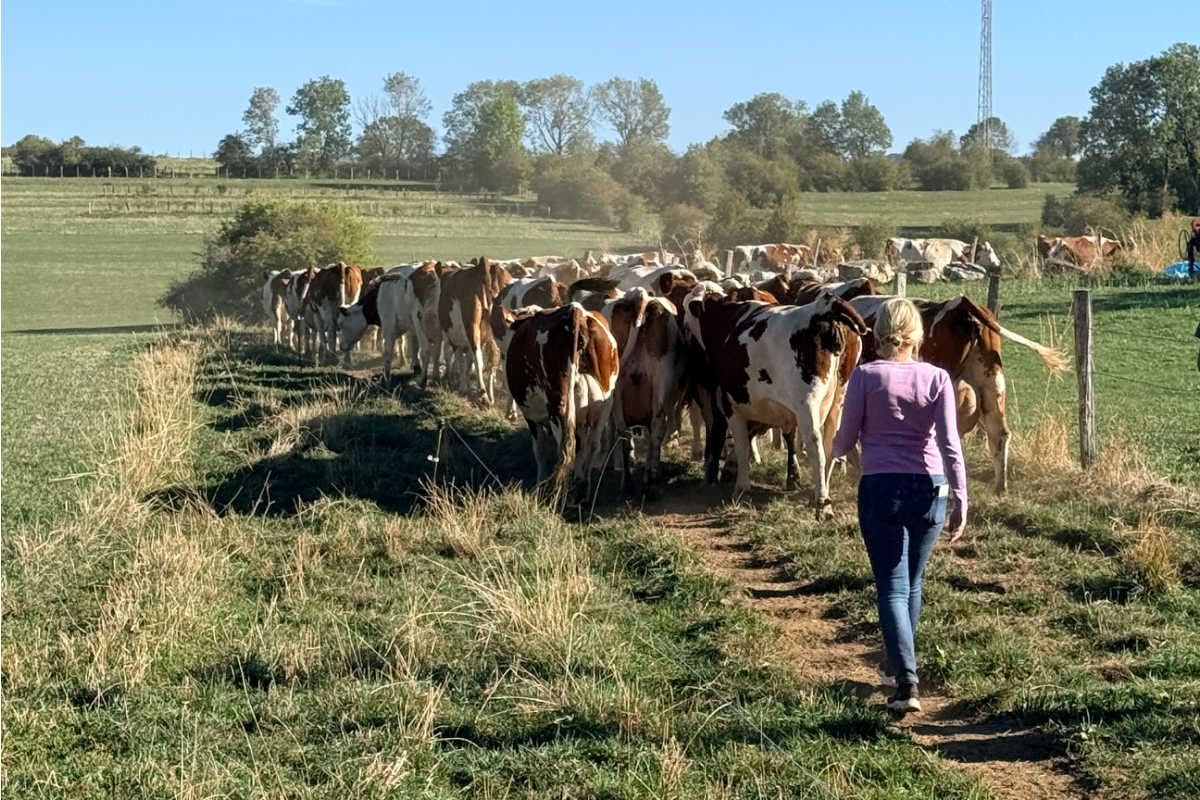
We met farmers Nicolas and Juliette, who belong to an 18-farm cooperative supplying milk for Comté production. After a look around the farm, Nicolas invited us to follow him into the pasture to round up the cows for milking. That’s when the day got fun.
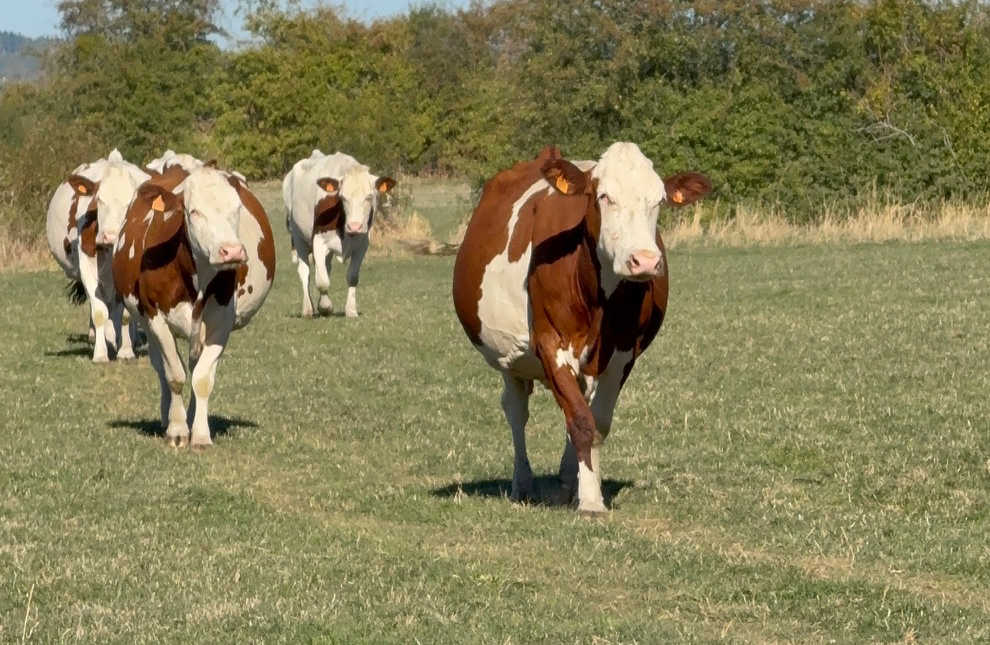
The cows ambled back toward the barn with our group trailing behind them like an impromptu fan club. Each cow seemed to know exactly where she belonged. They strutted down the aisle, found their individual stalls, and settled in as if this were the most ordinary thing in the world. Meanwhile, we were watching every move.
The cows were remarkably calm as they were hooked up to the milking machines, and I loved getting a closer look. It’s one thing to read about how milk is produced; it’s another to stand in a barn and see the process firsthand.
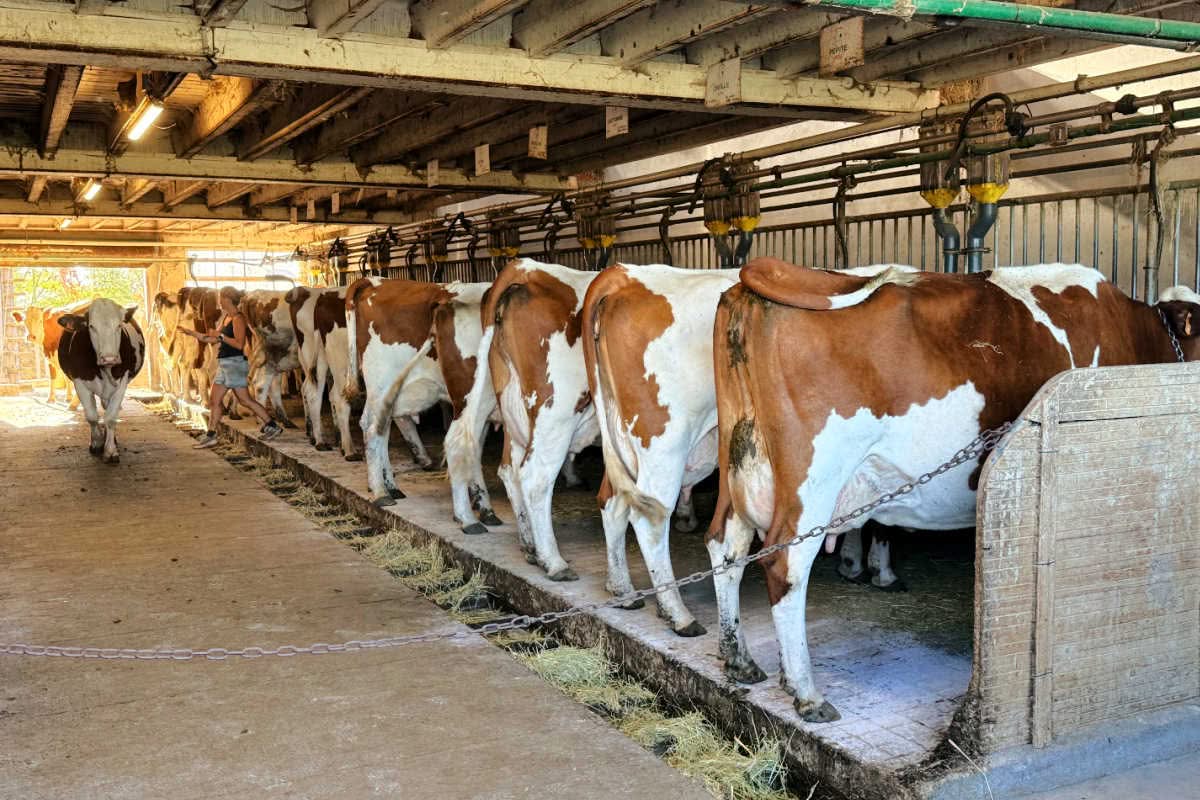
Another highlight was tasting raw milk fresh from the farm. I’d never tried it before, and I struggled to describe the flavor. It was a memorable first for me, and I’m glad I got to experience it.
A note about farm visits: Our visit was arranged through Comté USA, so it wasn’t a typical drop-in activity. If you’d like to include a farm visit in your own itinerary, contact a local tourism office or cheese cooperative to ask about visitor opportunities.
Other Places to Visit Near Poligny
I didn’t have time to explore every nearby attraction, but the following are worth considering.
- Arbois: The birthplace of Louis Pasteur and a good option for travelers interested in science and regional history.
- Château de Germigney: This Relais & Châteaux property is perfect for a family stay.
- Salins-les-Bains: Home to historic saltworks recognized as a UNESCO World Heritage Site.
Day 3: Watching Comté Being Made and Discovering the History of Absinthe
The next morning, we visited Fruiteière de Vernierfontaine to watch cheesemaker Antoine Cattin transform the previous day’s milk into Comté cheese.
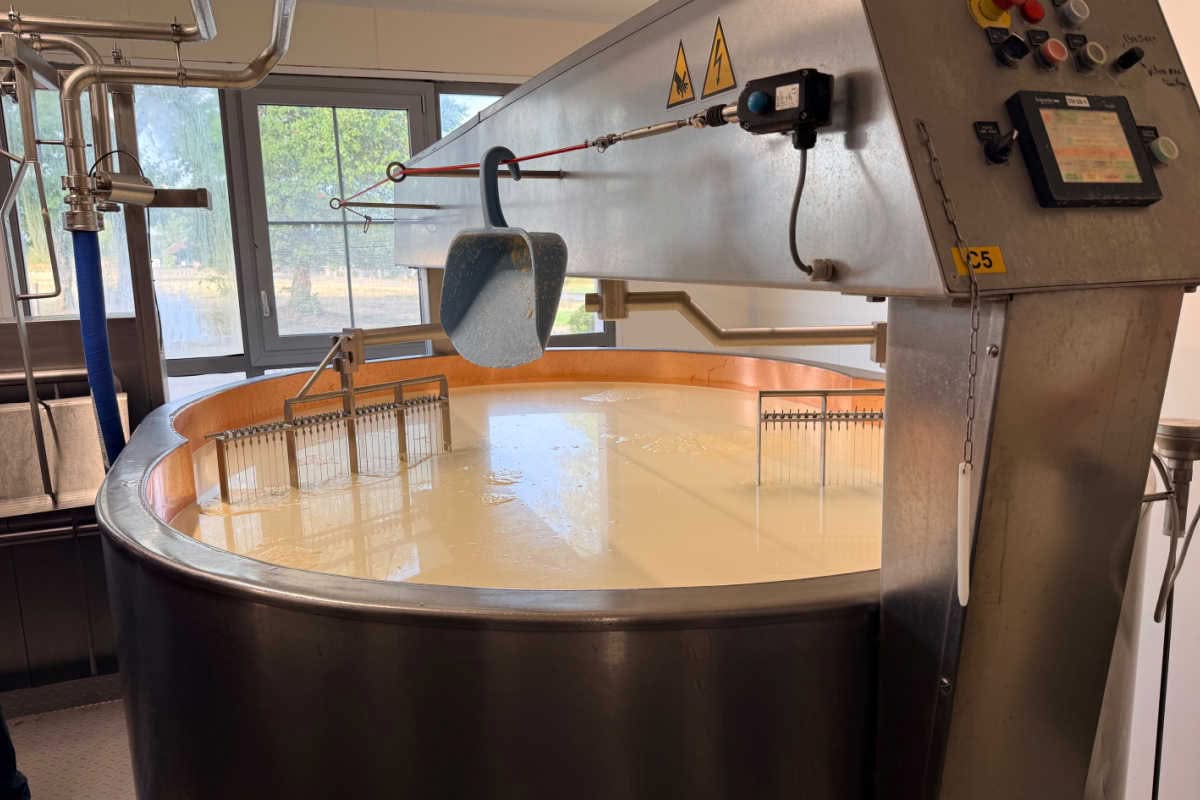
I’d already sampled the finished product, but seeing the cheesemaking process gave me a better appreciation for everything that goes into producing a wheel.
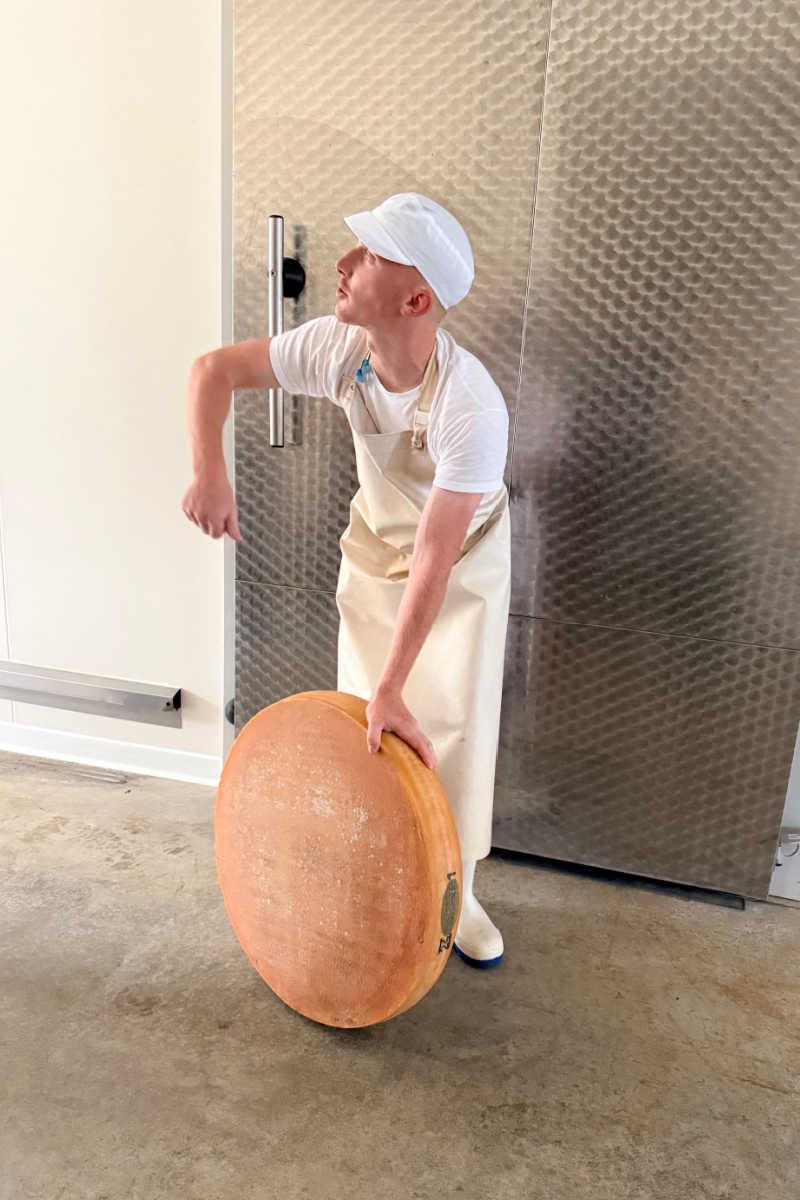
Photo credit: Kids Are A Trip
Seeing the process firsthand was fascinating, and I think this would be a particularly good experience for families with kids. It’s also a nice reminder that food doesn’t simply appear on grocery store shelves. People, skills, and traditions stand behind the products we take for granted.
Ornans: A Pretty Riverside Town
After leaving the farm, we headed to Ornans, a charming riverside town best known as the birthplace of painter Gustave Courbet.
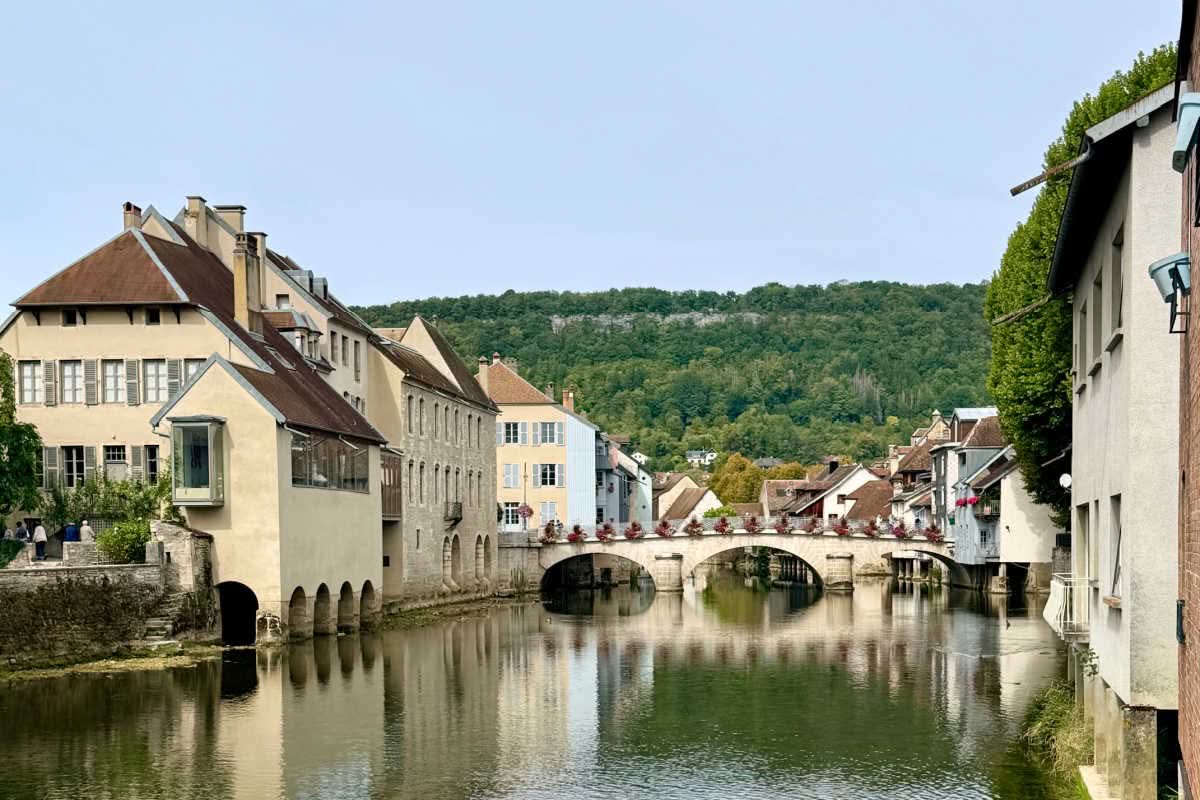
We spent some time browsing the local shops, and I highly recommend a stop at La Fabrique du Chocolat if you have a sweet tooth. After all the cheese, it was nice to switch things up.
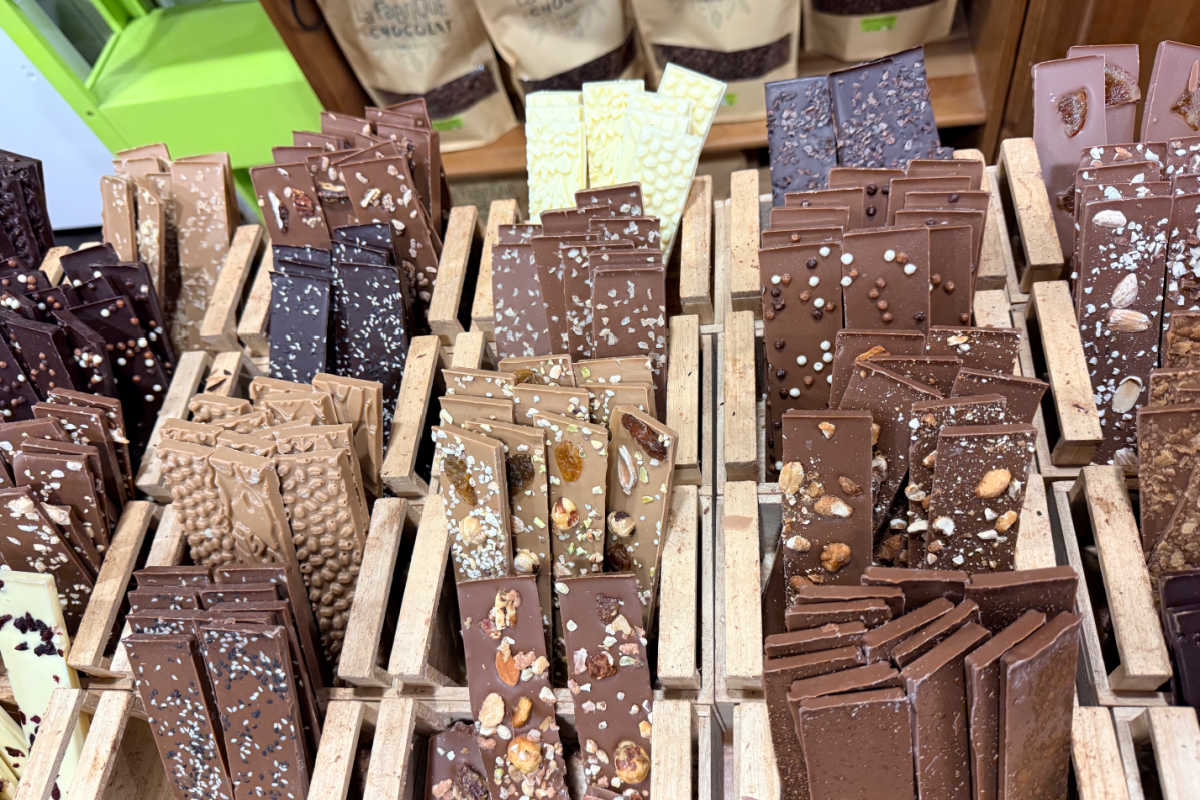
We also enjoyed lunch at La Table de Gustave. Ornans is a lovely stop for a leisurely lunch and a wander through town, if you’re looking to break up a day of driving.
Pontarlier and the Route de l’Absinthe
We stopped in Pontarlier for the evening, a convenient base for exploring this part of the Jura region. We strolled along the main street before visiting Distillerie Guy, a historic absinthe distillery.
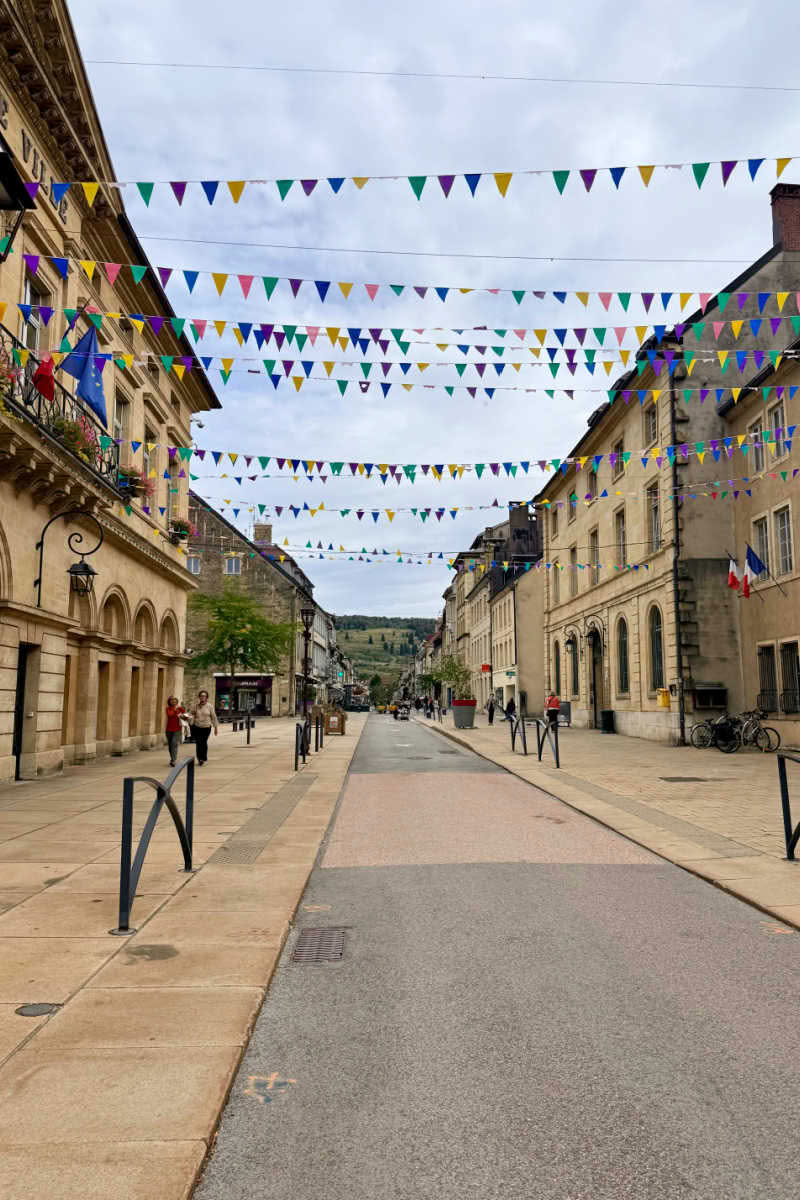
Absinthe has a fascinating history, and Pontarlier was once considered the absinthe capital of the world. When Armand Guy opened his distillery at the age of 20 in 1890, the town had more than 20 distilleries producing the spirit.
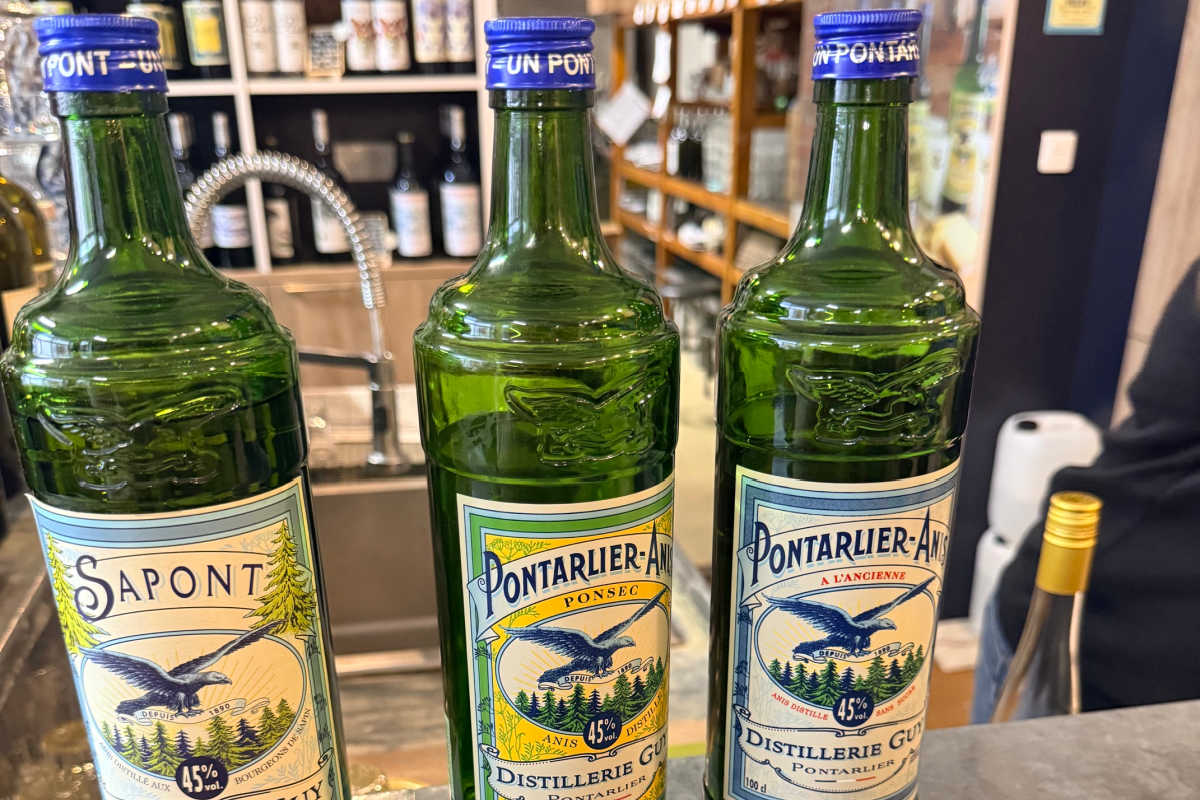
Today, Distillerie Guy is the last of the town’s historic distilleries still operating. It’s also part of the Route de l’Absinthe, a cross-border 50-kilometer trail between Pontarlier and Noiraigue in Switzerland’s Val-de-Travers.
More Places to Explore Around Pontarlier
If you have an extra day in this area, consider adding one or more of these stops:
- Château de Joux: A historic fortress with a fascinating past.
- Métabief: A mountain destination with outdoor activities and access to the surrounding scenery.
- Source de La Loue: Hike to see this beautiful waterfall flowing from a karst limestone cave. Truly worth the detour.
The landscape here reminds us that the Jura region isn’t just about food. It’s also a destination for mountain scenery, historic villages, and outdoor adventures.
Day 4: Inside Fort Saint-Antoine, a Cathedral of Comté Cheese
Fort Saint-Antoine is one of those places that makes you stop and wonder how someone came up with this idea.
The fort was built between 1879 and 1882, following the Franco-Prussian War. It was abandoned for 80 years before being sold for one French franc. Afterwards, it was converted into an aging cellar for Comté cheese.
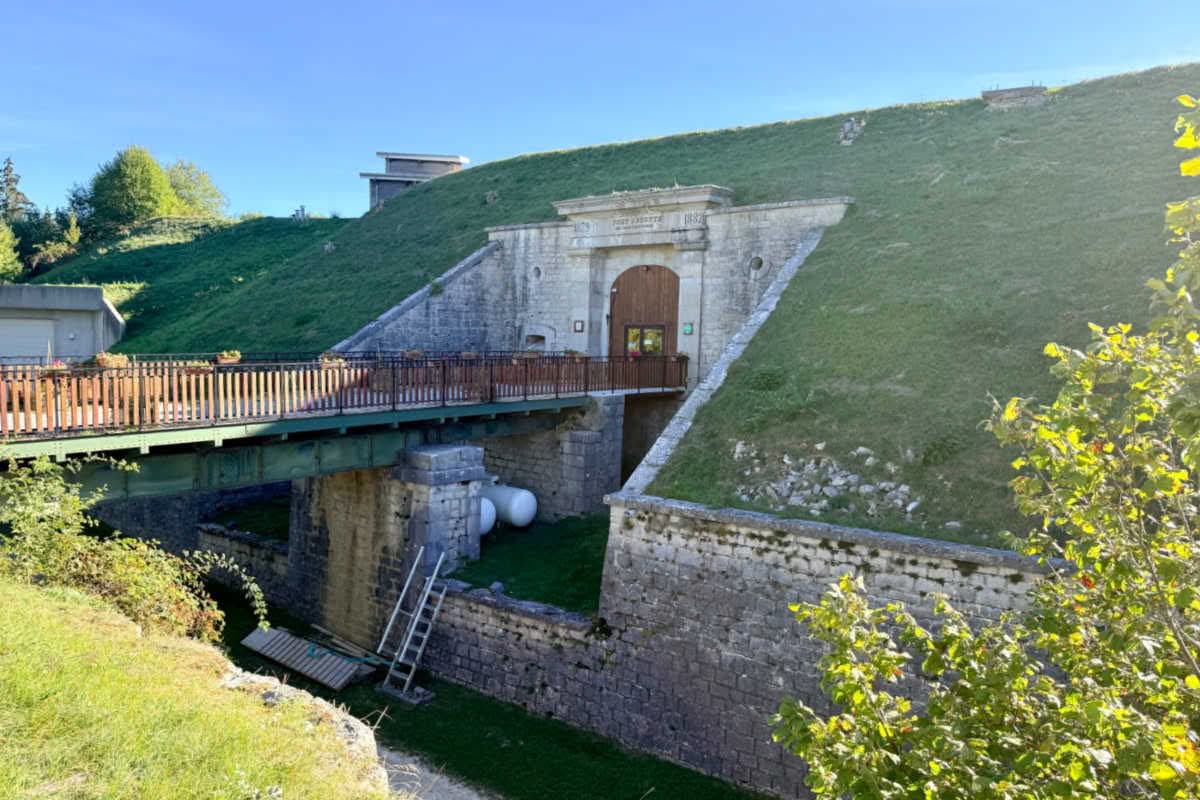
Yes, a former military fort is home to thousands upon thousands of wheels of cheese. France really does know how to make the most of a building.
Fort Saint-Antoine welcomes visitors, making it one of the most accessible stops to include in a self-guided trip through the region.
Once inside, you’ll understand why I think families should have this on their list.
Inside the Cellar
The cellar maintains a constant temperature of around 46°F with 98% humidity. Bring a jacket even if the weather outside is lovely. Inside, towering stacks of cheese wheels line the corridors. Each column holds roughly 30 wheels, and the cheese ages for 10 to 12 months.
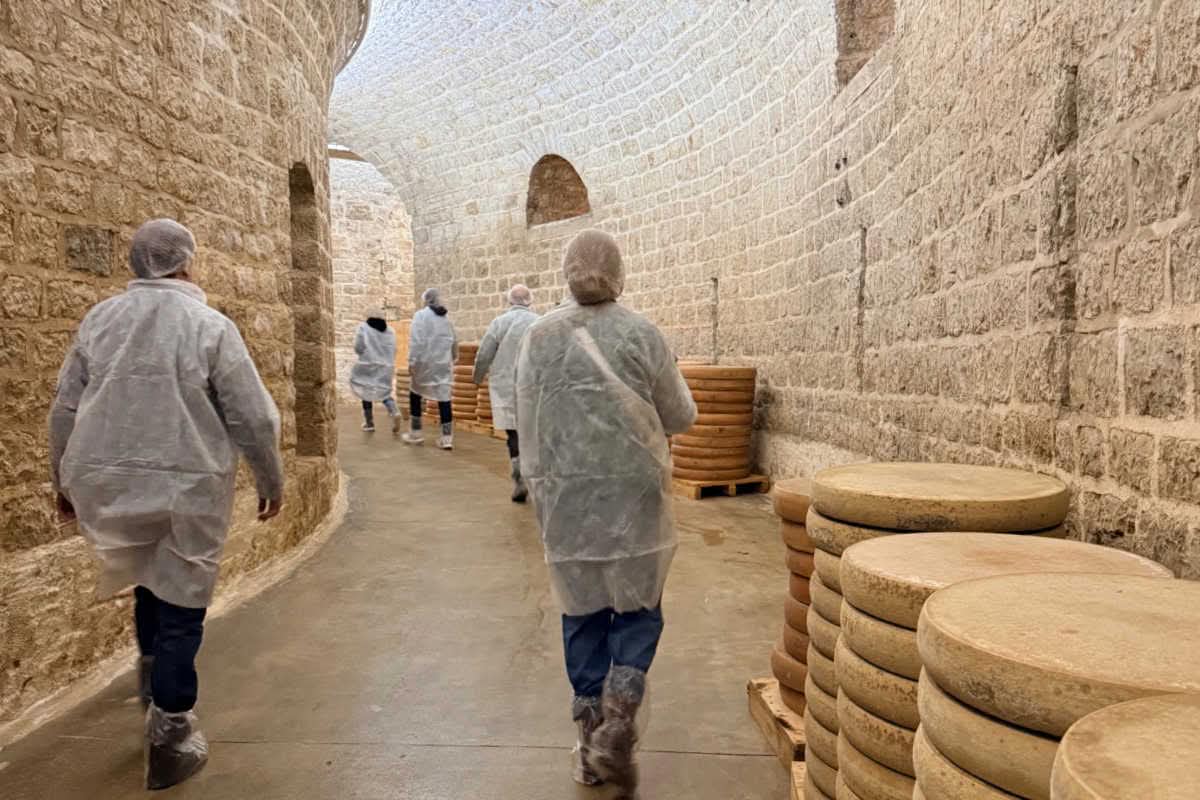
The sheer scale is difficult to comprehend until you’re standing there. In 1966, the cellar held around 2,000 wheels. Today, it holds approximately 100,000.
That’s a lot of Comté.
We also learned about the work involved in caring for the wheels as they age. Traditionally, a skilled worker could flip, salt, and brine around 60 wheels per hour by hand. Today, eight robots work alongside 20 staff members, and the robots can handle approximately 120 wheels an hour, operating around the clock.
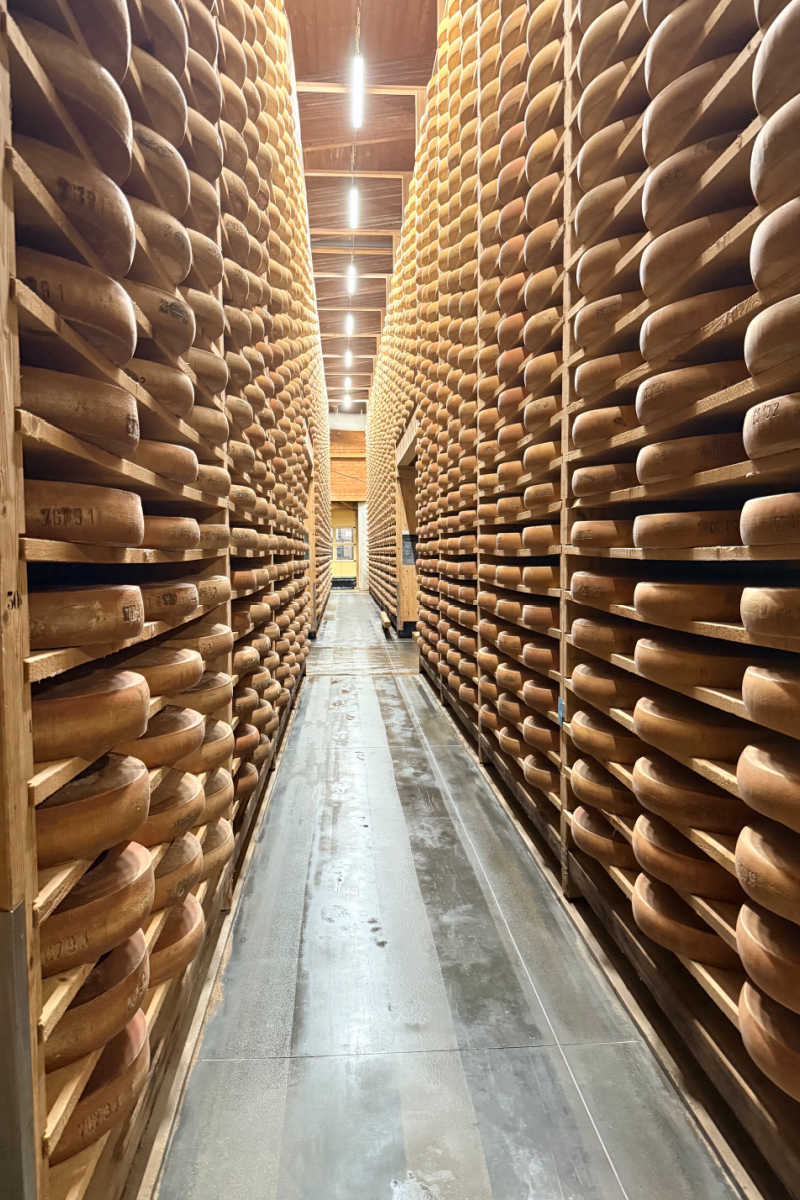
I found the combination of historic architecture, traditional craftsmanship, and modern technology particularly interesting. It’s a great example of how a centuries-old food tradition can evolve without losing its connection to the region.
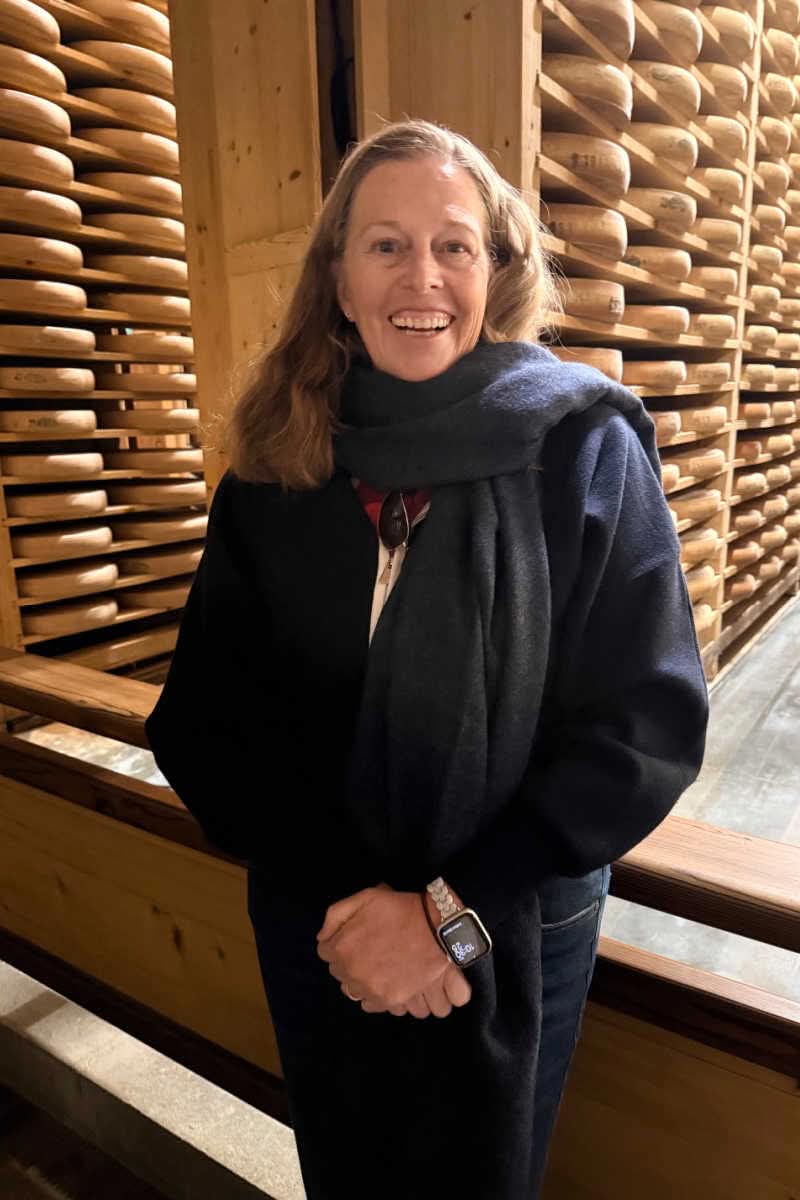
Photo credit: Kids Are A Trip
Comté has to age for at least 10 months before it can be sold. Wheels aged for 36 months are considered particularly rare. Before leaving the cellar, every wheel is graded by professional tasters.
If you’re visiting the Jura region, add this stop to your list. It’s unusual, memorable, and far more interesting than simply reading about cheese in a book.
More Things to Do Near Malbuisson
The area around Malbuisson offers several opportunities to get outdoors after a few days of driving and cheese tasting.
- La Source Bleue: A natural spring that makes a lovely stop for nature lovers.
- Parc Aventure Malbuisson: A treetop adventure park where kids and adults can burn off some energy.
- Fruitière Labergement: A cheese shop worth considering if you want to pick up Comté to take home.
- Fonderie de cloches Charles Obertino: A foundry where you can watch traditional cowbells being made and shop for souvenirs.
The mountain town of Les Rousses is another option if you want to spend more time outdoors.
Where to Stay in France’s Jura Region
This trip the variety of acoom, from countryside hotels to more luxurious properties. Where you stay will depend on which parts of the region you want to explore and whether you’re traveling as a couple, with kids, or with a larger group.
Here are a few properties to consider when planning your own Jura itinerary.
Domaine du Revermont
We stayed here on our first night, and it was a peaceful place to unwind after a day of driving and exploring. The countryside setting makes it a good option for travelers who want to experience a quiet stay. Check prices here.
Château de Germigney
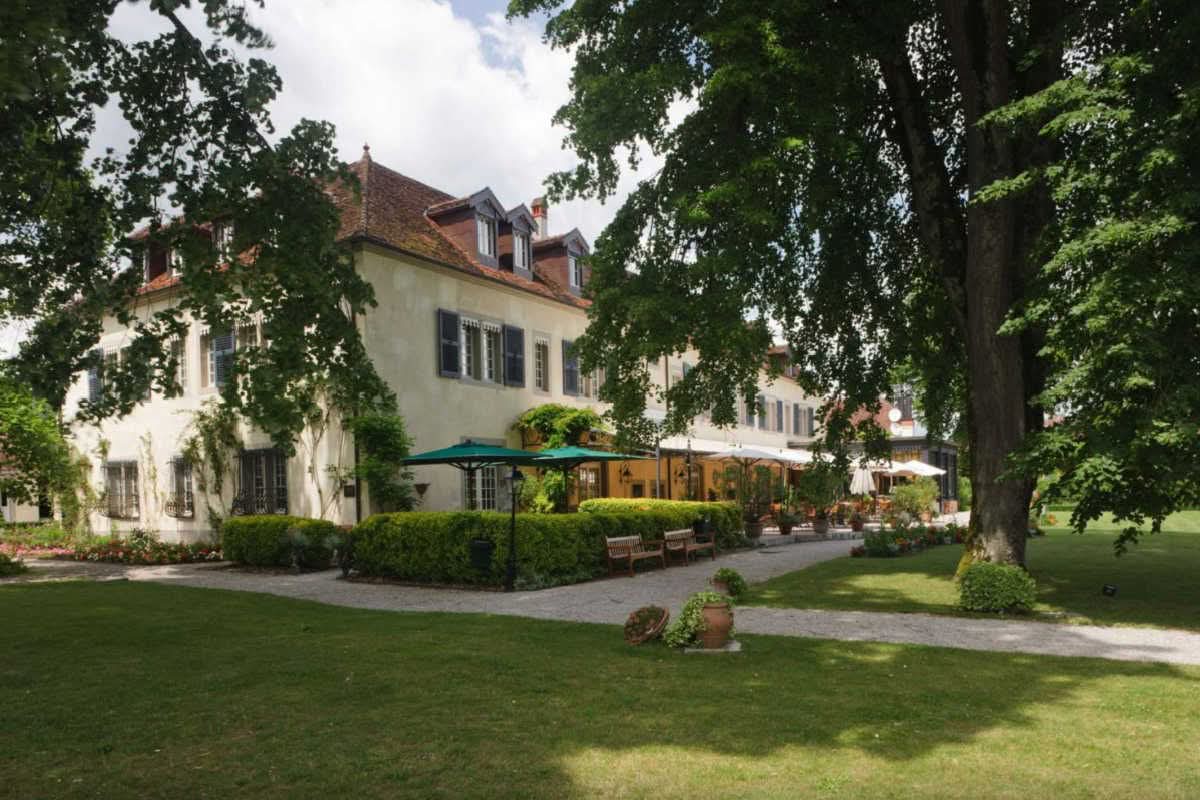
For something more upscale, Château de Germigney in Port-Lesney is a five-star Relais & Châteaux property set in a former 18th-century residence. It offers an outdoor pool, spa, gourmet restaurant, and babysitting services, making it an appealing option for families who want a little luxury mixed into their countryside adventure. Check prices here.
Hôtel Spa Les Rives Sauvages
Located in Malbuisson near Lac Saint-Point, this four-star spa hotel offers an indoor pool, sauna, and family rooms. Its location is a convenient option for exploring Fort Saint-Antoine, the lake, and the surrounding outdoor attractions. Check prices here.
Planning Your Own Trip Through Comté Country
After four days in the Jura region, I came away with a much greater appreciation for Comté cheese and the people who make it. I also discovered that there’s more to this corner of France than its famous dairy products.
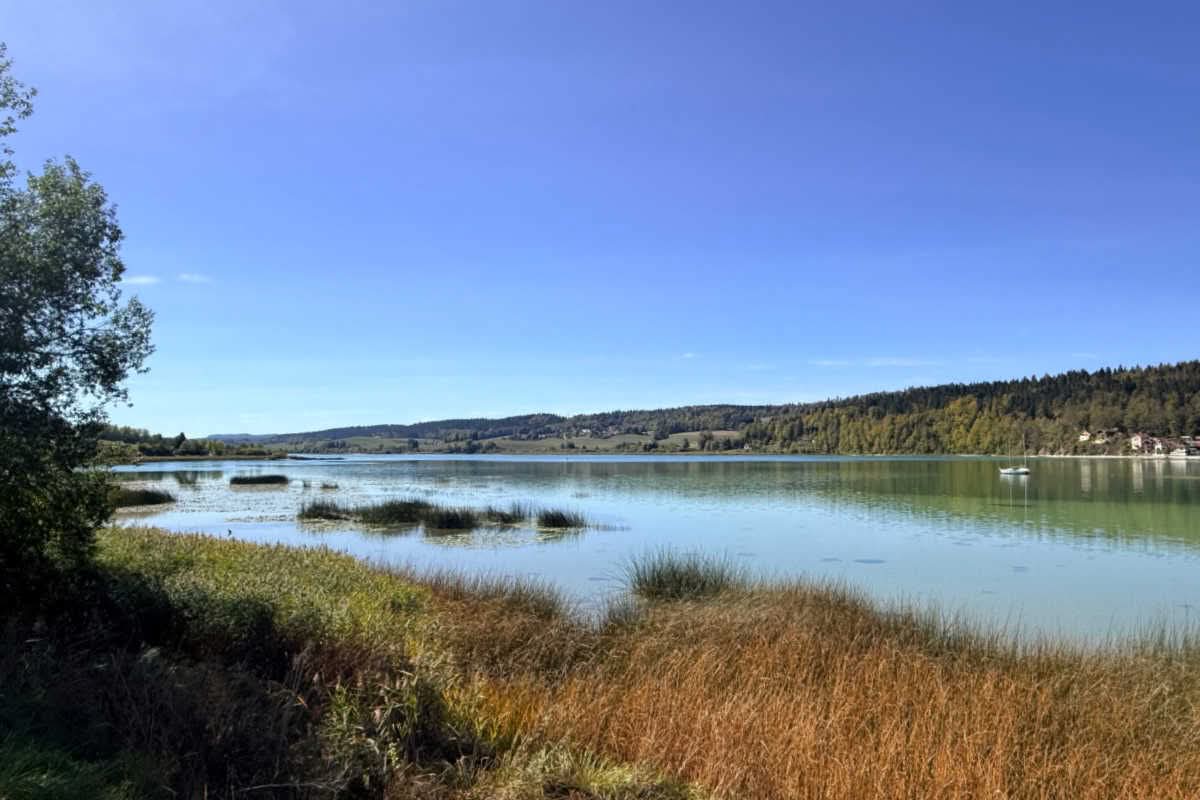
You can visit interactive museums, charming riverside towns, historic fortresses, and spend time in the countryside. And, of course, you can sample a lot of cheese along the way.
Not every experience I had was open to the public, and some of the behind-the-scenes visits were arranged specifically for our press trip. But many of the places we explored can be incorporated into an independent itinerary, and local tourism offices are a good resource for finding additional farm and cheesemaking experiences.
My advice? Don’t try to rush. Give yourself time to stop and take in the scenery between destinations. This isn’t a place where you need to race from one major attraction to the next.
If your family enjoys food, history, and outdoor adventures, the Jura region is well worth considering for your next trip to France. Just be warned: after visiting, you may never look at a wheel of cheese in the same way again.
